So, there is about to be a huge problem with global food production. The Strait of Hormuz carries one-third of globally traded fertilizer.

Key fertilizer producers in the region have halted operations due to safety concerns and damage from drone strikes. #Iran has stopped production. With no strategic reserve for nitrogen fertilizer (unlike oil), the global market lacks buffers to absorb such a shock. This has led to a sharp spike in prices and a partial pause in fertilizer bidding across the U.S. and other major farming regions.

Farmers, including the U.S., Brazil, and India, are facing uncertainty over whether they can secure enough fertilizer for the spring planting season. Analysts warn this could trigger a "fertiliser shock" that ripples through global food supply chains, increasing prices for staples like bread, pasta, and meat. The crisis is also affecting vegetable oils and sugar refining.

Get your gardens going folks. There’s not much time.

#war #epsteinWar #israel

@MissConstrue

Wonder if El Trumpo will attempt to pay off these guys, as he paid off the soybean farmers here in the states.

I can't believe El Trumpo got away with that, and everyone just sittin' around with one thumb in their mouths and the other thump shoved up their asses....

@tuban_muzuru I dunno who he’d pay off. Us and the Israelis are who have bombed ships in the Hormuz. We bombed an unarmed ship and let 90 people die rather than follow the law and rescue them, and Israel just bombed an oil tanker because it moved.

We are the clear and present danger here. We bombed the factories that make nitrogen. Without nitrogen, crop production will halve. Starving people cease to care about niceties. A global food crisis would be a disaster that could kill hundreds of millions of people.

@MissConstrue @tuban_muzuru

I guess they're planning to take over the ammonia production with the Venezuelan oil, but I've got no idea if there are factories for that or how long it would take to catch up.

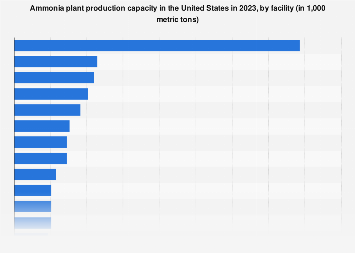
U.S. ammonia plant capacities 2023| Statista

In 2023, CF Industries, a manufacturer of agricultural fertilizers based in Illinois, was the company with the largest ammonia plant, located in Donaldsonville, Louisiana, with a production capacity of almost four million metric tons.

Statista

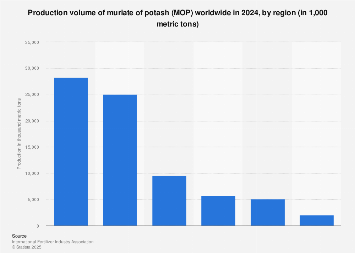
@bweller @violetmadder @tuban_muzuru That is an awesome resource unknown to me. Thank you! I found this while wandering around their site: https://www.statista.com/statistics/1287148/global-mop-production-by-region/

Potash is the potassium derivative used for fertilizer around the world, along with ammonia and others. As the chart demonstrates, destroying capacity in west Asia leaves only the US as a large scale producer, and we don’t make enough for the US, if I understand the numbers, and I may not.

Global potash production by region| Statista

Eastern Europe and Central Asia was the region with the highest production of muriate of potash (also known as MOP or potassium chloride) in 2024, with an output of around 28.3 million metric tons.

Statista

@MissConstrue @bweller @tuban_muzuru

(And meanwhile, phosphorous is dwindling. There's no way to synthesize it, but instead of keeping it on the land with efficient water and waste management and soil health, it's getting washed out to pollute the sea)