Hey Dutch friends,

"Goldman Sachs said a month-long halt to shipping through the Strait of Hormuz could cause European gas prices to more than double."

Better get on with the verduurzaming.
It's expensive, yes.
But in the long run you're better off not dealing with these unexpected spikes in heating costs.
https://www.investing.com/news/commodities-news/european-gas-prices-could-jump-130-on-hormuz-disruption-goldman-estimates-4534261

"Decentralised systems are harder to manipulate through supply chokepoints. Solar panels, once installed, generate energy locally. The vulnerability shifts from ongoing fuel imports to upfront manufacturing dependence.

Reducing oil dependence is often framed as climate policy. But it is also vital to energy security and national security."

https://theconversation.com/the-strikes-on-iran-show-why-quitting-oil-is-more-important-than-ever-277192

The strikes on Iran show why quitting oil is more important than ever

Oil isn’t a normal commodity – it shapes politics around the world.

The Conversation

"The strait is a key shipping route. Not only does a fifth of the global seaborne oil pass through it, so does a fifth of worldwide LNG shipments and about a third of global trade in urea – the most widely used fertiliser.

European wholesale gas prices could triple to US$100 per megawatt hour were the strait to close entirely for three months, or operate at half capacity for six months."

https://www.theguardian.com/world/2026/mar/02/iran-strait-hormuz-oil-global-prices-cost-of-living?CMP

What disrupting the strait of Hormuz could mean for global cost-of-living pressures

The narrow shipping route on Iran’s southern border carries one-fifth of global seaborne crude oil, one-fifth of LNG shipments and one-third of the most widely used fertiliser

The Guardian

The Strait of Hormuz is an energy chokepoint. A world running on renewable energy has far fewer such prominent chokepoints. Even with the same war scenario,

"Governments would be less exposed to sudden demands to subsidise fuels and an inflationary shock.

Energy security would become less about controlling distant shipping lanes, and more about building a distributed and resilient domestic electricity grid, more storage capacity and diversified supply chains."

https://theconversation.com/how-would-the-iran-crisis-play-out-in-a-world-powered-by-renewables-not-fossil-fuels-277537

How would the Iran crisis play out in a world powered by renewables not fossil fuels?

This conflict exposes the fragility of the global fossil fuel economy and how renewables create resilience.

The Conversation

"As the war in Iran sends global fuel prices soaring, the U.S. Dept. of Justice has released a legal opinion claiming that Trump has the authority to override California laws and regulations that have blocked a controversial offshore oil operation by invoking the Defense Production Act.

Sable’s proposal has generated intense resistance, particularly because it seeks to restart a pipeline that ruptured in 2015, causing one of the biggest oil spills in state history."

https://www.latimes.com/california/story/2026-03-07/trump-administration-sets-stage-controversial-offshore-oil-plan

Trump administration sets stage to OK controversial offshore oil plan

The Defense Production Act provides the president broad authorities to influence domestic industry in the interest of national defense or emergencies.

Los Angeles Times

"Saudi Arabia has joined Kuwait and Iraq in beginning the process of drawing down oil production, a response to the closure of the Strait of Hormuz and a shortage of storage options."

https://maritime-executive.com/article/report-saudi-aramco-shuts-down-two-supergiant-offshore-oil-fields

Report: Saudi Aramco Shuts Down Two Supergiant Offshore Oil Fields

 Saudi Arabia has joined Kuwait and Iraq in beginning the process of drawing down oil production, a response to the closure of the Strait of Hormuz an...

The Maritime Executive

Electricity prices are spiking in the UK because they are determined by gas prices, and those are spiking.

"By far the cheapest component of our energy supply is the electricity produced by renewables, principally wind and solar.

The war on Iran has put fossil-fuel prices centre stage, but don’t believe those who tout ‘maximising the North Sea’ as our salvation."

https://www.theguardian.com/commentisfree/2026/mar/13/uk-energy-prices-soaring-war-iran-fossil-fuel-north-sea

UK energy prices are soaring – and propagandists want to sell you a false reason why

The war on Iran has put fossil-fuel prices centre stage, but don’t believe those who tout ‘maximising the North Sea’ as our salvation, says Guardian columnist George Monbiot

The Guardian

"The effective closure of the strait [stops] 20 million barrels per day (mmb/d) from global oil supply, or about 20 % of global petroleum liquids consumption. To put that in perspective, the Arab Oil Embargo of the 1970s removed 4 mmb/d from the global oil market, or just 7 % of consumption at that time.

Member states of the International Energy Agency (IEA) agreed this week to release 400 mmb of oil reserves."

That's 20 days of Strait of Hormuz throughput.

https://www.cfr.org/articles/iran-the-strait-of-hormuz-and-an-unprecedented-energy-crunch

Iran, the Strait of Hormuz, and an Unprecedented Energy Crunch | Council on Foreign Relations

CFR President Michael Froman discusses the unfolding global energy crisis with CFR’s Dan Poneman and the Center on Global Energy Policy’s Jason Bordoff, all of whom worked together on the U.S. Strategic Petroleum Reserve 2011 release.

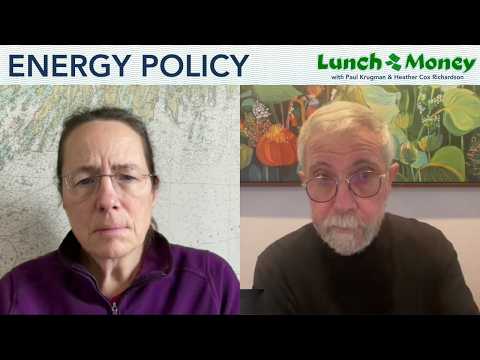
Paul Krugman says that American drivers will feel the pain most, as they drive the least efficient fossil fueled cars - mostly SUVs -and there are relatively few EVs in the country.

https://www.youtube.com/watch?v=e6vcGzlhyzc

Energy Policy | Lunch Money with Paul Krugman and Heather Cox Richardson

YouTube

HALF of the production of urea, the world's most used fertiliser, made from fossil gas, has been disrupted.

The global food shock could be larger than that brought on by the war in Ukraine.

Translation: Food prices will rise.

https://www.ft.com/content/10543c28-de10-4119-8a2c-8a264dce6539

Iran war risks global food shock as fertiliser supplies cut

Growing number of fertiliser plants forced to shut, threatening rice and other harvests

Financial Times

"When Americans pay $3.50 for a gallon of gas at the pump instead of the $2.80 they paid a month ago, it is akin to the government imposing a 70-cent-per-gallon tax. The same goes for higher prices for home heating oil and fossil gas. They’re the same as a major tax increase.

The big difference is that instead of the money going to the government, as it would with a tax, it’s going to the oil and gas industry—Trump’s campaign contributors."

https://themoneytrail.substack.com/p/on-the-money-who-really-benefits

On the Money: Who Really Benefits from High Oil Prices?

Without a windfall profit tax on the oil and gas industry, U.S. consumers will get stuck with the bill

Money Trail

"Oil is a leading cause of modern-day war -- with between one-quarter and one-half of interstate wars between 1973 and 2007 linked to oil, an analysis published in the journal International Security said.

[For example] The U.S., Britain and Dutch East Indies embargo on Japan's oil supply in July 1941 -- which impacted 88% of its imported oil --preceded the attack on Pearl Harbor on Dec. 7, 1941."

https://abcnews.com/amp/Technology/global-economy-dependent-renewable-energy-war-experts-explain/story

"Energy experts say some countries are better positioned to weather this energy crisis than they would have been just a few years ago. That's because of the rapid growth of renewable energy, battery systems and electric vehicles."

"With a stroke," he says, "this war has dramatically increased the power and the influence of those who want to go down the solar route."

https://www.npr.org/2026/03/16/nx-s1-5732984/energy-iran-war-solar-pakistan-crisis-renewable-evs

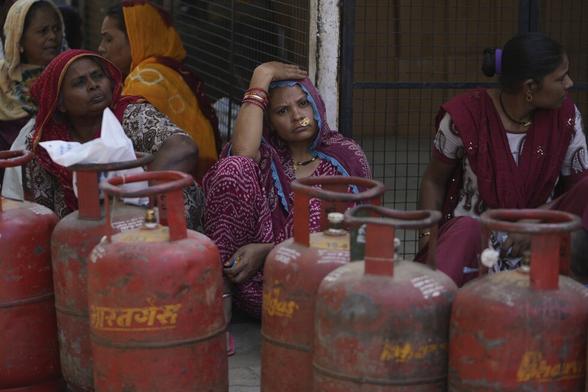
"The escalating war with Iran is pushing parts of the world into energy triage, forcing governments to choose where to cut demand or absorb costs, while prioritizing dwindling supplies."

https://apnews.com/article/middle-east-wars-energy-asia-gas-oil-f22739369eb36ccaf87543459cfed320

A four day work week
Taking the stairs
Raising temps on thermostats
Prioritise households
Release reserves
Price caps

But a prolonged war will make every policy more difficult. It's a strong argument for quitting fossil fuels.

Countries face energy triage as the Iran war escalates

The escalating Iran war is pushing parts of the world into energy triage. Governments are deciding where to cut demand or absorb higher costs, while prioritizing dwindling supplies. In places like Bangkok and Vietnam, people are being urged to work from home, take the stairs and keep air-conditioning above 24°C, while some businesses are preparing for disruptions. The conflict is disrupting critical oil and natural gas shipments from the Middle East, sending prices soaring and threatening global growth — with Asia facing the greatest risk from the shock. That prompted some governments to draw on their emergency reserves, a stopgap measure that can only go on for so long.

AP News

Egypt:
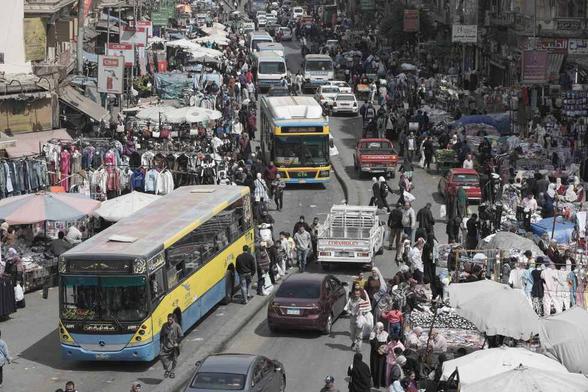
"Since the new fuel prices took effect, the cost of meat has jumped 25% and fruit and vegetables rose 15-30%, according to merchants at three markets in Cairo."

https://apnews.com/article/iran-us-war-egypt-economy-fuel-prices-6e75d557bc9b031036a1f07c7f8498f8

Egypt's economy suffers as Iran war drives up prices

Rising energy costs caused by the Iran war have forced Egypt to hike fuel and cooking gas prices, hitting the country's already struggling poor and middle classes hard. The price increases are rippling across the economy, raising the costs of food, transportation and services. Egyptian families have been struggling for years because of austerity measures. Many now fear the new blow will make even many basic necessities unaffordable. Merchants say people are buying less meat and produce, even during the holy month of Ramadan.

AP News

"The war in Iran is exposing the world’s reliance on fragile fossil fuel routes, lending urgency to calls for hastening the shift to renewable energy.

Unlike during previous oil shocks, renewable power is now competitive with fossil fuels in many places. More than 90% of new renewable power projects worldwide in 2024 were cheaper than fossil-fuel alternatives."

https://apnews.com/article/middle-east-wars-renewable-energy-asia-4b5fe0693ce5816472c905db85f7da6e

Iran war energy crisis is a renewable energy wake-up call

The Iran war is exposing how much the global economy still depends on fragile fossil fuel supplies. The conflict has virtually choked off the Strait of Hormuz, a vital shipping lane for a fifth of the world’s oil and liquefied natural gas. That's shaking up markets and pushing prices higher. Countries reliant on imported fossil fuels — from wealthy industrial economies to poorer developing nations — are facing major disruptions that can quickly ripple through utility bills, food prices, transport costs and electrical grids. Analysts say the crisis is a stark reminder that energy security is not just about stockpiles and shipping, but also about the lagging transition to renewable energy.

AP News

Trifurcation in the price of oil

"West Texas Intermediate and Brent have diverged substantially from the physical price of oil being bought by refineries in Asia, which rely on Persian Gulf supplies. Asian refineries have been paying around $155 per barrel, according to JPMorgan chief commodities strategist Natasha Kaneva. The WTI, which is based on oil to be delivered in Oklahoma, sits at $96, and Brent, in the North Sea, is $110."

https://heatmap.news/energy/california-gasoline-price-iran

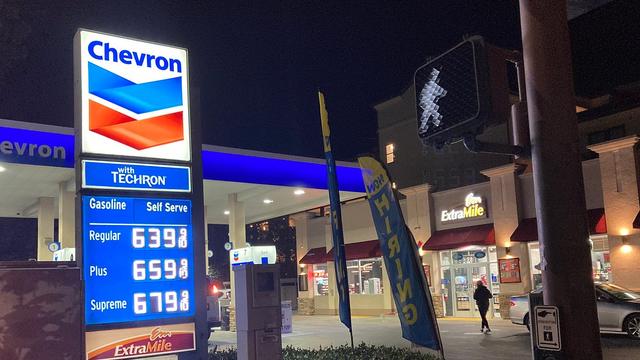
Why Gas in California Is Almost $6 a Gallon

California’s gasoline market is a world all its own. Gas prices there are consistently higher than anywhere else in the U.S. — and with the global oil industry currently experiencing its greatest physical supply shock since at least the 1970s, that difference has gotten especially painful.Since Iran...

Heatmap News

"Trump on Saturday threatened to "obliterate" Iran's power plants if Tehran did not fully reopen the Strait of Hormuz within 48 hours.

Iran said on Sunday it would attack U.S. infrastructure, including energy facilities in the Gulf, if Trump carried out his threat."

https://www.reuters.com/world/middle-east/trump-iran-trade-threats-over-energy-targets-war-escalates-2026-03-22/

This is part of a pattern where Iran's (threat of) retaliation is an in-kind but slightly larger action than the original (threat of) attack.

@CelloMomOnCars

While the Infauxtainment, Enquirer-esque, Infauxtainment, TMZishTabloid, MSM floods the airwaves with reports of 'Bachelorette  happenings' Twattle
masquerading as "news", educated enquiring minds must tune into US-Iran Warcast - Day 20 with Malcolm Nance.
https://youtu.be/YMuppXb6n04

US-Iran Warcast - Day 20 - Live with Black Man Spy - Malcolm Nance

YouTube

I wonder if this could force a scramble for alternatives. (Trying to look for an upside.)

@CelloMomOnCars

@hamishb

A scramble is certainly happening in the energy space, everything from "let's build nuclear" to "let's go back to work from home".

Non-fossil-fueled agriculture is there waiting to be deployed, from traditional methods optimised to the local conditions to newer ideas like permaculture. In the short term, yields will still be down.

@CelloMomOnCars Good. Chickens coming home to shit all over their monstrous, resource-wasting, ecosystem-destroying penis substitutes.

@CelloMomOnCars It's nearer 15% once you factor in oil that can be diverted by pipelines but is cheaper to ship by tanker. It's then a bit less because Chinese ships are permitted to pass as are Russian ones (at least until they seriously mine it versus using missiles).

In the other direction though the Houthis are threatening the routes via Suez.

More of a problem is food into the middle east.

@etchedpixels

There is also the matter of agricultural fertiliser, a fossil fuel product.
Also helium, much used in semiconductor manufacturing.

The price of food and electronic thingys about to rise.

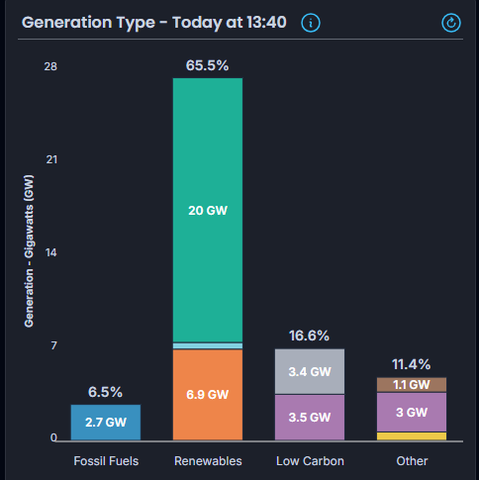
@CelloMomOnCars UK generation just now.

@TimWardCam

COOL!

But it's that small blue bar that determines the price for all of it.

Difficult to think of a more insane scheme to set electricity rates, if you ask me.

@CelloMomOnCars @TimWardCam The fact that the bid price from the gas generators sets the wholesale price is ridiculous but if you let the far cheaper renewables set the price the gas generators would go bust.

Sounds like the solution is more renewables, storage, grid capacity and lets price gas and oil out of existence. But what do I know.

While there still are fossil fuel plants on the grid, every wind, solar and especially battery installation has excellent return on investment. That's why it makes sense to set the price on margin - to incentivize clean build-out.
@rbphotographic @CelloMomOnCars @TimWardCam

@osma @rbphotographic @TimWardCam

There must be better ways to incentivise clean energy than by households getting smacked on the head every time the price of gas goes up.

We all know which households get hit hardest.

There is a plethora of ways the UK government subsidises fossil fuels: let them retool those for clean energy.

Well, yes, removing all the subsidies on fossil fuel and slapping them with the full impact of carbon pricing would certainly incentivize shutting those down. But then you'd not be paying high price for electricity when demand is high - you'd not have enough electricity supply. It's not an easy problem. Building more renewables and storage will solve it, but it takes time.
@CelloMomOnCars @rbphotographic @TimWardCam

@osma @rbphotographic @TimWardCam

Shivering in the dark? Be careful not to sound like fossil fuel scare talk.

There will be gas in the mix for some time to come, I have no illusions about that.

I'm just pleading for the consumer price to reflect the mixture of generation sources, not just the most expensive one.

@TimWardCam @CelloMomOnCars Was that chart designed to look like a finger up to the UK consumer?
@CelloMomOnCars Greenpeace have a plan to bring down electricity prices by decoupling them from gas prices: https://www.greenpeace.org.uk/resources/power-shift-report/
Power Shift: Read the Report - Greenpeace UK

How the government can bring down bills and bolster net zero by curtailing the power of gas, using a Regulated Asset Base (RAB) model.

Greenpeace UK

@jonpsp

Isn't it simpler though?
What if the price the consumer pays is the price of actual generation and delivery cost, plus some profit?

Why make the last-added electron - which by definition is the most expensive - determine the price of all the other cheaper electrons? This is really baffling to me.

@CelloMomOnCars
It's good that it's not the middle of winter now! Even more incentive to completely move away from fossil fuels.

@CelloMomOnCars

But what would all The Pimps of the Pumps do? All those fossil fools without their revenue? They couldn't poison enough people fast enough with microplastics and CO2 pollution if we get off of oil

@CelloMomOnCars "Solar panels, once installed, generate energy locally."

True, but the overall system quite likely can be controlled over the internet, and who knows what the average non-techie punter could do about that.

@TimWardCam

True. But also, honestly, the current grid is vulnerable to cyberattacks. I hear some of the crucial parts still have factory-set passwords, and they are not managed by non-techies.