Hey Dutch friends,

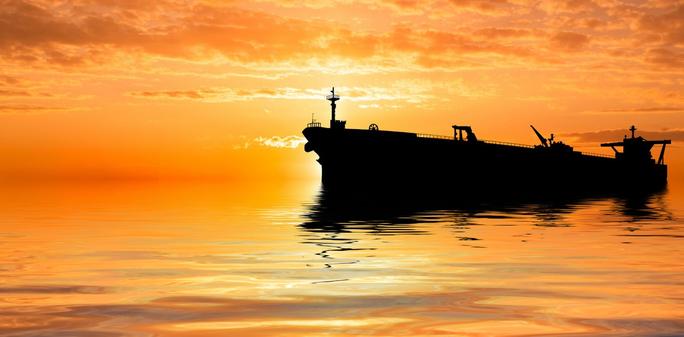
"Goldman Sachs said a month-long halt to shipping through the Strait of Hormuz could cause European gas prices to more than double."

Better get on with the verduurzaming.
It's expensive, yes.
But in the long run you're better off not dealing with these unexpected spikes in heating costs.
https://www.investing.com/news/commodities-news/european-gas-prices-could-jump-130-on-hormuz-disruption-goldman-estimates-4534261

"Decentralised systems are harder to manipulate through supply chokepoints. Solar panels, once installed, generate energy locally. The vulnerability shifts from ongoing fuel imports to upfront manufacturing dependence.

Reducing oil dependence is often framed as climate policy. But it is also vital to energy security and national security."

https://theconversation.com/the-strikes-on-iran-show-why-quitting-oil-is-more-important-than-ever-277192

The strikes on Iran show why quitting oil is more important than ever

Oil isn’t a normal commodity – it shapes politics around the world.

The Conversation

"The strait is a key shipping route. Not only does a fifth of the global seaborne oil pass through it, so does a fifth of worldwide LNG shipments and about a third of global trade in urea – the most widely used fertiliser.

European wholesale gas prices could triple to US$100 per megawatt hour were the strait to close entirely for three months, or operate at half capacity for six months."

https://www.theguardian.com/world/2026/mar/02/iran-strait-hormuz-oil-global-prices-cost-of-living?CMP

What disrupting the strait of Hormuz could mean for global cost-of-living pressures

The narrow shipping route on Iran’s southern border carries one-fifth of global seaborne crude oil, one-fifth of LNG shipments and one-third of the most widely used fertiliser

The Guardian

The Strait of Hormuz is an energy chokepoint. A world running on renewable energy has far fewer such prominent chokepoints. Even with the same war scenario,

"Governments would be less exposed to sudden demands to subsidise fuels and an inflationary shock.

Energy security would become less about controlling distant shipping lanes, and more about building a distributed and resilient domestic electricity grid, more storage capacity and diversified supply chains."

https://theconversation.com/how-would-the-iran-crisis-play-out-in-a-world-powered-by-renewables-not-fossil-fuels-277537

How would the Iran crisis play out in a world powered by renewables not fossil fuels?

This conflict exposes the fragility of the global fossil fuel economy and how renewables create resilience.

The Conversation

"As the war in Iran sends global fuel prices soaring, the U.S. Dept. of Justice has released a legal opinion claiming that Trump has the authority to override California laws and regulations that have blocked a controversial offshore oil operation by invoking the Defense Production Act.

Sable’s proposal has generated intense resistance, particularly because it seeks to restart a pipeline that ruptured in 2015, causing one of the biggest oil spills in state history."

https://www.latimes.com/california/story/2026-03-07/trump-administration-sets-stage-controversial-offshore-oil-plan

Trump administration sets stage to OK controversial offshore oil plan

The Defense Production Act provides the president broad authorities to influence domestic industry in the interest of national defense or emergencies.

Los Angeles Times

"Saudi Arabia has joined Kuwait and Iraq in beginning the process of drawing down oil production, a response to the closure of the Strait of Hormuz and a shortage of storage options."

https://maritime-executive.com/article/report-saudi-aramco-shuts-down-two-supergiant-offshore-oil-fields

Report: Saudi Aramco Shuts Down Two Supergiant Offshore Oil Fields

 Saudi Arabia has joined Kuwait and Iraq in beginning the process of drawing down oil production, a response to the closure of the Strait of Hormuz an...

The Maritime Executive

Electricity prices are spiking in the UK because they are determined by gas prices, and those are spiking.

"By far the cheapest component of our energy supply is the electricity produced by renewables, principally wind and solar.

The war on Iran has put fossil-fuel prices centre stage, but don’t believe those who tout ‘maximising the North Sea’ as our salvation."

https://www.theguardian.com/commentisfree/2026/mar/13/uk-energy-prices-soaring-war-iran-fossil-fuel-north-sea

UK energy prices are soaring – and propagandists want to sell you a false reason why

The war on Iran has put fossil-fuel prices centre stage, but don’t believe those who tout ‘maximising the North Sea’ as our salvation, says Guardian columnist George Monbiot

The Guardian
@CelloMomOnCars Greenpeace have a plan to bring down electricity prices by decoupling them from gas prices: https://www.greenpeace.org.uk/resources/power-shift-report/
Power Shift: Read the Report - Greenpeace UK

How the government can bring down bills and bolster net zero by curtailing the power of gas, using a Regulated Asset Base (RAB) model.

Greenpeace UK

@jonpsp

Isn't it simpler though?
What if the price the consumer pays is the price of actual generation and delivery cost, plus some profit?

Why make the last-added electron - which by definition is the most expensive - determine the price of all the other cheaper electrons? This is really baffling to me.