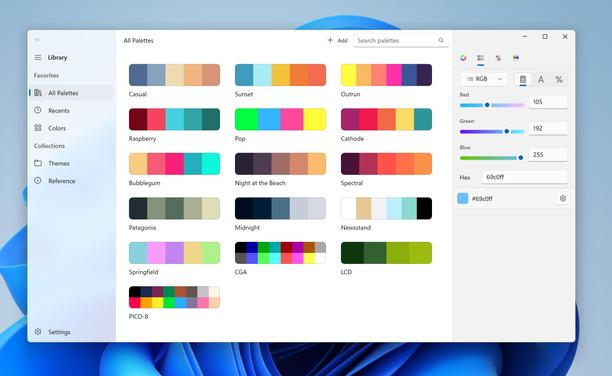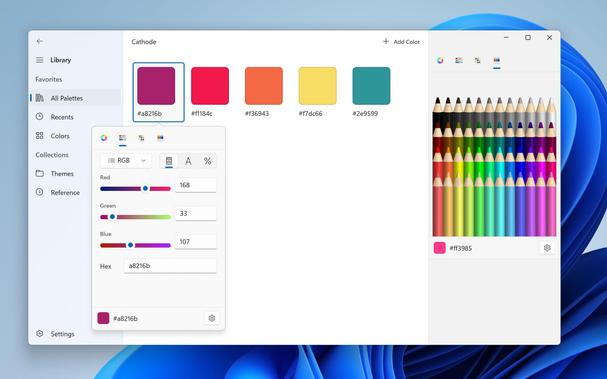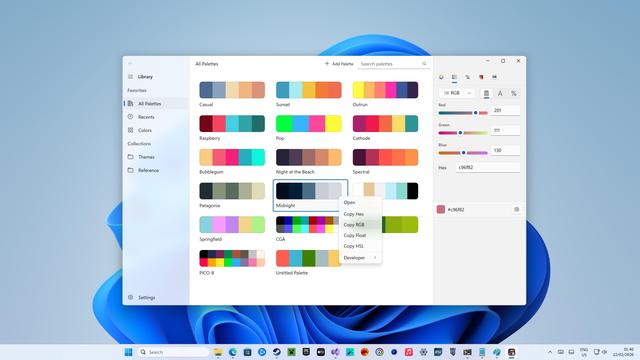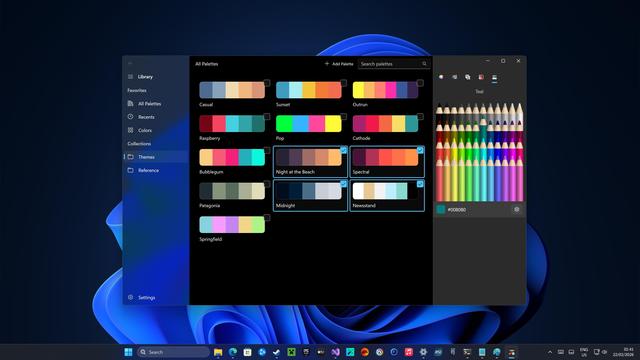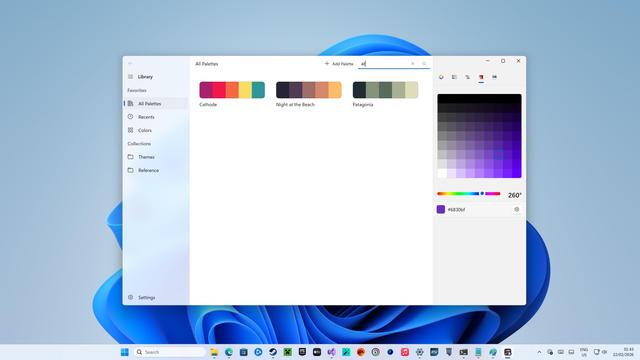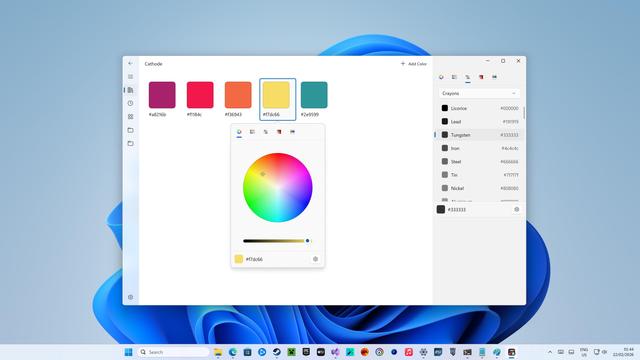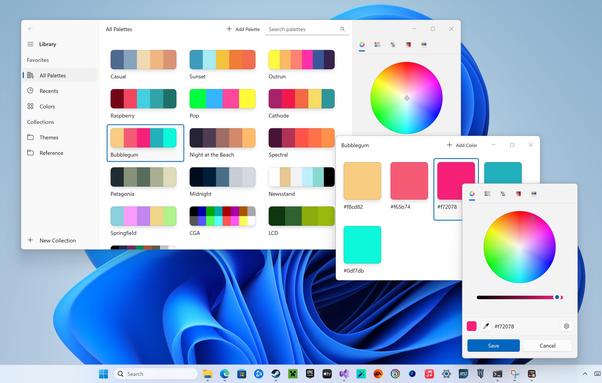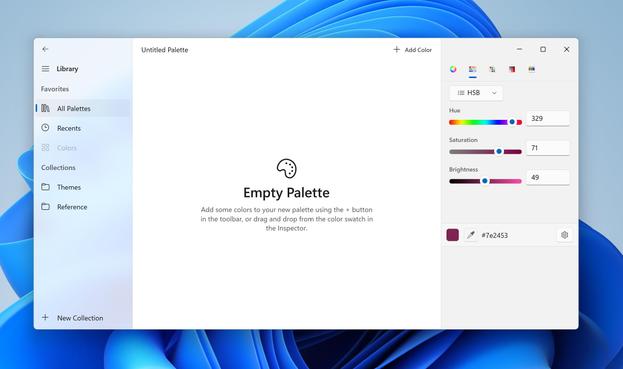
Turns out Codex is just as proficient at writing for the Windows App SDK, so I jumpstarted it with the existing unfinished UWP version of Pastel, and, like before, pointed it at the existing Swift codebase to begin porting it piece by piece to Windows 11. This is by no means a one-shot, I am slowly and methodically recreating the functionality of the Mac app.

Of course, there is no native version of Codex for Windows, so I'm running the Linux version under WSL, and Visual Studio 2022 to compile
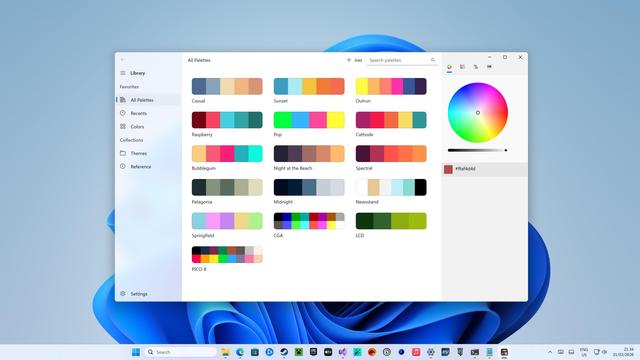
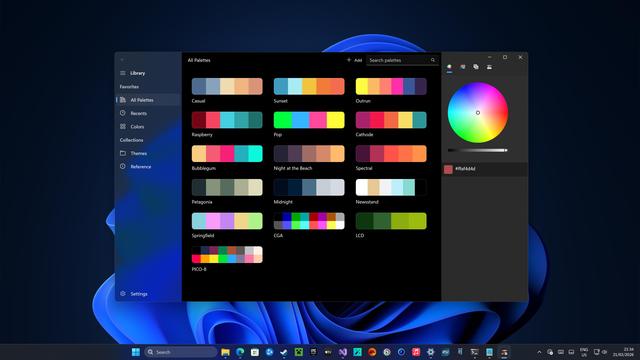
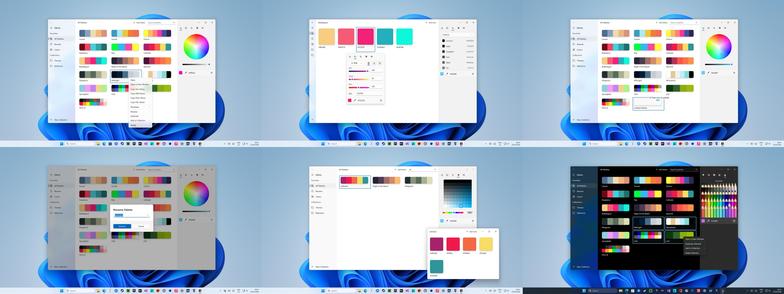
Light Mode | Dark Mode
Watching Codex recreate in seconds things that took me months, maybe even years, to implement the way I wanted 🥲
We are actually deeply cooked
Just ploughing through this Windows port, with some pretty complex bespoke UI
Editing flow; you don't even have to squint to see how a finished app might work. Something that I would have had to take months to build at the expense of the iOS version, done in a night's free time after a full workday doing more-productive things. I always wanted to finish Pastel on Windows, but I had reluctantly accepted that I could never invest that kind of time — save for some kind of catastrophe that left me excluded from the Apple ecosystem. Now? Trivial.

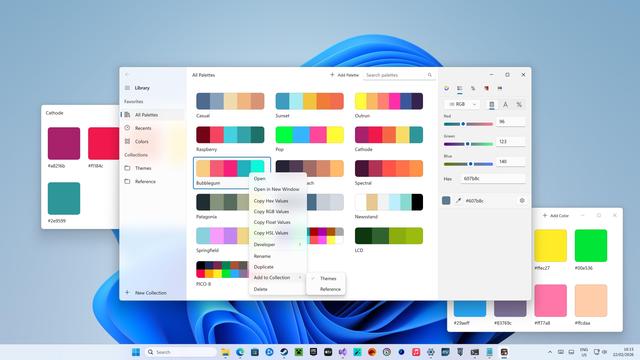
⭐️ Some more shots of all the working aspects of this Pastel for Windows project, using .NET 8.0 and the Windows App SDK (and Community Toolkit), ported from the iOS codebase and my original UWP prototype by OpenAI's Codex 5.3.

It's not a full app yet, but it's dangerously close.

It's hard not to think that agentic programming, or agentic porting, could have outright saved Windows Phone, had this all been possible a decade ago

It's only when you start trying to use a UI framework that you realize all the little things that are missing — like Windows' grid view doesn't have a drag-select API, it all has to be done custom. Or like how its alert boxes have no way of indicating a destructive item

When you search for Microsoft's Fluent design docs for Windows apps, you get a 404 on Microsoft's main site 🤡

You have to really know where to look to find them again, and they're buried as the last option (behind Web, iOS, and Android) on their design site

I'm pretty familiar with the .NET/XAML app building process; all my apps were ported to Windows Phone 7, then migrated to Windows Phone 8, Windows 8 and UWP, and I know my way around Visual Studio and the publishing system. I've even been through WinObjC for aborted ports of some of my apps. I'm familiar with the APIs, pitfalls, the 3P libs.

I won't pretend that somebody with zero experience would be able to just drop themselves in to Codex and easily build something like Pastel (but I hope so)

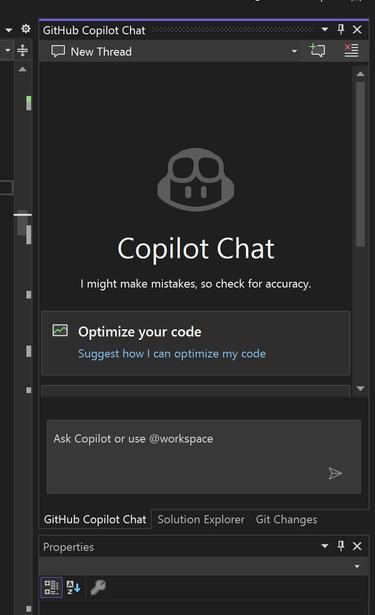
I updated my copy of Visual Studio and now 'GitHub Copilot Chat' is the first tab in the project explorer, replacing the project file list ('solution explorer') 🤡

Yeah no thanks

Drag and drop reordering, drag and drop colors into palettes.

This kind of (Mac-like?) behavior is not common to Windows at all. I am pleasantly surprised at how robust the Windows App SDK is, considering nobody in their right mind is building apps this way outside of Microsoft 🤪

Renaming a new palette, opening it in a new window, adding it to a collection, and navigating around the app

Codex has no problem going deep into the weeds implementing things I would never have had the faintest idea how to begin, like this eyedropper button that calls into Win32, captures the screen and steals mouse events, and creates a mouse-tracking overlay crosshair window with GDI+, a task far outside the bounds of most WinUI apps. In minutes, without complaint.

This particular behavior is built-in on macOS, but not on Windows, so it all has to be done from scratch

This Windows version of Pastel is just under 10K lines of code (C# & XAML) so far. It doesn't yet persist its data model to disk, or sync, it doesn't have the color systems UI, it doesn't import pictures yet, and it doesn't generate wallpapers or widgets. Still plenty to do, but it's rapidly becoming a real app. I'm already very proud of it, and it's been kinda fun trying to pull off a level of polish that Windows apps tend not to see
I'm kinda surprised Microsoft, who has been all-in on this stuff for two years with Copilot (and, now, Claude), doesn't have a whole app store full of beautiful first-party native apps already. If *I* (a dummy) can do this in a day, what can a platform expert working full-time at Microsoft do?
Some code to ensure newly-spawned windows are always close to the mouse, with some bonus presentation animations
Windows doesn't have an equivalent to TestFlight, but it does allow you to do private, whitelisted store submissions before shipping publicly, so I'm gonna start the ball rolling with this build of Pastel to make sure everything's in order
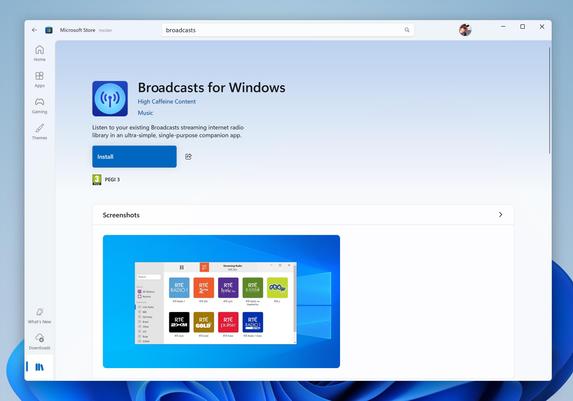
(That's where the Electron version of Broadcasts for Windows has lived since 2020 🙃)

And, since the usage stats part is always worth mentioning:

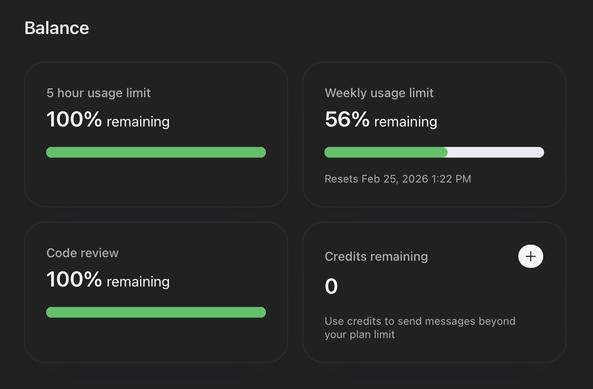
I've used maybe 40% of my weekly Codex credits building this Windows port of Pastel (never hit the five hour limit), I'm on the $20/mo ChatGPT Plus plan, and I've only used 'gpt-5.3-codex medium'

In case you ever wondered how long the publishing process is on the Windows Store: that long
One of the reasons I picked Pastel for this project was because I had built some initial concepts some years ago and determined that it would look the most native in Microsoft's Fluent Design design language, and would be the easiest bringup. Windows 11 and macOS 11–15 look incredibly similar, and already share many of the same patterns and elements. It would be a great opportunity to do a Windows 11 app right and make a gorgeous app (i'm biased) in the process

TIL, the Windows App SDK back-deploys to older versions of Windows 😯

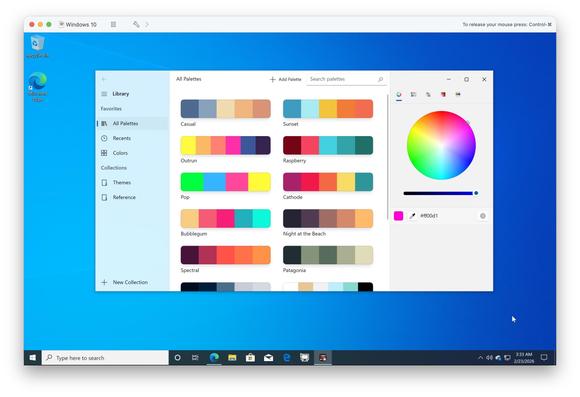
With just a little finagling I was able to remote-deploy* Pastel to a Windows 10 VM, and it appears to be fully-functional.

(*Hey Apple, would it kill you to add remote-deploy tools to Xcode? Or… macOS VMs?)

Going back to Windows 10 after not having used it for a while is quite a shock. It's a lot closer to Windows 8 than I remembered 👀

I do not miss this design language at all. Windows 11's Fluent is such an improvement

I was using a WinUI TeachingTip to replicate macOS-style popover behavior, but that's an in-window control and just doesn't work at all if the window isn't big enough to fully display it. So now I have a custom color picker window that does all the right things instead
WinUI also includes a content unavailable view, one of my favorite recent API additions to UIKit
I know Microsoft has had a revolving door of UI frameworks over the years, but I really think the Windows App SDK finally gets it right at a fundamental level. It's just a pity nobody makes native Windows apps anymore. And even more of a pity that there's no phone/tablet platform as part of this effort
@stroughtonsmith it doesn’t help that most native Windows development is happening on existing applications and Microsoft has burned a lot of goodwill over the years; why would I throw out 10+ years of stable legacy code for a framework that may not be supported in a few years

@scj @stroughtonsmith I’ve been sorta following Microsoft UI since the 90s and uh yeah the graveyard is long.

On the other hand, they *do* support stuff for a long time even thoug they stop developing them further. You can still use .NET WinForms, makes me want to try to find some of my projects from 20 years ago.