THE BOUBA/KIKI EFFECT

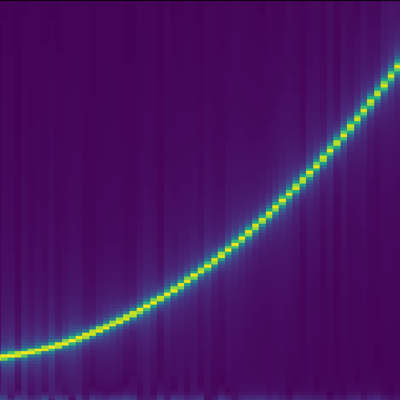
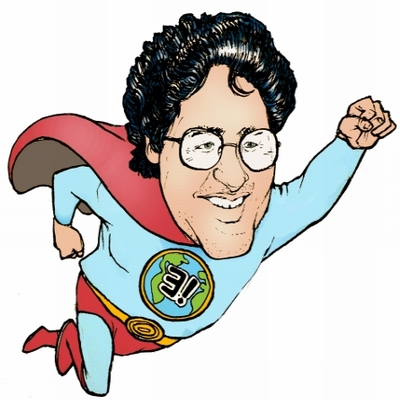
Which of these shapes looks like the sound "bouba", and which looks like the sound "kiki"?

People of all cultures agree on this, and now it's been found that baby chicks do too:

https://phys.org/news/2026-02-bouba-kiki-effect-baby-chicks.html

It may seem weird that sounds should robustly match with shapes, but I think it follows from physics - and living as we do in the physical world, it pays for us to make these associations.

For more:

https://en.wikipedia.org/wiki/Bouba/kiki_effect

Thanks to Alex at https://mathstodon.xyz/@WizardOfDocs@wandering.shop/116115329367345332 for pointing out the news about baby chicks!


@johncarlosbaez

I’m calling BS on this one, even without reading the paper.

If you want to know why, search Google for Clever Hans.

I spent my PhD years studying honeybee behaviour. Animal experiments are very often biased by the human experimenter in unconscious ways.

It just seems too far fetched for me: An cognitive effect in humans innately manifest in baby chicks? I doubt it.

Having said all that, I should read the paper and try to pinpoint specific weaknesses. But I’m busy and lazy.

@TonyVladusich - it's not supposed to be a linguistic effect, but rather a sonic effect: a correlation between sounds and shapes. We certainly know what sounds "wet" and animals should too. We also know what sounds "raspy and sharp", and what sounds "bouncy and rounded".

But yes: a skeptic should carefully study and question these findings with a careful comb.

@johncarlosbaez

How is that not linguistic? Sounds and shapes are cognitive constructs not physical ones!

@TonyVladusich @johncarlosbaez

Cognition and association-making don't require language.

Hard objects have give sharp transient acoustic signatures like kiki sound. Soft objects have slower rise times like bouba sound.

Crystal-like image on the left associates with hard, leaf-like image on the right associates with soft.

@maxpool @johncarlosbaez

Sure but language "requires" cognition and perception.

Constructs like hard and sharp are cognitive, not physical.

@TonyVladusich - Everything is cognitive insofar as I'm cognizant of it, but as a physicist I consider concepts like hard and sharp to be physical. We don't have to go down to deep reductionist levels like "quarks" for concepts to be about the physical world. For example the fact that hard sharp things can cut other things is a fact of physics.

@maxpool

@johncarlosbaez @maxpool

Of course, everything has a physical basis.

But to say one thing "cuts" another thing is a cognitive construct that bears some vague and unspecified relationship to the physical act of "cutting".

@johncarlosbaez @maxpool

Can we make this mapping "concrete"? I say we fundamentally cannot and that any "resemblance" between cognitive and physical constructs is, in a fundamental and well-defined way, a "fiction of coincidentals".

When a magician saws a person in half, for example, we are perceptually convinced of the veracity of the act, although no such physical operation actually occurred (hopefully).

The cognitive and physical have thus become fundamentally dissociated by the visual performance of the magician.

@TonyVladusich - a stage show performer can fool me into thinking the huge dumb-bell he seems to be straining to lift is heavy, but that doesn't make me question the physical basis of the concept of "mass".

@maxpool

@johncarlosbaez @maxpool

Riiigghhht. But you see my point, yeah?

@TonyVladusich - not really. You'd been saying that "to say one thing "cuts" another thing is a cognitive construct that bears some vague and unspecified relationship to the physical act of "cutting"." But this sentence seems to apply to anything at all, e.g. "to say someone "lifts a heavy weight" is a cognitive construct that bears some vague and unspecified relationship to the physical act of "lifting a heavy weight"." Or "to say "a star explodes into a supernova" is a cognitive construct that bears some vague and unspecified relationship to the physical act of "exploding into a supernova"."

Let's quit this particular branch of the conversation, okay? It's not fun for me. I'm just not subtle enough for it.

@johncarlosbaez

I think you understand it perfectly well. Our models of the world are cognitive constructs, no more, no less.

I’m sorry if you don’t enjoy such conversations. But they sit at the heart of the endeavour we call science, whether you like it or not.

@maxpool @johncarlosbaez

This type of reasoning is known as "begging the question".

(As in, begging the very question we seek to answer.)

It is a logical fallacy.

Why is part of an image (an image!, not physical thing itself, no less) "hard" or "soft"?

@TonyVladusich @johncarlosbaez

begging the question is error when you assume the truth of your conclusion in your premise to prove it's true. But I'm not trying to prove a conclusion, I'm trying to show that there exists a possible answer to your question "How is that not linguistic?"

@maxpool @johncarlosbaez

Yes, I agree linguistic was a bad word to use. But I did later correct myself.