 Tilton Raccoon
Man, I thought US lumber sizes were fucking weird, literally EVERY TRADE is fucking weird here. I need NM wire clamps for our main electric service box. The punch-out hole measures 7/8" in diameter (22.5mm). The trade calls this a 1/2" punch-out, but you don't buy a 1/2" clamp, you buy a 3/8" clamp. So yes, you need a 3/8" clamp for a 1/2" hole that actually measures 7/8". Thanks, I hate it.
 Charlie Stross
@tilton @a_cubed And inches are 25.4mm give or take a few microns! I mean, who ordered THAT? It's almost as crazy as the pre-revolutionary French Foot, which was the distance from the tip of the king's nose to the end of his right middle fingertip (arm extended stiffly from the shoulder) because why the fuck not (and also, it varied from king to king).
 Jeff
Jeff@cstross @tilton @a_cubed NIST ordered it, and there's no give or take. A US inch is exactly 25.4mm to as much precision as your equipment allows. That is the official definition, and why I like to call US customary units The Worst Version of the Metric System. NIST redefined everything in terms of metric units half a century ago.
@overeducatedredneck @tilton @a_cubed Oh good grief. That's as bad as the British Metric Pint (568ml precisely, legal/statutory measure for serving beer in pubs, used for NOTHING else.)
 Alan J. Cain
@cstross @overeducatedredneck @tilton @a_cubed I seem to remember some supermarkets selling milk in plastic bottles in multiples of 568ml. Did that stop? I left the UK almost 20 years ago.
 HighlandLawyer
@ajcain @cstross @overeducatedredneck @tilton @a_cubed
No, you can still buy 568ml pints of milk; but just to confuse things you can also buy 2 pint (1.136l) cartons of milk and 1 litre cartons of milk
No, you can still buy 568ml pints of milk; but just to confuse things you can also buy 2 pint (1.136l) cartons of milk and 1 litre cartons of milk
 Rhialto
@HighlandLawyer
I remember seeing (I think it was in the 90s) a sign in an Edinburgh supermarket: New! Metric milk!
 A. Fleury-Gobert
@ajcain @cstross @overeducatedredneck @tilton @a_cubed
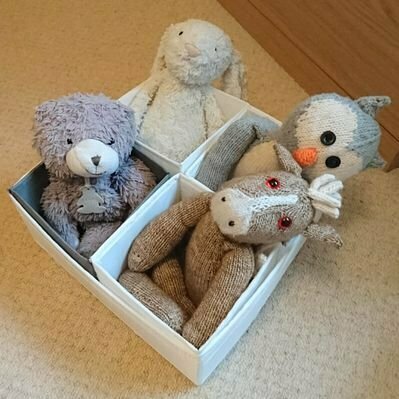
Milk is still sold like this. Sometimes soda bottle in pint or double pint appears on supermarket shelves, usually sold as "promotion! extra 15% free!", which is technically close but not true...
edit:add pictures...


 Nick Taylor
@cstross The UK has also been on the metric inch since like the 1930s. Saved our bacon in WWII because American-machined parts *weren't* a few thou per inch out.
Of course, in practice both the US and the UK had been on the metric inch for a while before then because the (I think Swedish) chap making the gauge blocks got fed up with having to maintain two product lines and split the difference between the two inches.
 Andrew Dalke
@tienelle The Swede Carl Edvard Johansson's gauge blocks, to be specific.
 Tubemeister
@tienelle @cstross This thread reminded me of my aftermarket motorcycle handlebars that I had to file down because they were 7/8” and the (German) switchgear was of course *precisely* 22mm and didn’t have enough give in it to fit.
Yes, I had to buy a new one of those too as the stuff was a quarter century old and apparently quite brittle.
 Cadbury Moose
It's worse than that. The UK Arms industry (RSAF Enfield) used their own "Enfield Inch" standard from the 1850s for measurements under 2 inches, and the "Imperial Inch" (0.0004" larger) above that size. The "Metric Inch" was much later (1930) and 0.0000017" longer than the "Imperial Inch" or 0.000002" shorter than the US one. It caused problems with gun manufacture during WW2 in that US and UK parts weren't interchangeable. A more recent difficulty was the licensing of... 1/
...the Pattern 1853 Enfield Rifle to an American company for reproduction/reenactment purposes. The UK manufacturer supplied the drawings, dies, and various gauges, plus an original rifle as a pattern/test piece, and the US company set to work. They then complained that their parts would not interchange with the original rifle, despite precisely matching the drawings... "Are you using the Enfield Inch?" was the reply "We sent you a standard". "Er, what?" "Oh crap." ... 2/
...explanation followed: "There's a small wood box with sliding top and a gauge block inside it marked Enfield Inch; that's the unit used in all the drawings."
"Oh." they said, and retooled for the smaller "Inch".
Problem solved.
I remember being horrified by the "Bushel" and "Barrel" measures being different according to the item being measured - the old "Mathematical Tables" books had a reference section on the back page for some of them.
The old units linger on...
UK Beer is still sold in "Pints" - a somewhat arbitrary measure in some places - Shipping containers use the "TEU" (Twenty-Foot Equivalent Unit) for size, Steel drums are 200 litre, 55 (U.S) or 44 (UK) gallon capacity - and they're all the same size, and so on. At least we've ditched Apothecaries Measure and (nearly) everything except gold is measured in grams & kilograms these days. 4/last. 3:O))>
@Cadbury_Moose @tienelle This incidentally is why American cooking recipes are useless—they use volume as a measurement for solids! Not weight. So in what universe is a "cup" of lead shot the same quantity as a "cup" of popcorn?
Presumably they have a national standard of "cup", for use solely in the kitchen, and not the plethora of sizes in the rest of the world from the tiny "Turkish Coffee" one, through more usual tea and coffee cups, half and one (imperial) pint mugs, and the ceremonial/joke giant sized ones that hold anything up to half a gallon?
UK recipes were all in ounces and pounds[1], readily convertible to metric.
3:O)>
[1] "and nearly two gallons of water" in the case of Ginger Beer.
@Cadbury_Moose @tienelle A US measuring cup is 236.588ml, for no sane reason (a metric cup being 250ml). They're close enough for cullinary use that you can substitute the non-brain-damaged metric utensil if you've got one (they're about 5% larger).
 Knitronomicon
@cstross @Cadbury_Moose @tienelle
If/when I HAVE to make a US recipe using cup measurements, and can't easily convert to useful metric units, I'll do it by proportion. One cup x to half a cup y and 3 cups z should work fine whatever the size of cup. Usually.
@Knitronomicon @Cadbury_Moose @tienelle Except US recipes all go by VOLUME and what the fuck even IS this non-quantitative bullshit?
(NB: my approach to following recipes may have been irreparably influenced by an over-focus on pharmaceutical compounding, where weight and purity of ingredients is just slightly more important.)
@cstross @Cadbury_Moose @tienelle Even more annoying are the (thankfully, rare) ones that give you different measurements dependent on altitude. Which since the UK is virtually all at/around 'sea level' is pretty useless here!
 Elyse M Grasso
@Knitronomicon @cstross @Cadbury_Moose @tienelle Speaking as someone who lives at nearly 6000 feet above sea level: baking gets interesting up here, especially if you are using chemical leavening. Trying to use sea-level proportions of the ingredients is not recommended.
(And one US cup is 1/2 US pint)
@ElyseMGrasso @Knitronomicon @Cadbury_Moose @tienelle Yes, but a US pint isn't a pint, either! It's just bullshit measurements from start to finish—burn it all to the ground and go metric already.
@cstross @ElyseMGrasso @Knitronomicon @Cadbury_Moose Until we metricated our unit definitions the US "pint" made more sense than the UK one: theirs was based on a length cubed, ours was based on the volume of a mass of pure water at a defined temperature (fine), which wasn't its maximum-density point (why?!).
@cstross @Knitronomicon @tienelle
Just a tad. 3:O)))>
 AlisonW ♿🏳️🌈♾️
@Cadbury_Moose @cstross @Knitronomicon @tienelle
What's the difference between a 'pinch' and a 'large pinch' though?
What's the difference between a 'pinch' and a 'large pinch' though?
@AlisonW @Cadbury_Moose @cstross @tienelle
Pinch = 1 finger + thumb.
Large pinch = 2 fingers + thumb.
@cstross @Knitronomicon @Cadbury_Moose Volume is tolerable for liquids (you can bake the density into the instructions), and a bit shakey for granular materials (like, say, flour and sugar, quite common in recipes).
And then you have salt. There are, it turns out, two main kinds of salt in the US: the fine-grained free-flowing stuff one might put on chips, and "kosher" or "kashering" salt which is these little hollow affairs like some kind of industrial fleur-de-sel. And they *still* insist on measuring it by volume!
 D Ingram
@cstross @Cadbury_Moose @tienelle There's metric madness too. A tablespoon in most parts of the world is 15ml (3 teaspoons). But not in Australia, where a tablespoon is 20ml (4 tsp). That messes up trans-Tasman recipes.
 "Mediocre Bunny" Evelyn
@Cadbury_Moose @tienelle @cstross
Sure. A cup is 8 fluid ounces (nb: not to be confused with ounces by weight); unless we’re talking about tableware & kitchen appliances, in which case a cup is 6 fluid ounces which is why your 8 cup coffeemaker only makes 6 8-ounce cups. Most tumbler-sized cups hold 10 to 16 ounces. There are four cups in a quart, & four quarts in a gallon.
We are not even going to talk about teaspoons and Tablespoons.
Sure. A cup is 8 fluid ounces (nb: not to be confused with ounces by weight); unless we’re talking about tableware & kitchen appliances, in which case a cup is 6 fluid ounces which is why your 8 cup coffeemaker only makes 6 8-ounce cups. Most tumbler-sized cups hold 10 to 16 ounces. There are four cups in a quart, & four quarts in a gallon.
We are not even going to talk about teaspoons and Tablespoons.
 Clifton Royston
@cstross @Cadbury_Moose @tienelle
In what universe are you planning to substitute lead shot for popcorn in your cooking recipes?
@CliftonR @Cadbury_Moose @tienelle Missing the point, dude. (Solids in different forms do not have equal density. So cooking recipes that go by volume are bound to be wildly inaccurate.)
@cstross @Cadbury_Moose @tienelle
Sorry, Charlie, but I don't know how you can possibly arrive at this conclusion about recipes if you cook regularly.
I cook and bake with US and non-US cookbooks, using both volume and metric weight measurements, and this is not how *either* of them work.
No recipe specifies 1 measuring cup of each ingredient, regardless what. That's as absurd as every recipe specifying 500 g of every ingredient. Either way you're not going to get cake or bread out of it.
 Jeff Miller (orange hatband)
@CliftonR "pound cake" being the rare proverbial exception. (pound each sugar, butter, flour, eggs)
@CliftonR @Cadbury_Moose @tienelle Resisting the urge to roll my eyes now, because who the hell DOESN'T think quantifying ingredients in grams/mls is more useful than some random unit of volume that varies with density?
@cstross @Cadbury_Moose @tienelle
We're entering the realm of complete absurdity now.
If you cook measuring in grams and ml, you *do* measure by volume as well as weight! What exactly do you think ml is a unit of?
It's not weight, except in the unique case of water at a specified temperature.
As I said, I *regularly* cook with recipes that specify grams (pro bakers commonly use it in specifying bread proportions.) There's no real difference in convenience between the two.
@cstross @Cadbury_Moose @tienelle
I'll drop the topic now, regardless.
This probably all seems funnier to me than it should, because I'm completely groggy and punchy today after staying up until 3 fricking am reading 'The Regicide Report'.
I very stupidly opened it last night at what should have been bedtime and I just could NOT STOP.
Congratulations on 25 years of incredible writing; I can't believe it's been that long.
 MidgePhoto
@CliftonR @cstross @Cadbury_Moose @tienelle
A ml is a measure for liquid.
(I'm quite happy weighing water as I add it to a bowl on a scale.)
Important point about liquids, they are incompressible.
Powders are not.
A ml is a measure for liquid.
(I'm quite happy weighing water as I add it to a bowl on a scale.)
Important point about liquids, they are incompressible.
Powders are not.
@CliftonR @Cadbury_Moose @tienelle The ml is specifically used for FLUID volumes. Using volumetric measures for solid ingredients is MADNESS!!!
 Yes, *that* dawn person
@cstross @CliftonR @Cadbury_Moose @tienelle I still want your recipe for popcorn (which my preferred method measures by volume, not weight) using lead shot.
The book in which a colonizer-culture person comes to realize that singing a particular song gives a chemical reaction time to occur comes to mind.
@cstross @Cadbury_Moose @tienelle
The only case I can think of where anything close to this applies would be baking with flour that's extremely compacted by sitting for a very long time - and that is why cookbooks say to sift it before measuring, to aerate it and restore its typical density.
If you measure it by weight instead - then you've still got to sift it either before or after, to aerate it and restore its usual density or you'll get a lumpy mess instead of what you wanted.
@cstross @tienelle @Cadbury_Moose
If you’re putting a cup of lead shot and a cup of popcorn into the same recipe, I’m not sure I want to know what you’re cooking.
If you’re putting a cup of lead shot and a cup of popcorn into the same recipe, I’m not sure I want to know what you’re cooking.
 Pozorvlak
@overeducatedredneck that's the value of the inch *everywhere*, as defined by treaty in 1959, but adopted for industrial and scientific purposes by most inch-using countries in the 1930s: https://en.wikipedia.org/wiki/International_yard_and_pound
The US is actually a latecomer here: it only finally abandoned the pre-1959 US survey foot (retained for surveying, and *only* for surveying) on the 1st of January 2023.
 Dr Andrew A. Adams #FBPE 🔶