Callum, the
#DXCommander, shared a YT the other day about A/B testing of antennas.
www.youtube.com/watch?v=c845...
I'll do one better, & use a
#python script, written w/
#AI help, to auto-run un-attended overnight A/B
#antenna test.
"Keep a careful log of times you change ANT."
No. PC does that.
RESULTS: What the Data Actuall...
RESULTS: What the Data Actually Says: Vertical vs Delta Loop on 40m
WSJT-x waterfall & WSPR decode window, next to a python GUI which switches antenna ports every 4 minutes, & keeps a running count of decodes, average SNR, max SNR, and unique calls.
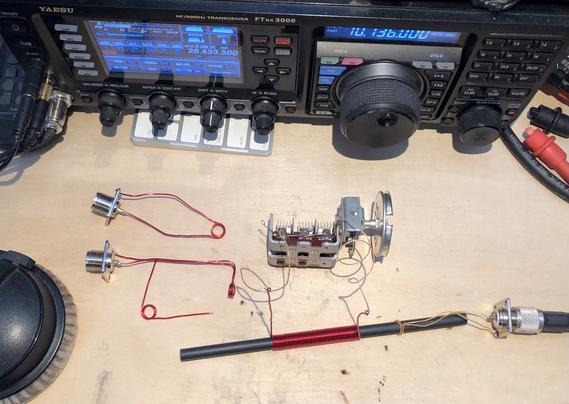
This is on 40m, but the ferrite antenna is for 160m. This was just to prove the script works. Building 40m ant now.
Left this running all day.
Could I make it gather more info? Sure. I could have it split the logs into two files, one for the "A" antenna, another for the "B" antenna, & use those to do all sorts of other analysis.
I just wanted to prove the concept of unattended long-time comparison.
 n0mql.com