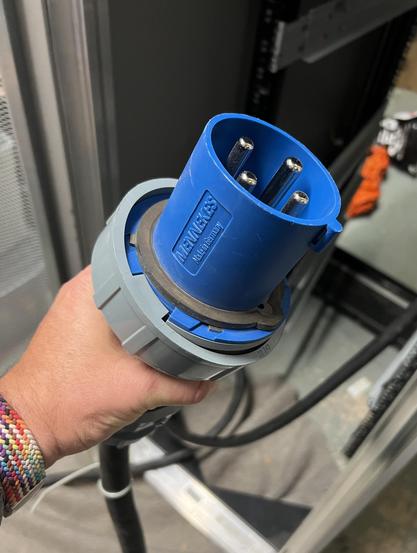
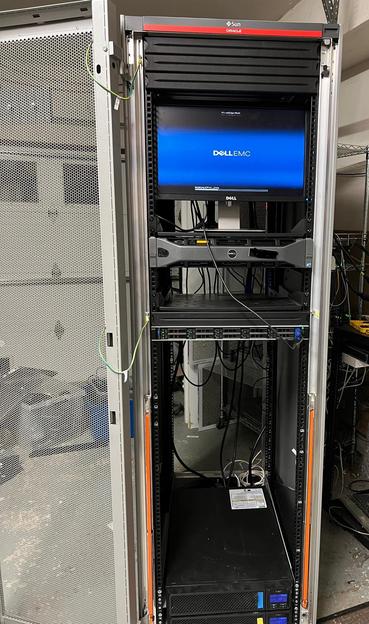
It’s coming together. I have 2 out of 6 racked. All the power is in the rack. Network and all the actual workloads are still on the bread rack behind and to the right. I will get these 2 servers online, move a bunch of workloads to them, and then I’ll be able to move more servers off the bread rack to the new rack.
I don’t see any way to redo the networking without some brief outages. I’ll have to disconnect the router, move it, and reconnect. A few minutes of disruption.
That’s going to be the hardest part: the main network wire runs through the whole basement and pops out in the garage and it’s basically at its limit. I have about 5-6 feet in the garage and that’s it. So when the main router finally moves to the rack, the rack has to be in its final location and then it can’t really move much.
Either that, or I just stick one of these RJ45 couplers on there and extend the line. I only have 200Mbit service, so I’m not worried about losing bandwidth to a coupler.
#homelab #selfhosting
 Paco Hope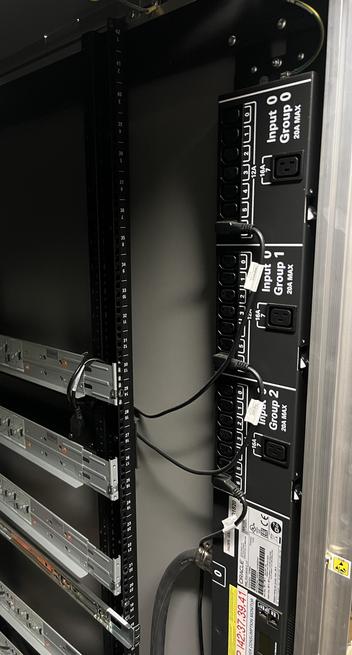

 skryking