On the 4th October, 1936, the British Union of Fascists had planned a march to the East End of London.

Despite the petition of East Londoners, with 100,000 signatures over two days, the Home Office declined to ban the march. Authorities refused to allow a counter-march by the Ex-Servicemen's Movement Against Fascism, because the fascists had organised their march first.

On the day, around 3,000 fascists turned up for the march, protected by more than double that number in police.

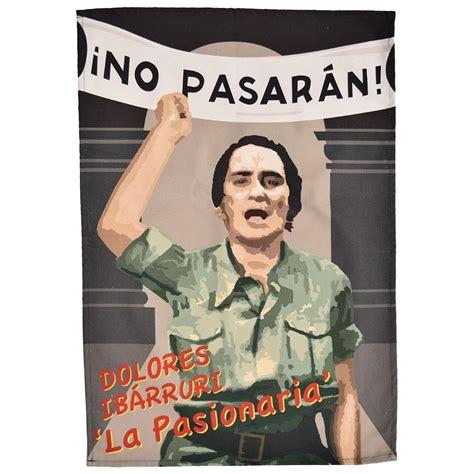
The fascists and police were resisted by over ONE HUNDRED THOUSAND anti-fascists who erected barricades, chanting "They Shall Not Pass". Police attempted to dismantle the barricades and clear a path for the fascists, and were pelted with rotten vegetables, and the contents of chamber-pots thrown from upstairs residents.

There's a damn good reason why fascism had a hard time establishing itself in the UK; I'm pretty sure it wasn't the government nor the police.


https://en.wikipedia.org/wiki/Battle_of_Cable_Street

#fascism #antifa

@pjf Thanks for sharing. This is the first time I hear about this. It makes me more hopeful for the future.
@afilina : I only learnt about it this morning in a book I've been reading!

@pjf @afilina I listened to a great episode of Origin Story on this subject some months ago.

https://podtail.com/en/podcast/origin-story/the-battle-of-cable-street/

The Battle of Cable Street – Origin Story – Podcast

The Battle of Cable Street on 4 October 1936 has been described as “the greatest anti-fascist victory on British soil”. It is certainly the most mythologised, most recently inspiring massi... – Listen to The Battle of Cable Street by Origin Story instantly on your tablet, phone or browser - no downloads needed.

Podtail
@pjf captured in song by the Young'uns.
@pjf I'm a huge Terry Pratchett fan, but not being from the UK, there's a bunch of historical references that often fly past me. His book "Night Watch" clearly lifts ideas from this event!
@mwop @pjf yes, this book is absolutely about resisting fascism even when your government and police officially support it, and the references to cable street are too obvious to miss once you know.
@pjf
And isn’t that a sad & enragening thing to say: “There's a damn good reason why fascism had a hard time establishing itself in the UK; I'm pretty sure it wasn't the government nor the police.” 😤
Thank goodness for ‘ordinary’ people… turns out they’re pretty extraordinary… just as in all the ‘ICE Boys’ counter-strategies we hear about - from frogs & dancing in FoxNews’ “war-torn Portland” to whistle-blast tactics in Chicago & Charlotte. Go you good people!! 😁
@Su_G @pjf As 20' year old Dutch lad I worked at King's Cross, Euston and few other stations in 1975/76.
With everything in mind we learned about WW2 from our parents and others. Plus movies and books. The so-called Free ´60' s still roaring around. Reality was different: Many managers, people who cherished the Bad Ones mentioned here. Wow ! After many years travelling through the UK: Still Good , Bad and Ugly. Don´t worry : It is the same in The Netherlands . ( Still love the UK though).

@pjf

Around that same time (1933) Churchill was PRAISING Mussolini! Damned straight that it wasn't the U.K. government fighting fascism; at that time they were leaning into it. And now again, in 2025....

@VulcanTourist @pjf

Fascism was widely supported in the British 'Establishment'. Mussolini was admired in the 20s, there was no intervention in Spain in the 30s. The fight against fascism was largely a post-war afterthought - at the time the motivation of Churchill etc was the prospect of Germany building a land empire that would challenge the economics of the British Empire.

@GeofCox @VulcanTourist @pjf

And meanwhile the people who did the bulk of the actual fighting were Communists, but it's like hardly anyone recalls that part.

@GeofCox @pjf

> the motivation of Churchill etc was the prospect of Germany building a land empire that would challenge the economics of the British Empire

And there it is....

Fascism was never beaten. It was just driven into the closet to plot its return with entirely new actors.

@pjf I first learned about this day from a song by a Northern British singing group called The Young'uns. Here's a link to the fabulous song that captures it.https://www.youtube.com/watch?v=jnMrHQHUa1Y&list=RDjnMrHQHUa1Y&start_radio=1
Cable Street

YouTube

@pjf The media didn't help, either.

And just because the BUF was banned in 1940, didn't mean that fascism was totally eradicated and won't come back.

@pjf so 9,000 fascists were marching just some of them were being paid for it
@pjf Good for them. Fascism should have no place in the this or any newer century. Can't stop the past, but the future should be fascist free.
@pjf This musical portrayed combined resistance from groups of jewish, Irish and communist #antifascists #SouthwarkPlayhouse
https://en.wikipedia.org/wiki/Cable_Street_(musical)
Cable Street (musical) - Wikipedia

@pjf on November 29th, next Saturday, the youth chapter of the german Nazi Party AfD will try to institute itself in the Town #Giessen. We will not let them pass. If you can, support @widersetzen and join us in blocking their location!
#nopasaran ✊🏴🚩

@pjf How can you mention the Battle of Cable Street without saying the word "Jewish" even once?

The East End was targetted by Mosley specifically because of its huge Jewish population.

The counter-mobilisation was organised jointly by local Jewish community organisations and the Communist Party (who were in many cases one and the same individuals).

And the thing that stopped the fascists wasn't just the fact that large numbers of organised anti-fascists turned up. It was that the entire community - men, women, children, the elderly, all overwhelmingly Jews - came out of their houses and stood on their own streets shoulder to shoulder to say They Shall Not Pass.

@losttourist @pjf the communist party originally organised a central London rally on the same day that would have drawn people away, it was only local CP activists that prevented this from happening. Joe Jacobs' account covers this.

https://libcom.org/article/battle-cable-st-1936-joe-jacobs

The Battle of Cable St, 1936 - Joe Jacobs

Joe Jacobs was in 1936 a local Communist Party activist in London's East End. This is his account of his involvement in the famous defence of the East End against an attempted march by Mosley's fascists.

libcom.org
@losttourist @pjf this was covered extensively in The Anti-Fascist Handbook by Mark Bray.

@losttourist @pjf

I'd like to recommend Arnold Wesker's trilogy of plays on this. The first, Chicken Soup With Barley, is set in a jewish, communist household during the siege of Cable Street. The other plays, Roots and I'm Talking About Jerusalem, explore the family's subsequent political experiences and issues - whether to go to Israel and join the kibbutz movement, remain political activists in London, move to a more personal alternative life in rural England - all the sorts of questions us lefties often ask ourselves.

The 'rural alternative' bit is actually set in the Cambridgeshire fens, where I grew up - this part is famously written in accurate fen dialect, so not easy - but it is inspirational, because it turns out those old communist ideas have percolated out to the children of the local farm workers...

@bookstodon #bookstodon #theatre

@pjf
Brilliant and relevent share, thank you. There is always hope.
@pjf See also postwar, the 43 Group https://en.wikipedia.org/wiki/43_Group and their fights against Mosely's Union Movement and the BUF https://en.wikipedia.org/wiki/43_Group#/media/File%3ARidley_Rd_2.jpg
43 Group - Wikipedia

@arclight If you've not read it, check out Maurice Beckman's book, "The 43 Group". @pjf
@pjf There’s a really cool mural of this 🔥
@pjf looks like I need to get some chamber pots.