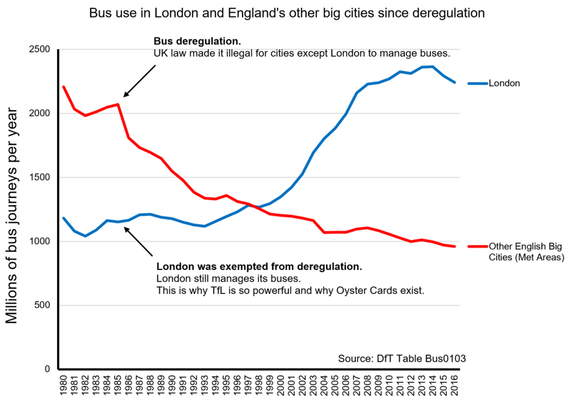
have them reliable and plentiful and people use them.
@pikesley @Thebratdragon @anon_opin Yes, I have considered it and agreed the heck out of it.
The real question is whether the companies running these routes have considered it. I doubt it.
@slowe @mike @pikesley @Thebratdragon @anon_opin Reading presents another exception, walk around the town centre and there are colourful town-owned buses everywhere, people using them too.
I'm sure the locals have their complaints, but it's about the one ‘deregulated’ place where buses still ‘work’ — specifically because the council worked against the ‘spirit’ of deregulation 🫣
(and whilst London retained powers over bus services, the buses were still, and are, privatised, unlike Reading)
@purple @slowe @pikesley @Thebratdragon @anon_opin That's brilliant!
Are they free in Reading, or just cheap?
@mike @slowe @pikesley @Thebratdragon @anon_opin I think the description would be ‘cheap-er’.
Certainly not free, but still, less than most places I think.
Really the key though is that the service is actually usable, naturally cheaper would be better, and then even more people would use it, but it goes to show people will pay when the service is frequent and varied enough to reliably get people where they need to be.
@mike @slowe @pikesley @Thebratdragon @anon_opin ah but see that's half the fun, frequent can lead to cheaper!
You both start to unlock economies of scale, reducing the running cost of the fleet itself, and increase overall utilisation, which reduces those costs per passenger.
More people paying fares means increase income as well, even with lowered fares.
15,000 trips at £1.50 produces more revenue than 10,000 at £2.10.
This is without even considering, shock horror, the idea of using public funds to support a public service.
Really the problem is having the initial rush of capital to get things started, private entities really have no incentive to do so and public ones, for one reason or another, largely can't.

@purple @slowe @pikesley @Thebratdragon @anon_opin Yes indeed. Once the ball starts rolling, virtuous circles are available. But in any given moment, when a council gets a 20% funding boost for public transport, say, it can EITHER run services 20% more often OR reduce fares by 20%. It can't do both.
One important question would be: which of these measures would most quickly lead to further revenue increase?