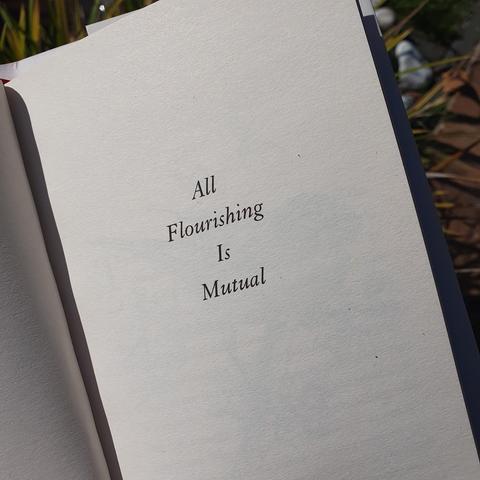
I made notes on Robin Wall Kimmerer's "The Serviceberry - An Economy of Gifts and Abundance", which was one of the first #books this year. But somehow never came around to make posts - perhaps because it did not feel right in the middle of winter.

Now, with the fall upon us, it seems the right time.

A biologist's and Native American's thoughts on economy - and alternatives and gifts. Hugely relevant but in a quiet way, one that makes you make small changes in everyday life.

1/7
#VicisBooks

Enumerating the gifts you've received creates a sense of abundance, the knowing that you already have what you need. Recognizing "enoughness" is a radical act in an economy that is always urging us to consume more.

-- Robin Wall Kimmerer "The Serviceberry"

2/7

Gratitude and reciprocity are the currency of a gift economy, and they have the remarkable property of multiplying with every exchange, their energy concentrating as they pass from hand to hand, a truly renewable resource.

-- Robin Wall Kimmerer "The Serviceberry"

3/7

When I speak about reciprocity as a relationship, let me be clear. I don't mean bilateral exchange in which an obligation is incurred, and can then be discharged with a reciprocal "payment". I mean keeping the gift in motion, in a way that is open and diffuse, so that the gift does not accumulate and stagnate, but keeps moving [...].

-- Robin Wall Kimmerer "The Serviceberry"

4/7

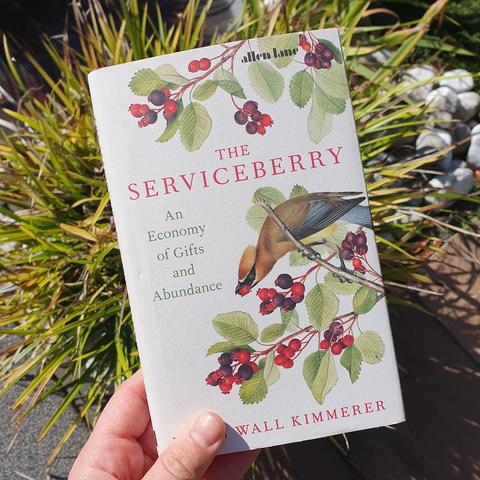
In a gift economy, wealth is understood as having enough to share, and the practice for dealing with abundance is to give it away: In fact, status is determined not by how much one accumulates, but by how much one gives away. The currency in a gift economy is relationship, which is expressed as gratitude, as interdependence and the ongoing cycles of reciprocity. [...] the economic unit is "we" rather than "I", as all flourishing is mutual.

-- Robin Wall Kimmerer "The Serviceberry"

5/7

@vicgrinberg @ShaulaEvans I'd never seen it put so well before, but it's interesting to note how many people (including me) want more than we currently have so that we can help others by giving them things, whether that be physical things like food or less tangible things like our time