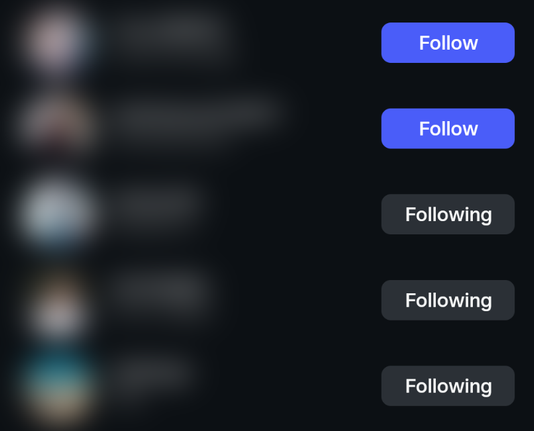
#a11y folks, what's your take on this UI pattern that's quite common on social platforms:

A button with a verb label (e.g. "Follow") that, after the button was pressed, changes to an adjective describing the status (e.g. "Following"), rather than being explicit about the action it'll perform when pressed again (e.g. "Unfollow").

Do you find this problematic in practice?
Context:
Normally, buttons should say what they'll do when you press them. Toggle buttons can instead have a pressed state (conveyed visually and via `aria-pressed`), but shouldn't change their label when pressed.

To me, the example above looks like a toggle button where the label _is_ changed when pressed – not to the inverse action, but to reflect the new state more explicitly. This leaves it to the user to infer that unpressing the button will "undo" that state.

I suppose the argument for this pattern could be that the changed label reinforces the "pressed" state, avoiding the confusion of there being a "Follow" button on an account you're already following.

Does this justify going against common best practice for labelling buttons? Does the pattern being so common make it more acceptable?

@diondiondion I'm not an expert, just a UI enthusiast, but now that you've pointed it out, I think changing the label to "unfollow" makes more sense. It's a different length than "follow" and so should be visually different enough to notice, especially in a list.

Ugh, I just got semantic satiation for "follow".