grobi
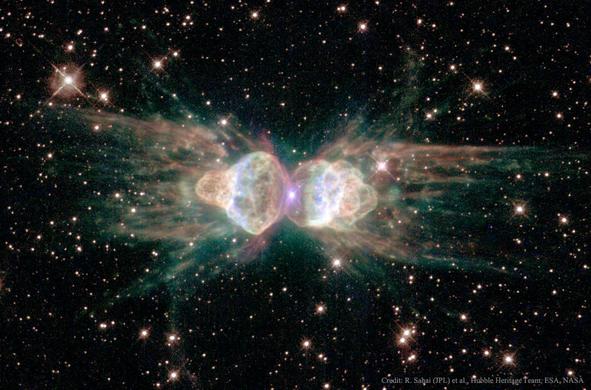
grobiSometimes the names of objects are deeply misleading. For example, starfish are not actually fish (they are echinoderms) and guinea pigs are not related to pigs in any way (they are rodents). Similarly, planetary nebulas have nothing to do with planets. They were misnamed when scientists looking through small telescopes in the 19th century thought that these objects looked like planets.
Today, astronomers know that a planetary nebula actually represents a phase that stars like our Sun experience after they use up much of their fuel. After cooling and expanding through a “red giant” phase when it begins to expel its outer layers, such a star leaves behind a type of dense and smaller star called a white dwarf. The previously jettisoned shells of gas remain for a relatively short time in cosmic terms — tens of thousands of years — before dissipating into space. Meanwhile they are illuminated and energized by the white dwarf at the center of the system. This will happen to our Sun, but not for another 5 billion years or so.
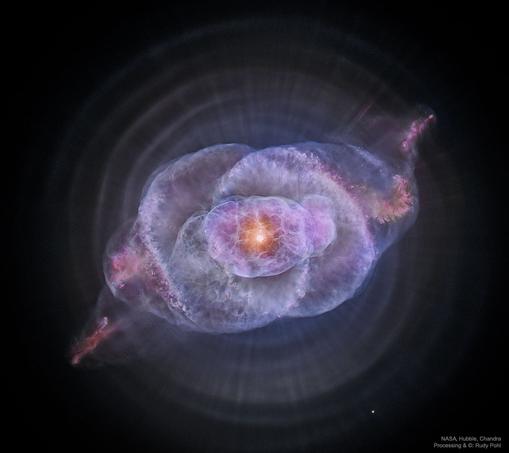
NASA’s Chandra X-ray Observatory contributes to the understanding of planetary nebulas by studying the hottest and most energetic processes still at work in these beautiful objects. X-ray data from Chandra reveal winds being driven away from the white dwarf so quickly (i.e., millions of miles per hour) that they create shock waves during collisions with slower-moving material previously ejected by the star. Chandra’s exceptional vision in X-rays contributes to the understanding of this brief, yet important, stage of stars’ lives.
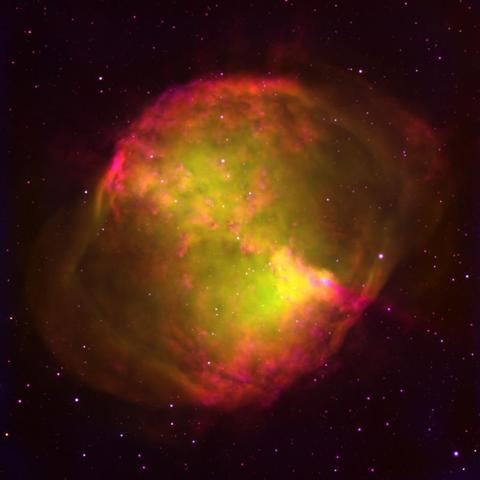
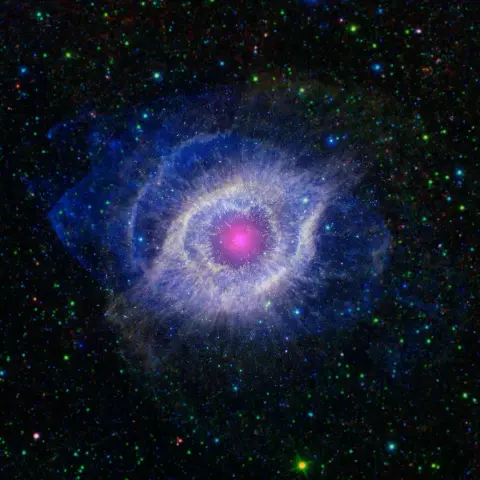
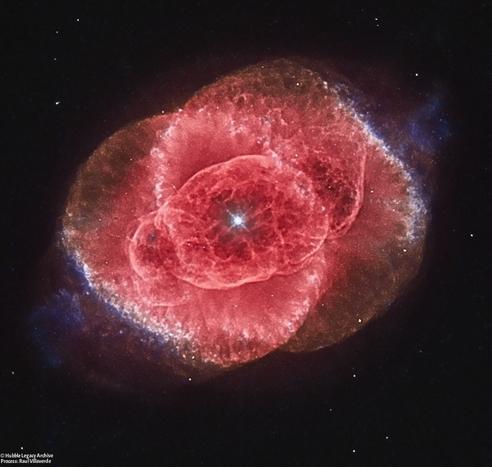
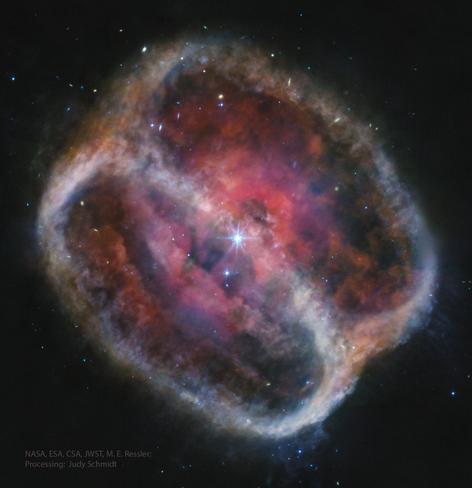
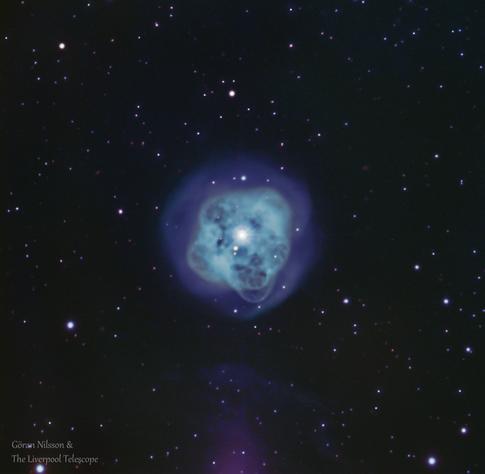
This gallery contains a half a dozen planetary nebulas that have been observed both by Chandra and NASA’s Hubble Space Telescope, with the latter detecting the delicate-looking structures of gas that have been expelled from the star. [...]
+ Read further in ALT-Text
https://chandra.harvard.edu/photo/2021/pne/
#space #nebula #astrophotography #photography #science #astronomy #physics #nature #NASA #ESA