We are nearing the end of the cold season here, so I have a better understanding of what it means to follow the sun’s schedule for my energy needs
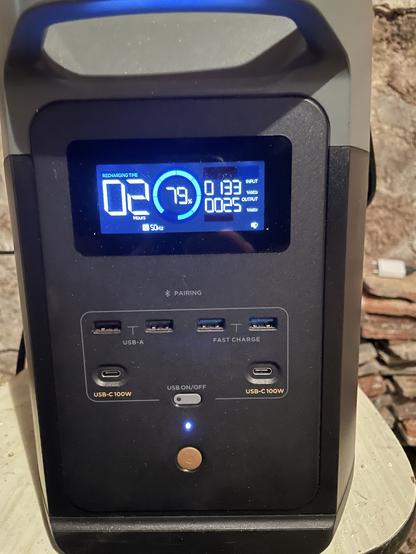
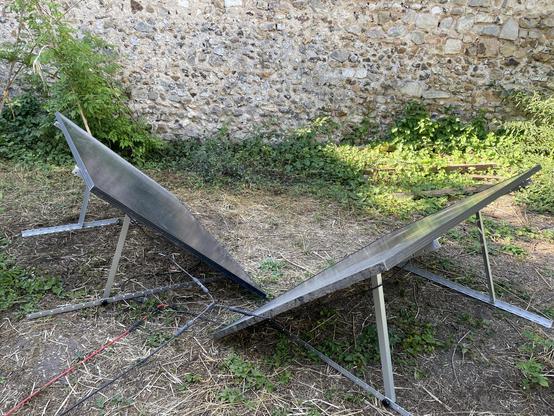
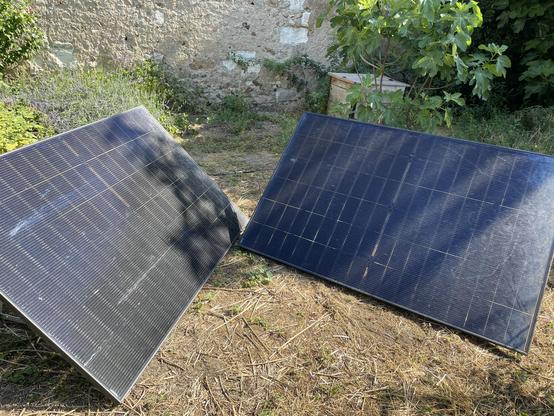
[Quick recap: I have two 450 W solar panels in the garden hooked up to a maybe 1 kWh battery, which lost some capacity from 2 kWh originally]
First, I don’t have much capacity or storage, and at the same time my heat pump draws a lot of power in this season. So the heat pump will be left out of this.
challenges of a grid
My understanding of the requirements of running a national power grid is limited.
I do understand that one of their challenges is to be able to absorb spikes, for example when everyone starts preparing lunch in the same general time bracket. They built systems to buffer some amount of excess energy while they spin up or down production, so they can adapt to an extent.
Predicting lunch break is an easy task. The amount of additional power that needs to be produced, not so easy to guess exactly, but doable.
Now if a lot of people started using their most powerful machines at home at the same time, that would be a problem for the grid because there isn’t a way to predict this at all.
There is also the issue that the grid has a maximum throughput capacity. If we started using all our equipment at once, then even with advance warning, the grid wouldn’t be able to accommodate the demand. The grid would have to stop powering certain things, possibly entire neighborhoods, just to stay online.
In fact there are talks and plans to enable the grid to shut down some home appliances remotely when the energy load is too high. Your dish washer can be paused to preserve the grid.
I accept that but I also think there is another way.
how a little home system can help
All I’ve been powering this winter with my solar panels were the work laptop + additional screen, plus my washing machine and vacuum cleaner.
The last two are the most power hungry machines in my home (except for the heat pump) and I’m happy that my little system can offset that, and reliably too.
how it’s been doing in the winter
My panels haven’t been absorbing nearly as much light as in the summer, due to lower orbit and nearby roofs. The days are much shorter.
In December I couldn’t often get the battery to even a full charge in one day, while in the summer, I could get at least three full charges every day.
More panels would have helped, and more battery too.
heating
The heat pump stays completely out of range of this kind of system. The order of magnitude is just too great.
I would need about 100 of the batteries that I have, just for one day of heating at 0°C outside temp. And of course the same for the panels, and aside for the cost, I just don’t have nearly the space for 200 solar panels.
And beyond that, I’d need storage for extended clouds cover.
So, just no.
financial considerations
The plug and play solutions like the EcoFlow that I have are much too expensive to be useful to the grid, in the way that they could be useful if priced differently.
I paid upwards of a thousand EUR for two panels and a battery that is already damaged one year in…
This won’t take off as a product. We’d need something that could conceivably be installed as cheaply as any appliance.
policy considerations
There is an opportunity here to avoid having to entertain telling people “we need to shut down your dishwasher and stuffs remotely this week”
A system like the one I’ve been using, but refined and optimized and with regulatory help, would be a much better solution
#solar #resilience #energy
 Guillaume Rossolini



 donburi
 Chewie