 Mickey7
Kid gave a reasonable answer without all the math bullshit
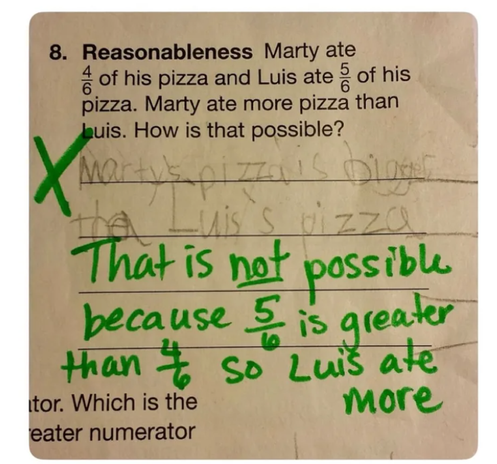
Kid gave a reasonable answer without all the math bullshit
In elementary school our teacher asked us to spell the current year with roman numerals, so I worked out “MCMXCVIII”, which I was quite proud of. Instead the teacher came back at me quite snarky and said it’s much easier to do “IIMM”, just substract 2 from 2000, duh!
It was only years later when I accidently learned that he was indeed full of shit and I was right all along.
it’s much easier to just substract 2 from 2000, “IIMM” duh!
For anyone wondering why this is wrong, there are two reasons:
The roman numeral system only traditionally contains subtractions from the next higher five- and tenfold symbol. So you can subtract I from V and X, X from L and C, C from D and M
The subtractions only generally allowed one symbol to be subtracted, with a few notable exceptions like XIIX for 18 and XXIIX for 28
Holy shit this is dope!
But how did historians come up with the conclusion that, in the case of XIIX, the Romans substracted from the second X, and didn’t just write 12+10?
Not arguing, just extremely curious
The general rule is that the larger symbols come first in Roman numerals, so 12+10 (22) would be written as 10+10+1+1 or XXII.
If you literally meant the arithmetic 12+10, I’d assume they used some symbol for addition, so it would be written as XII+X, but I can’t say for sure.
 Karyoplasma