 Emily Velasco
Hmm
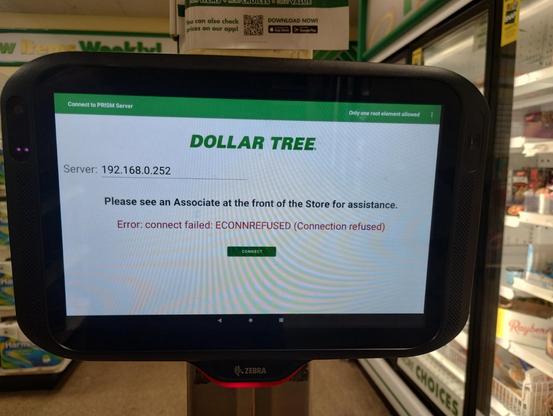
@RueNahcMohr @esnyder @MLE_online I wouldn't have hesitated to use zero. Can you elaborate on what cases cause what issues? I refuse to believe you're just trolling us!?! :-)
I imagine you mean that there are some poorly defined gui interfaces that don't allow it or something like that, and you'd rather not run into those types of bugs?
I'm not, but I can't recall all the details.
One of them has to do with VLSM a network. The other has to do with a router-behind-a-router and equipment that cant tell its local interface from a hole in the ground.
There has been lots of frustration, solved by not using 192.168.0.x
@peaceman @esnyder @RueNahcMohr @MLE_online "likely to collide": I think that's the gist of it. Probably all the trouble is due to configuration mistakes. But if you avoid 0 you avoid seeing any symptoms because you're less "likely to collide."
So in the sunny day case 0 is fine, but we never use 0 because we plan for the worst.
Or more poetically:
If there is a configuration mistake in the forest, but you don't have zero in the third octet, then you won't get hit by the falling tree. :-)
@woody @RueNahcMohr @MLE_online A very common subnet found on home routers is 10.0.0.0/24. It's normally not good to have zero for the last octet, but it's still valid if 0 is not the start of the subnetted range of IPs.
For instance, 192.168.100.0/23 would allow for 192.168.101.0.
@qlp @woody @RueNahcMohr @MLE_online
Where not to put zero.
W.X.Y.Z
W: Definitely not !
X: Go ahead
Y: Very valid
Z: You shouldn't but it works, mostly.
Btw, classful IP addressing is SOOO from the '80s.
@ache The one time where being classless has benefits, and it might involve some slashing 🙃
@RueNahcMohr Yep, I know it well. It was something that I helped a few friends and co-workers who were interested in taking their CCNA exams back when I was a network engineer (before moving into storage, virtualization and datacenter fun).
@woody @RueNahcMohr @MLE_online
I am aware of at least one production router that I used to oversee that has the last two dotted quads of its v4 loopback as "0.0"
 Rue Mohr
 poleguy looking for lost tools
 Emile Snyder
 Friedemann Wachsmuth
 Bill Woodcock
 Linh Pham
 ache
ache Stormgren
 anotherandrew