I have this odd kind of admiration for the truly terrible invasive species. "Invasives" turn all of the things that make human activities hostile to nature into their advantages. There is something delightfully subversive about it.

Although, I still study them in hopes of protecting the wild diversity that they can destroy. When you dig into some of the things they have done to be successful a little awe is only natural.
A fact that isn't directly related, but that I think about often is how people who are *serious* about growing orchids use foam as substrate. Orchids are hard to raise from seed. The seeds are tiny and the operation is more like chemistry than gardening. Of course, at first, everyone always used cork bark to germinate: that is what they grow on in the wild.

But someone figured out that styrofoam peanuts work better. That's how most are started. They add the moss later for cosmetics.

It's amusing to me that literal "hot house orchids" rejected the cork and thrive on a junk material that causes all kinds of problems (like micro plastics in the ocean.)

They don't "eat" the styrofoam, sadly, just use it to anchor their roots, and it provides the right balence of moisture for many hard to grow species.

Orchids are very strange plants. They also break a lot of rules.

Orchid fans will often lament this. As, if you have been trying to grow some tricky miniture orchid for years, finding out that you can do it, but it's gotta be sitting on a pink foam peanut is ... kind of disappointing.

It's not as romantic as having it on a little slab of cork.

But sourcing cork at least expensive.* And you can find the peanuts in the trash.

*I think my previous comment about it not being sustainable wasn't correct.

@futurebird I was reading “orchids” as “orchids“ in this thread and finally realized my mistake in this post. For a good time go back to the beginning of this thread and read it making my mistake.
@futurebird had a friend growing up whose mom grew and crossed orchids, like 3 huge greenhouses worth.. complete w/ biolab full of petri dishes and jars. Looks like mycelium until you realize it's roots

@chremylus

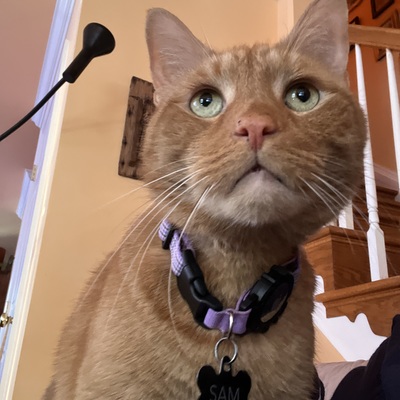
It's a whole rabbit-hole. I thank my cat, Pica for getting me on to other hobbies. But... yeah there is something about tiny baby orchids and getting them to take that's intoxicating.

Pica thought so too. She ate my bulbophyllums!!

@futurebird she had a great thing going, staggered blooms swapped out w/ some local restaurants to pay for it all
@futurebird I agree, Brown Marmorated stinkbugs and asiatic bittersweet are awful, but one has to admire their tenacity

@trevorthetuba

I kind of hope if I can really understand them I might stand a better chance of finding a way to ... negotiate a truce.

@futurebird I root for wild horses because horses evolved in the Americas - I think they belong here.
@futurebird Most of them will be the root families to re-diversify after this mass extinction.

@futurebird

I'm currently listening to an audio version of *The Voyage of the Beagle*, which refers many times to attempts, successful and unsuccessful to introduce European organisms to other places.

The invasive, the strugglers, and the failures.

And also thinking of the "refugees", forced from their traditional habitats by anthropogenic climate change.

@futurebird I feel the same. Invasive species often are able to be invasive because they can live in human-disturbed environments that are difficult or impossible for many former native species. (The podcast Herp Highlights covers this frequently, because it's often difficult to get research money for (non-bird) reptiles and amphibians that aren't invasives. Similarly, the podcast arthro-pod covers invasives because the same applies to insects. )

@llewelly

It rankles me that research money for arthropods is only focused on getting rid of them so much of the time. But, I still like the research, often the things learned apply more widely.

@futurebird
there's a similar issue in invertebrate (and also conodont) paleontology; much of the support for it is connected, in one degree or another, to its usefulness in biostratigraphy, and in turn, biostratigraphy's use in mining, especially fossil fuels.

@futurebird
There's a book that touches on this: "Darwin Comes to Town: How the Urban Jungle Drives Evolution".

It advocates the idea of cities being new ecosystems, where cosmopolitan life forms make a home. Because a city while hostile to nature in some ways can also be a great host to it.