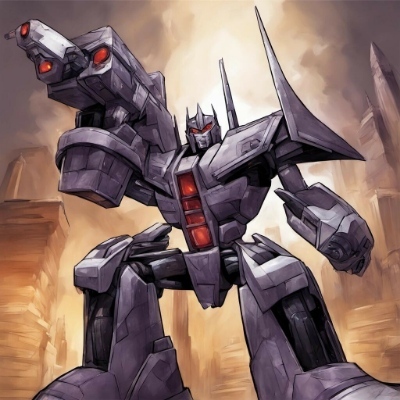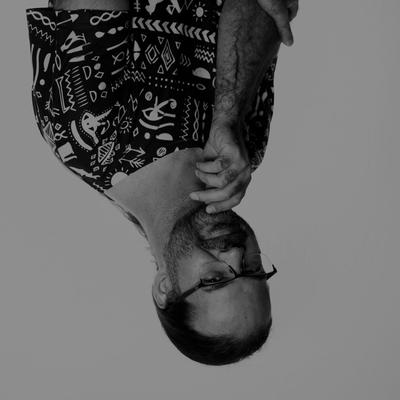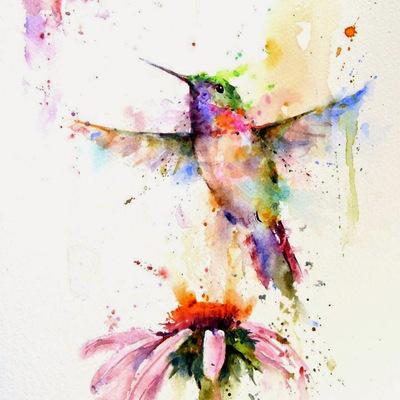
#genuary2025 #genuary10
Day 10: "only use TAU in your code"
I cheated by deriving other numbers, like int(TAU) = 6, int(sqrt(TAU)) = 2, etc.
@ylegall
Why "cheating"? As a physics teacher, I call it "estimating".

@knodel @ylegall
Every number can be defined in terms of the empty set.

All mathematics is "cheating"

https://youtu.be/dKtsjQtigag

What IS a Number? As Explained by a Mathematician

YouTube
@ylegall So there's pixel graphics, vector graphics, and now... wave graphics?
@harmone @ylegall Is it a wave? Or is it a pixel.... No, it's both at the same time. 🤯
@ylegall that's the most beautiful thing I ever laid my feeble eyes upon!
@ylegall wow. And now I wanna hear what this sounds like
@ylegall using python ?
@Devin11 I used houdini and vex (built in c-like language).
@ylegall the shadow achieves a mirror effect seemingly as it passes the front. So good
@ylegall This looks a LOT better than my rudimentary "sinusoidal Mario". 😃
Do you have a legible code I can take a peek at for inspiration?
@j_bertolotti looks like in your gif the image value only affects the amplitude of the wave? I think the only difference is my version affects the frequency.
@ylegall I tried both, but couldn't come up with a simple formula where the frequency was position-dependent, the line was nice (continuous and infinitely differentiable) and didn't take forever to compute 😉
@j_bertolotti one thing I did to avoid discontinuities: for each point on each horizontal line, calculate the cumulative lightness value going from left to right. Then use this (times some factor) to drive the wave.
@ylegall Well, Ï„/Ï„ is 1, so Ï„/Ï„+Ï„/Ï„ is 2, and so on... (and Ï„-Ï„ is 0).
@ylegall Very clever and very impressive! Well done!
@ylegall Try blurring your eyes, it becomes much more clear what is going on
@ylegall oh holy shit this is an amazing rendering idea