Okay. Please help me as I ask COMPUTER BABBY QUESTIONS.

I have a Thinkpad T14 Gen 3 (AMD).
It has a 256 GB HD. That's too small. I want to buy a new, bigger one. I have a sense the good hard drives these days are "M.2".

Lenovo's specs page

https://www.lenovo.com/ca/en/p/laptops/thinkpad/thinkpadt/thinkpad-t14-gen-3-(14-inch-amd)/len101t0013

doesn't say anything about "M.2". It says the hd is "PCIe".

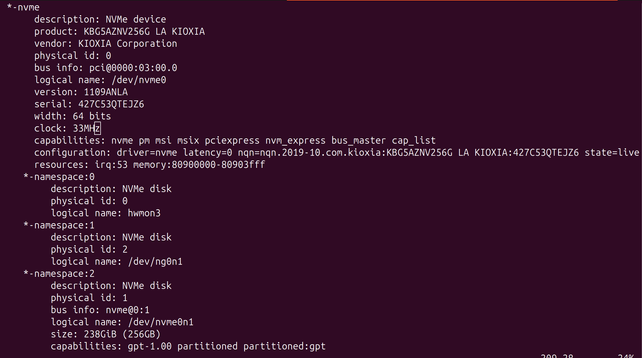
I run "lshw" to see what's on the computer. It says "NVMe".

How do I find out the bestest fastest aftermarket drive Canada Computers carries that my computer will support

I only understand computation as the MANIPULATION OF ABSTRACT PLATONIC FORMS. I do not understand this realm where computers are "physical objects" you manipulate with "screwdrivers". I would prefer to use Math to translate my thoughts directly into action, as if I am casting magic spells
Okay thank you all for explaining. I have one more question: Is there actually, like, a difference between drive vendors. Like if I pick WD vs Samsung vs Lexar (vs… "crucial"?!) will it ever make any difference
@mcc you'll probably be fine with the big name brands, samsung, wd. You can get into differences around the controller and all stuff like that, but outside of the difference between slc/mlc/tlc/qlc it'll probably be the same.
@mcc to clarify, sorry, the difference between slc and qlc mainly being speed and longevity, with qlc beeing cheapest, most dense, quickest to die, slc being most expensive, least dense, longest laating
@violator @mcc It’s worth noting that SSD lifespan hasn’t really been a concern since 2005 or so. You can make drives fail in synthetic testing, but even there, they generally last >20x their rated endurance. Outside of synthetic testing, drives basically never fail due to wear.
@bob_zim @violator I do, um. A LOT of Rust clean builds

@mcc @violator That won’t be a problem on any M.2 SSD. The kind of synthetic testing I’m talking about is filling up the drive and erasing it as quickly as you can, continually, for a year or more.

I write around 150 GB per week to my VM host (rebuilding VMs, mostly) and its drives haven’t spared any pages since the first month I had them. It’s been years.