Surprise Solar Boom in #Pakistan Helps Millions, But Harms Grid

"For corn grower, Mohammad Murtaza, installing panels has enabled him to slash his power bill by switching irrigation pumps from diesel or pricey electricity from the grid. Farmers like him are the latest to join the #solar craze, following households and factories, in a country where power prices for some have tripled since 2021 as the government cut subsidies to meet IMF loan requirements."

https://www.bloomberg.com/news/articles/2024-11-22/surprise-solar-boom-in-pakistan-helps-millions-but-harms-grid

Surprise Solar Boom in Pakistan Helps Millions, But Harms Grid

There’s a shiny new addition to Pakistan’s dusty agricultural heartland: rows upon rows of solar panels.

Bloomberg

What happened:
In 2021, Pakistan needed a loan.
The IMF offered a loan, but - as with many IMF loans - it came with strings attached.

"Pakistan and the IMF have agreed to restore energy sector viability as part of the bailout program, which includes cost cuts and privatization of state-owned power distribution companies."

And subsidies had to be done away with.

Predictably, electricity prices rose steeply. People started turning to solar PV.

https://www.bloomberg.com/news/articles/2024-08-13/it-can-cost-more-to-power-a-house-than-rent-it-in-pakistan

Rising Pakistan Electricity Prices Mean Powering House Can Cost More Than Rent

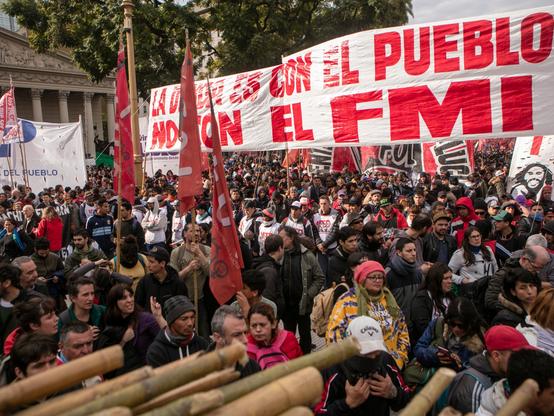
Electricity bills have outpaced home rental rates for some people in Pakistan, as tariff increases and other reforms to comply with IMF loan conditions spark nationwide protests.

Bloomberg

Now, there is so much solar in #Pakistan, and such a wholesale abandonment of the expensive grid, that there's talk of “risk of a utility death spiral.”

“Pakistan’s [now privatised] distribution companies are losing every day as solar becomes attractive.”

But.
"The IMF has said retaining demand should be a key objective of reforms."

Seems to be the terms and conditions of the IMF loan was responsible for this "crisis".

https://www.bloomberg.com/news/articles/2024-11-22/surprise-solar-boom-in-pakistan-helps-millions-but-harms-grid

Surprise Solar Boom in Pakistan Helps Millions, But Harms Grid

There’s a shiny new addition to Pakistan’s dusty agricultural heartland: rows upon rows of solar panels.

Bloomberg

The world should be happy that Pakistan has engaged in a transition to #CleanEnergy (almost entirely without subsidies, it should be added).

This is the much vaunted free market at work, man.

But now the privatised grid companies are wringing their hands and it would surprise no one if the IMF imposes further terms and conditions that are unlikely to benefit Pakistan. Think energy austerity.

Hypocrites.

https://www.bloomberg.com/news/articles/2024-11-22/surprise-solar-boom-in-pakistan-helps-millions-but-harms-grid

Surprise Solar Boom in Pakistan Helps Millions, But Harms Grid

There’s a shiny new addition to Pakistan’s dusty agricultural heartland: rows upon rows of solar panels.

Bloomberg

@urlyman pointed me to this podcast with Fadhel Kaboub that starts with:

“If you divide the world into rich and poor countries – global north and global south – and you net out *all* the global financial transactions – meaning you include exports, imports, interest payments, debt payments, charity, foreign direct investment, including illicit transactions – you find that the global north takes $2 trillion a year from the global south.”

$2 tn a year.

https://www.planetcritical.com/p/decolonise-to-decarbonise-fadhel

Decolonise to Decarbonise | Fadhel Kaboub

The Economics of Modern Colonialism

Planet: Critical

"Economists Samir Amin and Arghiri Emmanuel described this as a “hidden transfer of value” from the South, which sustains high levels of income and consumption in the North. The drain takes place subtly and almost invisibly, without the overt violence of colonial occupation and therefore without provoking protest and moral outrage.

Today, the global North drains from the South commodities worth $2.2 trillion per year, in Northern prices."

https://www.aljazeera.com/opinions/2021/5/6/rich-countries-drained-152tn-from-the-global-south-since-1960

Rich countries drained $152tn from the global South since 1960

Imperialism never ended, it just changed form.

Al Jazeera

If you include the value of
"12 billion tons of embodied raw material equivalents, 822 million hectares of embodied land, 21 exajoules of embodied energy, and 188 million person-years of embodied labour, [the transfer is] worth $10.8 trillion in Northern prices."
That's for 2015 alone.

https://www.sciencedirect.com/science/article/pii/S095937802200005X

Imperialist appropriation in the world economy: Drain from the global South through unequal exchange, 1990–2015

Unequal exchange theory posits that economic growth in the “advanced economies” of the global North relies on a large net appropriation of resources a…

@CelloMomOnCars I tend to think of these numbers – $2.2 or $10.8 trillion? – as heuristics.

As in, we can never know what the ‘true’ figure is, but we know it’s terribly unjust and utterly unsustainable.

In the same way as we can see from the geological record that the last time that CO2 concentrations were as high as they now are, sea level was 9 metres higher.

We don’t know when or how things will break badly but we know that they’re gonna