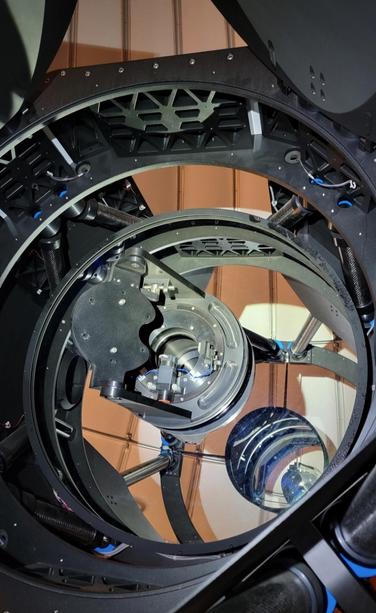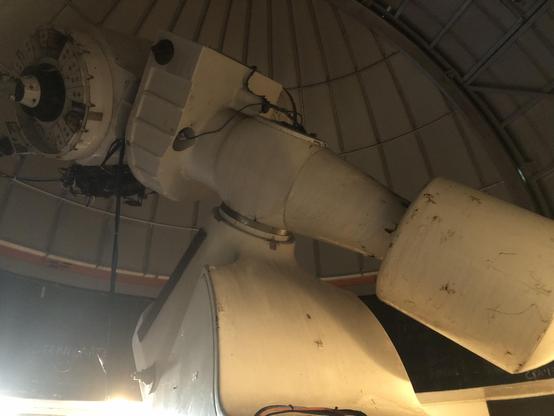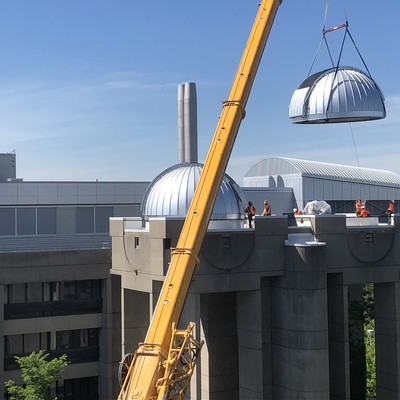
Not so long ago our uni decided to build a football stadium right next to the observatory (insane, I know!)... but it turns out the light pollution is only one of the many dangers. A few nights ago with no warning they set off a *huge* smoke bomb. We were observing with both telescopes at the time.

If you didn't just gasp in horror, let me tell you about smoke and optical surfaces, it's bad #Astrodon #Astronomy #optics #telescopes #observatory #yorkuniversity #smoke #observer #science
1/
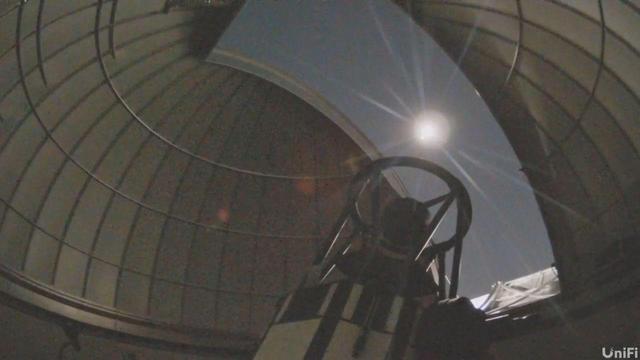
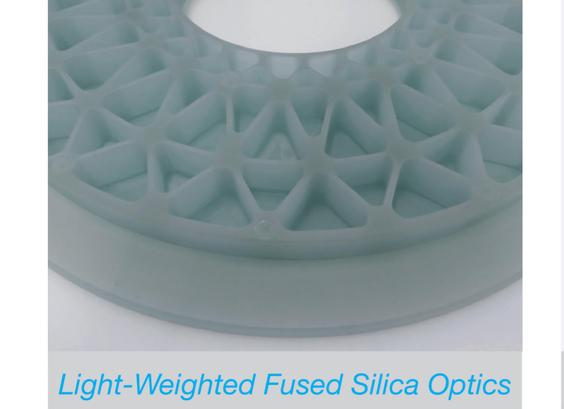
Optical surfaces, especially in telescopes, tend to be made of layers. Most commonly you will have a base layer that is optical glass, or, glass with hollow regions (like a honeycomb) to reduce weight. For a mirror like our 1m, you need the surface to be very precisely the right shape to reflect the light correctly to make lovely images.

Once a reflective coating is applied, it is usually very thin and even to keep the shape precise. However, anything very thin is very fragile 2/?

This is what our 1m mirror has as its 'honeycomb' structure to help reduce weight (image credit: Planewave Associates) 3/?
For optical coatings, to make your mirror as accurate as possible both cohesion and adhesion are very important. Here is our 1m mirror, the high performance coatings included a special overcoat which allows for cleaning with deionized water... unless, unless there are smoke particles 4/?
Smoke can turn into an acid-like liquid if not correctly removed. The trick is (generally) to remove the particles while dry and only then clean. For those interested (or with fancy coatings on their glasses), canned and not compressed air is a great starter. Optical quality camel-haired brushes can also sometimes be used. Once it's been removed then the usual distilled water and optical cloths are on the menu... but only for telescopes with an overcoat 5/?
If your telescope is an older model like our 60cm (below) it will likely be missing the overcoat layers. The mirror is solid glass (very heavy) and the coating is just carefully sprayed aluminum in a vacuum chamber, and ours doesn't have the robust protective overcoat of our 1m. If you have a mirror like this, it's time to take it out and get it recoated. Canned air is reasonably safe but everything else I mentioned doesn't apply here! 6/?
I hope this thread gets around and can serve as a handy reminder that smoke =/= dust when it comes to optics. Be nice and don't set off smoke bombs or campfires anywhere near telescopes. /end