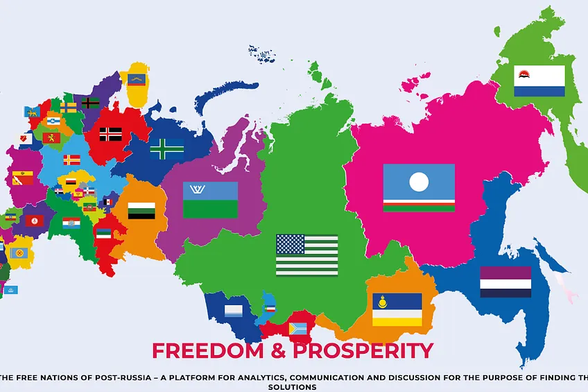
Nowadays, #Russia consists of 21 national republics and almost 200 ethnic groups, each with its own distinct cultures. The majority of these populations have been subject to attempts to systematically assimilate them. Independent movements are suppressed before they can gain momentum.
Many #Ukrainians – and independence activists fighting for freedom – believe that the #Russian empire will continue its violent expansionism unless it breaks up into its component national parts, when all its cultures and peoples are given self-determination.
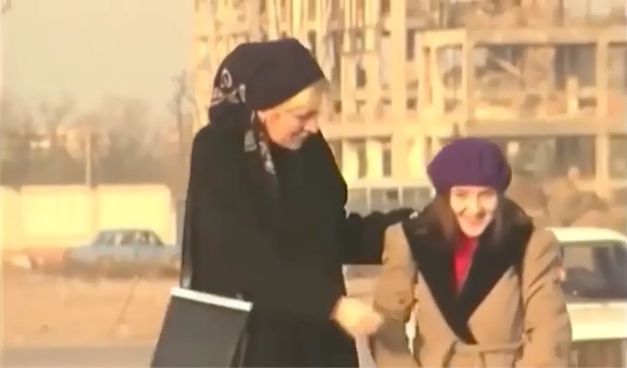
The Chechens became the first victims of Russia’s imperial violence in the history of modern #Russia. Few understand this better than Aset Sabb, whose people have struggled for freedom from Russia for generations.
She was just three years old in 1994 when Russian forces invaded her homeland, the Chechen Republic of Ichkeria. At the time, the Chechens tried to declare independence after the collapse of the #Soviet Union. But #Russia refused to grant it.
The newly-proclaimed republic soon found itself under an economic and transportation blockade since #Moscow did not want to lose power over Ichkeria (commonly known as Chechnya, but this name is used by the #Russians to cement its status as part of the Russian Federation).
Unlike other former empires, #Russia has failed to decolonize. It is still a classic empire, continuing the extraction of resources to finance the conquest of new lands.
The Russian empire is made up of many nations, forced under authoritarianism to exist under a single state. Some Ukrainians believe Ukraine won't be safe until Russia's empire is broken apart.