h/t to @PaulHammond51 & Mars Guy for referring to the recent "10th International Conference on Mars" in the Cheyava Falls video. Only news or pointer I've seen to it.

The summary papers & posters are a treasure trove of upcoming research or incremental studies since LPSC

🧵 1/N

https://www.hou.usra.edu/meetings/tenthmars2024/technical_program/

Tenth International Conference on Mars - July 22–25, 2024

The Tenth International Conference on Mars is a large, 500–600-person gathering of Mars scientists from a range of disciplines, institutions, and countries.
The Tenth International Conference on Mars is a large, 500–600-person gathering of Mars scientists from a range of disciplines, institutions, and countries.
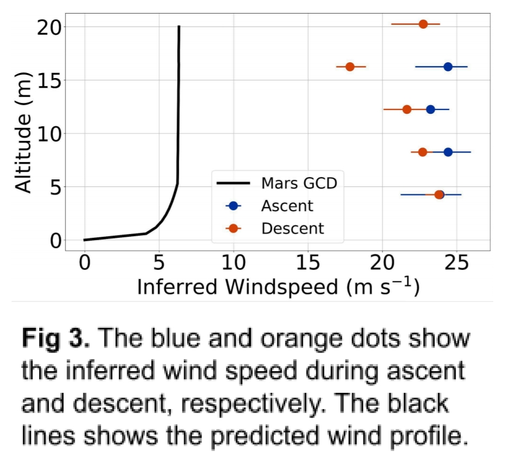
Using #MarsIngenuityHelicopter as a weather vane 😀 Preliminary analysis of telemetry to estimate wind speed & direction. Surprisingly strong winds detected!

Jackson & Brown: Estimating Near-Surface Martian Winds Using the Ingenuity Helicopter's Attitude
https://www.hou.usra.edu/meetings/tenthmars2024/pdf/3346.pdf

"Tilting in the breeze Ginny groks the martian winds Surprisingly strong."

🧵 2/N

Iteration/compilation of conclusions from earlier papers from this team.

Mangold et al: "Constraints on Jezero Paleolake History from Its Fluvial Input"
https://www.hou.usra.edu/meetings/tenthmars2024/pdf/3079.pdf
"A high variability in fluvial deposits is observed on Jezero delta front and top, which reflect variable fluvial regimes associated to Jezero lake level fluctuations in a closed basin."

#JezeroDeltaScience 🧵 3/N

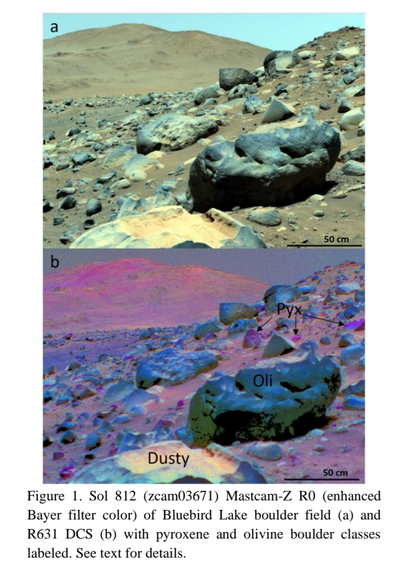
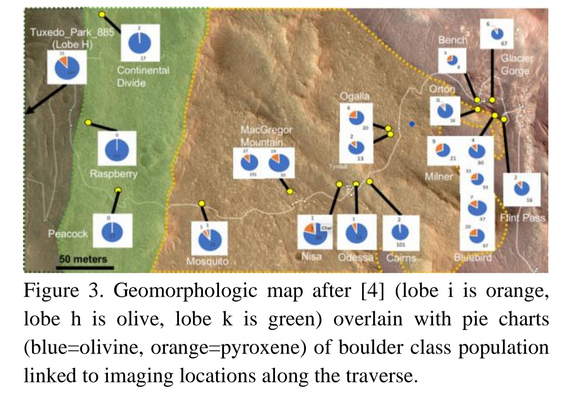
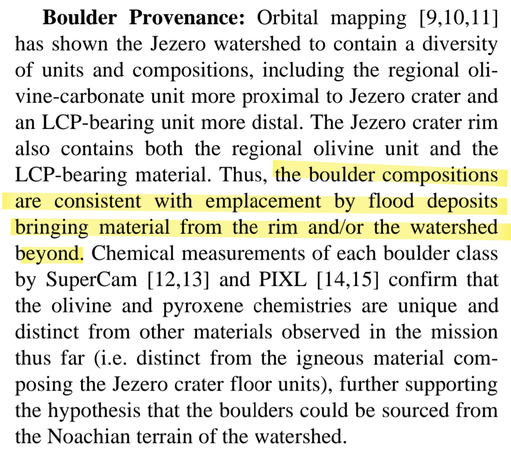
A new iteration of analysis of Margin Unit boulders, this time with MastCam (compare to this earlier one with SuperCam https://mastodon.social/@sharponlooker/111870338355722359 ). Boulders "confirmed" to be coming from floods and differ from Séítah.

Vaughan et al : "Investigating the Blocky Unit Boulders of the Western Jezero Fan Top Using Mastcam-Z"
https://www.hou.usra.edu/meetings/tenthmars2024/pdf/3328.pdf

🧵 4/N #JezeroDeltaScience

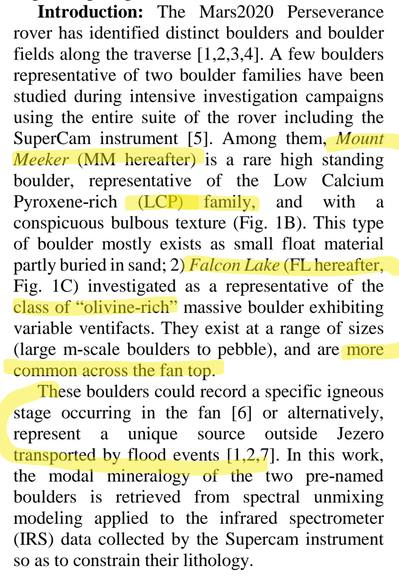
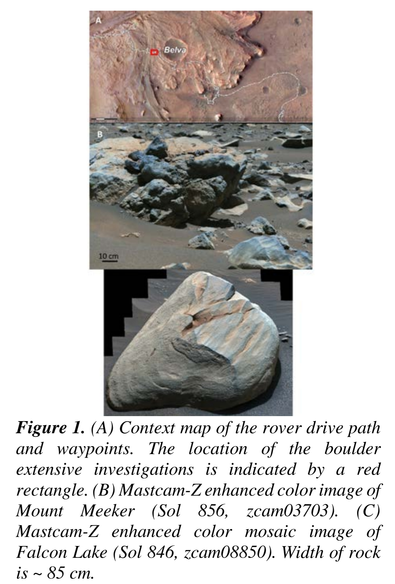
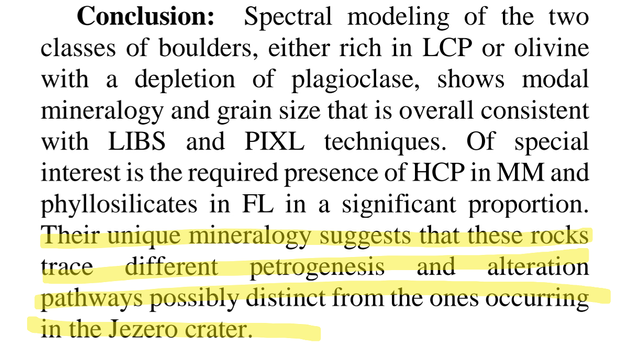
More boulder-family work on 2 representative targets.

Poulet et al : "Investigating the Modal Mineralogy of Olivine- and LCP-Rich Boulders Identified in Jezero Crater"
https://www.hou.usra.edu/meetings/tenthmars2024/pdf/3107.pdf

🧵 5/N

#JezeroDeltaScience

Paul Hammond (@[email protected])

Video of Ken Farley's talk at the 10th International Mars Conference discussing Mars sample return and the samples collected to date, including “Cheyava Falls”. Ken is the project scientist for NASA’s Perseverance Mars rover mission. https://www.youtube.com/watch?v=61phIWESjis #Solarocks #Space #Mars #Rover #Perserverance #MarsSampleReturn #Science

Fosstodon

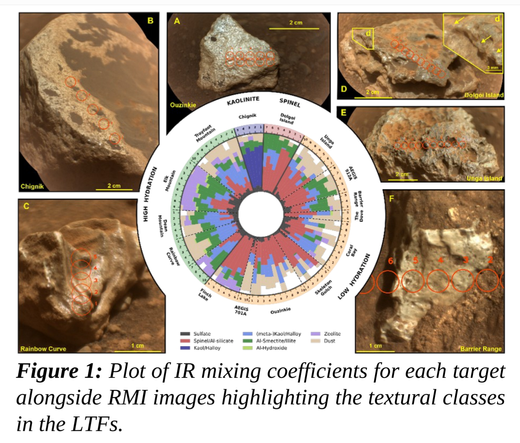
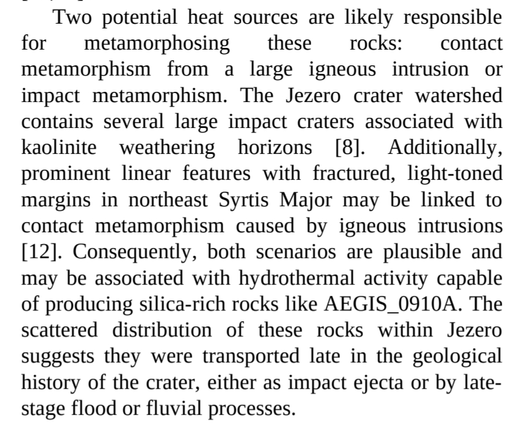
Revisiting my backlog of this conference: a paper on bright floating rocks that don't look too dissimilar to what the rover is currently finding on the rim

Royer et al : "Heavily Altered Aluminum-Rich Light-Toned Float Rocks in Jezero Crater"
https://www.hou.usra.edu/meetings/tenthmars2024/pdf/3258.pdf

🧵 7/N

#JezeroDeltaScience #JezeroBrightRocks

[EDIT]: final paper at https://www.nature.com/articles/s43247-024-01837-2

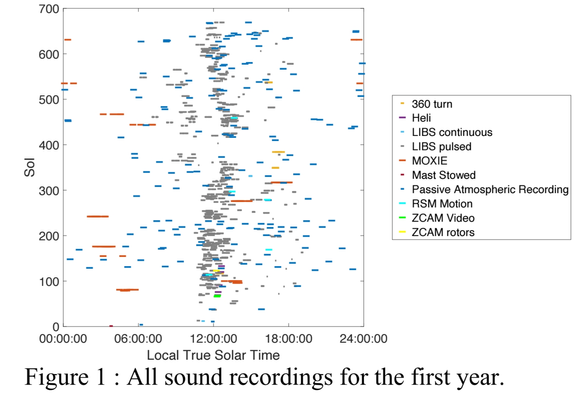
Sounds from Mars, Supercam mic recordings available at
https://pds-geosciences.wustl.edu/missions/mars2020/supercam.htm

Mimoun et al : "A preliminary catalogue of Martian sounds"
https://www.hou.usra.edu/meetings/tenthmars2024/pdf/3071.pdf

🧵 8/N

Mars 2020 SuperCam Archive

This site provides planetary science data, tools, and documentation from the PDS Geosciences Node.

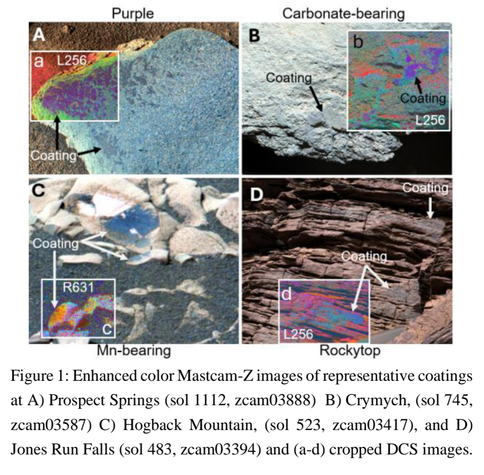
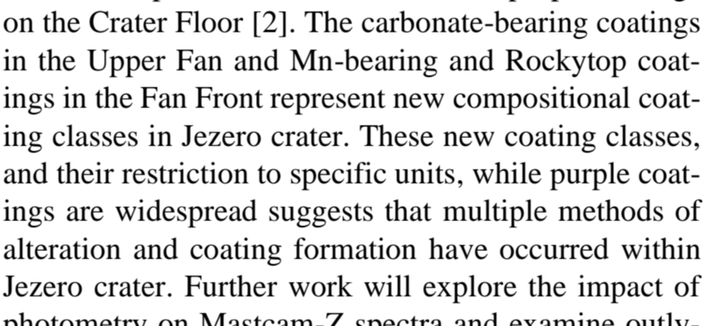
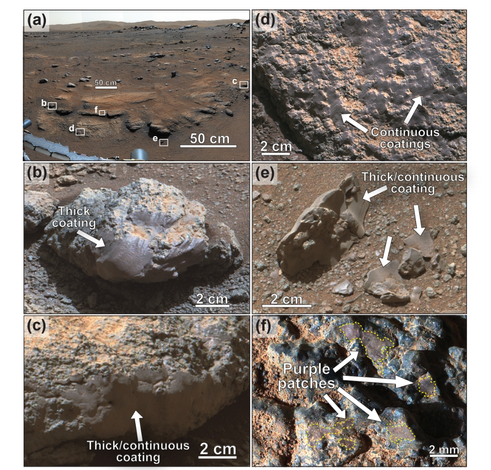
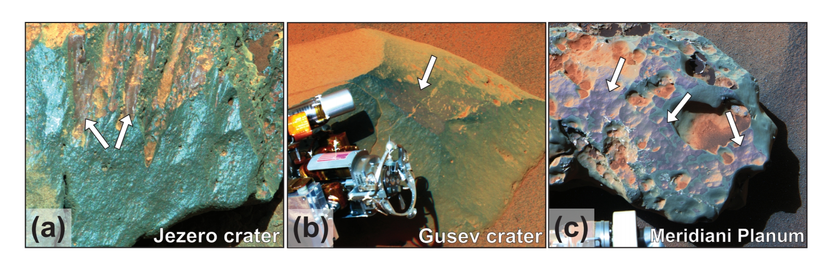
Coating talk at last! "Plaster" gets its own category (Rockytop) and along with the Mn-bearing, is interpreted more as an infill, instead of airfall dust (purple aka "varnish")

Theuer et al : "Characterization of Rock Coatings in the Fan Front, Upper Fan, and Margin Units Using Mastcam-Z Data"
https://www.hou.usra.edu/meetings/tenthmars2024/pdf/3481.pdf

🧵 9/N

#JezeroDeltaScience #JezeroPlaster

The paper above refs (2) a submitted one. Turns out it's still a preprint, waiting for peer review since 2023. I found the manuscript by chance while reading others, it's a whopping 500MB in that format!

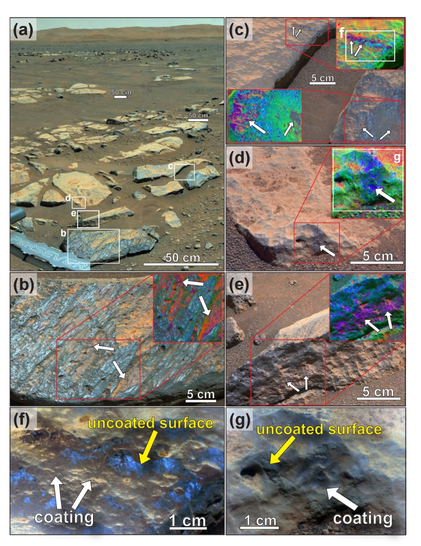
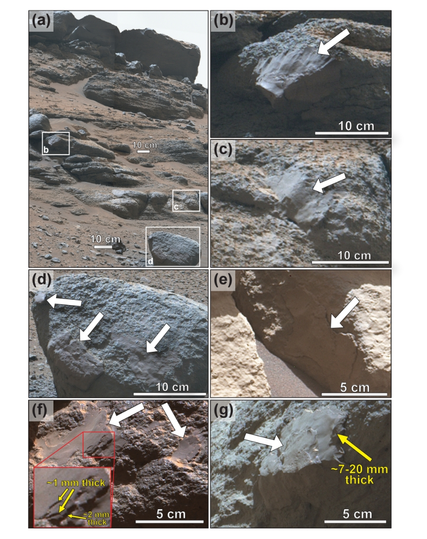
Covers 3 categories of identified coatings on Máaz & Séítah, discusses potential origins & compares to previous coatings seen by other rovers.

Garczynski et al: "Rock Coatings as Evidence for Late Surface Alteration on the Floor of Jezero Crater"
https://essopenarchive.org/users/578302/articles/651742-rock-coatings-as-evidence-for-late-surface-alteration-on-the-floor-of-jezero-crater-mars

#JezeroPlaster

For completeness: a predecessor LPSC summary paper from 2022 with mostly the same authors

"Perseverance and the purple coating: a Mastcam-Z multispectral story"
https://www.hou.usra.edu/meetings/lpsc2022/pdf/2346.pdf

Samantha Theuer's master thesis: "Spectrophotometric Characterization of Hawaiian Coated Basalt and Implications for Mars"
https://cedar.wwu.edu/wwuet/1347/

#JezeroPlaster

Spectrophotometric Characterization of Hawaiian Coated Basalt and Implications for Mars

Visible to near-infrared (VNIR) reflectance spectroscopy is a commonly employed technique used to study the surface of Mars and other bodies, but spectra are sensitive to viewing geometry, non-linear spectral mixing, surface texture, and environmental factors. Furthermore, alteration products like coatings may considerably impact spectra, which is of particular importance for investigating Mars, where orbital spacecraft and rovers have documented extensive surface coatings. Studying how coatings affect the spectra of naturally weathered analog rocks, therefore, is critical to our ability to identify coatings on Mars, determine their compositions, and interpret their formation environments. Previous work using synthetic coatings and limited natural weathered materials has shown that coatings influence spectral slope, can impart unique photometric behavior, mask underlying lithologies, and may alter other absorption features, but further work is needed to characterize the spectral behavior of natural coatings. Coated basalt samples from Hawaii are reasonable natural analogs for coatings on Mars, and previous work has described silica-rich and Fe/Ti-enriched coatings with proposed formation mechanisms. However, no previous studies have quantified their full VNIR spectral and photometric behaviors. Here, we characterize coated Hawaiian basalt samples and constrain the effects of viewing geometry on their VNIR spectra for the first time. We collected samples from the 1920 Kilauea flow along the Kau Desert Trail and the 1970 Kilauea flow along the Puna Coast Trail in Hawaii Volcanoes National Park. Coating composition and morphology were characterized using reflected light microscopy and Scanning Electron Microscope (SEM) with energy dispersive spectroscopy (EDS) elemental maps and backscattered electron (BSE) imaging. Spectral and photometric behavior was characterized via Western Washington University’s TANAGER spectrogoniometer at geometries covering the full scattering hemisphere. VNIR spectra were convolved to bandpasses of the Mars-2020 Perseverance Rover’s Mastcam-Z instrument to be directly compared to Mastcam-Z spectra from Jezero crater, Mars. Mastcam-Z multispectral data from Perseverance’s recent exploration campaigns (sols 415-1198) were assessed for evidence of coatings. We identified three unique coating types with distinct stratigraphic relationships on the Hawaiian samples: (1) “porous” fragment-bearing SiO2 coatings; (2) “Fe/Ti-bearing” coatings; and (3) “layered” SiO2 coating with visible striations and fractures. The coatings significantly mask the VNIR spectral character of the underlying basalt and cause distinct wavelength-dependent photometric behaviors, particularly in the NIR; these may significantly impact interpretations of Mastcam-Z data of coatings of Mars. Our SEM analyses of coating relationships challenge the previously published formation model; further work is needed to determine the coatings’ formation mechanism.

Western CEDAR