It wasn’t journalists, tech bros, and influencers who made the Internet a thing. It was librarians, scientists, educators, and programmers.

@shoq

So true. Actually, the tech bros ruined the internet.

@mastodonmigration @shoq Yes. In high school, the tech bros were laughing at me for building websites and spitting on me. It was the geeks and nerds like me who built the stage for them.
@mastodonmigration @shoq today a learned a new word.
@melroy @mastodonmigration @shoq I still don't know what it means.
tech bro

1. someone, usually a man, who works in the digital technology industry…

@melroy Thanks, I didn't think there would be a dictionary entry for that term. I mainly see people use it around these parts of the internet, and the definition that Cambridge gives seems too specific.

The general knowledge I'd like to have is what the relation of any foo to foo-bro is. Can you do it for any word?

@pkal bro stands for brother. Tech bro is really slang language. And no you can't just add any word and add 'bro' behind it.

See also: https://en.m.wikipedia.org/wiki/Brogrammer

Brogrammer - Wikipedia

@mastodonmigration @shoq No no, it was (impersonal) you who gave it away to them.
@shoq and lots of bored students
@ThreeSigma @shoq Looking at what passes as journalist I would file them (then:us?) under scientists.
@shoq And pornographers. Don't forget the pornographers.
@msbellows @shoq they’re always the pioneers. When they couldn’t find a use for bitcoin, that’s when I knew for certain it was hype.
@BenAveling
Exactly. It's THE place for anonymous transactions, and they still don't use it...
@msbellows @shoq

@Tedgarrison3 @BenAveling @msbellows @shoq

It was never really anonymous, having a fully public, immutable ledger is very much the opposite of that.

@shoq @Tedgarrison3 @ainmosni @msbellows It’s kind of neither but also kind of both of those things.

With just the wallet ID, you can trace every transaction, but you don’t know who owns the wallet. Unless you can work out who performed any of those transactions, and then, most likely, the same party performed all of the rest also.

@BenAveling the thing is, given some knowledge about a person, it's not hard to find the owner of a wallet.
@ainmosni you'd need something to link the two, there's just too many wallets and too many people. But that something could be something as simple as a transaction with another wallet suspected to be owned by a suspected contact.

@BenAveling

Or knowing the target received transactions from X, and likes to buy stuff at Y and Z. This will become easier the more actual traffic use it (ignoring that any non-play use will just not scale) as you will have more and more metadata to trace.

@ainmosni Yes, exactly. It may start off anonymous, but it's very hard to both use it and have it stay anonymous.

@Tedgarrison3 @BenAveling @msbellows @shoq

I doubt online transactions could ever be truly anonymous, If you want anonymous use cash in person...

@BenAveling @shoq I mean, I saw one of these in Amsterdam as late as 1976: https://en.m.wikipedia.org/wiki/Mutoscope
Mutoscope - Wikipedia

@shoq The internet used to be a global village of people sharing ideas. Now, it is a bunch of corporate skyscrapers.
@danderzei @shoq I think about this every day and it makes me sad. I miss the feeling of the Internet of the 90s
@DanielTuttle @shoq We can take the Internet back with technologies like Fediverse. We need a new Geocities!
@danderzei @DanielTuttle Or at the very least, a new Angelfire! (It still exists, btw)

@shoq @DanielTuttle

I want the old webrings back and do them in a way that only non-commercial websites (no adds) can join.

@danderzei @shoq I do miss webrings and guestbooks haha
@danderzei @DanielTuttle Webrings will make a comeback, soon. But they will be reinvented to be deeper better curated.
@shoq @DanielTuttle Somebody tried once, and they got killed by SEO optimisers with low-content websites.
@shoq Tech bros and finance bros, in fact, wore science and education like an aesthetic and piggybacked on the cred built by the scientific community.They appropriated scientific jargon make it look like they knew what they were doing. They don't give a shit about knowledge, but will wear its mantle to make money.
@shoq are we really trying to reclaim DARPA? like, I get that ARPANET had a lot of great heterarchical, decentralized characteristics but DARPA ain't exactly a beacon of progressive politics.
@shoq And nerds, weird lil guys doing their things.
@shoq I’ve heard these two phases of the internet referred to as the “cat internet” (the old, nerdy/academic one) and the “dog internet” (the attention/marketing-driven one that replaced it)
@shoq - and it was funded by taxpayers, not Silicon Valley VC douchebros.

@shoq

Not forgetting ordinary people, grassroots people on the World Wide Web.

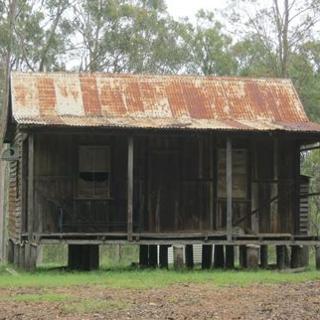
4th Grade school children from rural Far North Queensland (Mareeba) educating educators in Cairns in 1996 [?precise year].

People, you & me, with a simple knowledge of HTML.

People wanting to share their knowledge.

People wanting to help, inform, educate other people.

People with no interest in profit.

People.

@BushHut @shoq And fans. And fanfic writers. Fanfic sites were some of the first things I looked for when I got on the Internet in the 1990s. Geocities and Angelfire sites that let very not technical people, many of them women and girls, share their thoughts and stories.

@beecycling @shoq

I know nothing of fanfics

I didn't have a good impression at the time of those sites you mentioned

@shoq
And, oddly, musicians - IIRC, the first actual photo on the Web was of a band...
Okay, they were all scientists or assistants, but they were a band...
@shoq and a lot of US DoD money, to start with.

@shoq

And then it was occupied by corporations.

@spaceghoti

@shoq AND WRITERS AND ARTISTS.
@shoq Almost everything on the internet had a writer. For the first decade, writers didn't get paid. I had the first serial publication on the WWW that Netscape said was viewed by 250K people a month for years (but then there wasn't much on the WWW in the early years). It's still online, 30 years later. . I never made a penny on it. https://proustsaidthat.blog/
Proust Said That

Marcel Proust Support Group

Proust Said That
@shoq activists and socialists and anarchists, as well as meany progressive liberals had a role :)
@shoq Well, and the US DoD, at least from a funding perspective in the early years. Also not forgetting key design input from the UK Post Office.
@shoq tech bros are parasits of a once prosperous ecosystem
@shoq Sh*tload of military types, scientists and programmers, all ginned up with Cold War urgency and financed up the ying-yang by unwitting taxpayers. The librarians and educators came decades after the fact.
@sqwabb But that was just the foundational packet switching tech in the 60s, It wasn’t until Vint Cerf and Bob Kahn got TCP/IP started in mid ‘70s, and that’s when the universities already on ARPANET (and their librarians) already took to it all almost immediately. Then in ‘80s, NSFnet provided supercomputer access to universities. Then 90s brought gopher and the WWW, and the rest is history.
@shoq I was awed when Michael Hart, founder of Project Gutenberg, told me in the early 1990s that he began using the Internet in 1970! People were happily using the Net from university nodes by the beginning of the 70s. I will argue for the absolute centrality of programmers and computer scientists (like Tim Berners-Lee) well past 1991, when I got on the Internet. I know I could be mistaken but AFAIK Librarians were users - never creators, or even particularly, builders - of the Internet.
@sqwabb Certainly users, but pivotal users. From adapting MARC to to digital content, encouraging gopher and Archie menus and usage, to modernizing GPO and FDLP, and creating the first digital archives. From Library of Congress, to Carnie Mellon, to Syracuse, they were nudging and urging the tech we use today, every step of the way.
@shoq Gopher protocol was created 1991 by comp scientists at U of Minnesota only 2yrs before Web *killed* it. I can understand how librarians latched on to Gopher as an early means to put card catalogs on the Net, tho LoC says in had a online card cat of some sort in 1981, 13yrs before its website. But I've long thot online libraries of digital content were pioneered by BBSs & pre-Internet services like CompuServe & 1st Internet libraries were FTP directories, ala, CIA & Project Gutenberg.
@sqwabb Pioneered, perhaps, but with exception of 70s era OPACs, the development of big digital archives and public repositories and catalogs didn’t really get started until the late 80s and 90s. And that’s what most modern tools we use today evolved from.
@shoq I think we're discussing around each other. But please believe me when I write that I love librarians and libraries! Cheers!
@shoq the day the NSF allowed commerce was the day everything began to change.
@Codhisattva @shoq Ya we'd still be using Novell Netware at work with a Domino server for in house email and you'd be the most popular person in you're Usenet group.