THIS is the moment I've been waiting for!
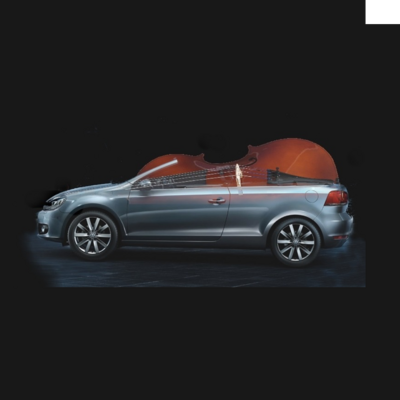
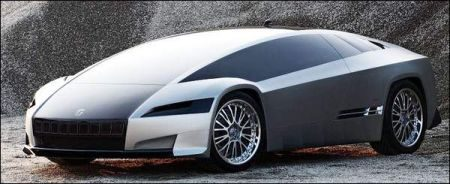
I've always wanted a "solar skin" on my car. Or even on my backpack, with a USB port inside for charging my devices.

Four decades ago the only available candidate was amorphous semiconductors that you can put on a flexible substrate: look up Sharp and Ovonics for those. The (big) problems:
1. the efficiency sucked;
2. the semiconductors degraded under solar UV exposure.

It was frustrating.
But no more!

https://www.solarpowerportal.co.uk/oxford-scientists-ultra-thin-solar-cell-27-energy-efficiency/

Oxford scientists reveal 'breakthrough' ultra-thin perovskite solar cell with 27% conversion efficiency

Scientists at the University of Oxford have revealed an ultra-thin solar cell that can deliver over 27% energy efficiency.

Solar Power Portal

"A coating 100 times thinner than a human hair could be “ink-jetted” onto your backpack, cell phone or car roof to harness the sun’s energy, new research shows, in a development that could reduce the world’s need for solar farms that take up huge swaths of land."

The flexible #perovskite solar-cell "skin" captures around 27% of the energy in sunlight, beating silicon #PV cells' efficiency of 22%.

https://www.cnn.com/2024/08/09/climate/solar-panel-inkjet-renewable-energy/index.html

BRING IT ON!
A Tumi solar-active backpack for me, please.

Razor-thin solar panels could be ‘ink-jetted’ onto your backpack or phone for cheap clean energy

A coating 100 times thinner than a human hair can harness the sun’s energy and be applied to everyday objects, in a development that could reduce the world’s need for solar farms.

CNN

A decade ago, I did an optimistic back-of-the-envelope estimate that said a Nissan Leaf with PV on its horizontal area could get 20 miles from a one-sunny-day charge.

But you can hardly mount three solar panels on top of your Leaf, can you.

A solar skin changes everything.
And with the efficiency of the perovskite material, you can cover most commutes, charging your car while you're at work. No charging station required.

http://www.cellomomcars.com/2012/01/ev-unplugged-truly-zero-emission.html

EV Unplugged: the TRULY zero emission electric car

There has been a lot of noise lately about plug-in electric vehicles. Of course, those are not really zero-emission cars : in the US, th...

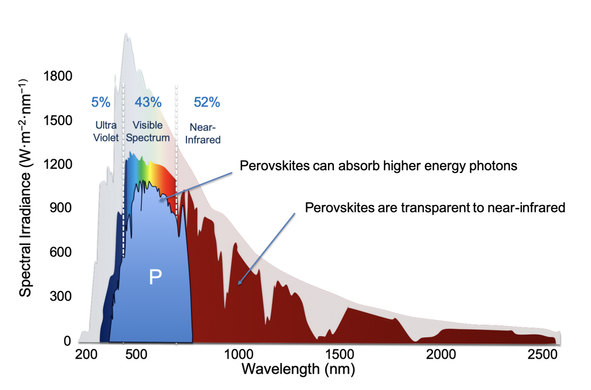
Part of why perovskites are great for PV is that it is well matched with the spectrum of the solar light on the surface of our planet . Our eyes are likewise matched, tuned to the peak of the spectrum, at "visible" wavelengths!

Because silicon and other semiconductor solar cells kick in in the infrared, you can build efficiency by stacking cells made with a variety of spectral response. Of course, people have done / are doing just that.

https://qdsolarinc.com/technology/

Technology -

Our Technology Traditional solar technologies, such as the common silicon solar cell, only capture a fraction of the available solar radiation, because of their intrinsic material properties. The gray area is the total light produced from the sun that reaches earth. The colored spectrum is the solar radiation that reaches sea level (the gaps are […]

If this thread makes me sound like an over-excited puppy it's because I'm so hungry for it 😃
So it's time for a caveat.

The reality is that perovskite solar cells are not ready for massive deployment: There's a lot of work to do on extending the lifetime (currently about 1 year in the field, compare to 20-25 yrs for silicon).

"Any combination of UV light, high temperature, high humidity, and oxygen causes rapid degradation of MAPbI3 perovskite films."

https://www.ossila.com/pages/perovskite-solar-cell-degradation-causes

Perovskite Solar Cells: Causes of Degradation

A major challenge in perovskites is the improvement of their stability and durability. This article discusses the factors that influence and cause perovskite instabilities.

Ossila

@CelloMomOnCars I was wondering what wavelengths a protective film might filter, that they could otherwise use.

UV for example is powerful, but powerful enough to degrade a lot of organic chemistry, as many film and wraps might contain.

@CelloMomOnCars Thank you for introducing perovskite solar cells to everyone.
I am the son of Dr. Miyasaka, the inventor of perovskite solar cells.

@kotaro

Hajimemashite!

The perovskites are quite a game changer, and the thin-film version even more so. Exciting field!

@CelloMomOnCars My father is going to generate electricity by attaching thin-film perovskite solar cells to the windows of buildings all over Tokyo.
Right now, he is very busy promoting his work.

@kotaro

Is there a demo or pilot project that's up?
Would love to learn more.

@CelloMomOnCars My father is doing his own experiments with model trains here.
However, there is also a demonstration experiment using a larger cell that floats in a pool of water.
https://youtu.be/Yhd2vmd3cc4
- YouTube

Enjoy the videos and music you love, upload original content, and share it all with friends, family, and the world on YouTube.

@CelloMomOnCars This is a demonstration of a larger cell. https://youtu.be/jcfmQXRTlmc
- YouTube

Enjoy the videos and music you love, upload original content, and share it all with friends, family, and the world on YouTube.

@CelloMomOnCars But don’t park in the underground garage! 😀

@christineburns

Haha! yes!

Of course, a BUS with a solar cladding would be best for your commute. You'd need to build fewer expensive parking garages. But in those places where buses don't come, then an e-car with a solar roof is a good second choice.

@christineburns @CelloMomOnCars joking aside, I feel that this is a significant problem. We already surrender both sides of almost every street to parked cars. A parked car isn't providing anything useful to anyone. Underground car parks are far better. Give us our public space back!

@mspcommentary @christineburns

Absolutely. See my comment about solar-roofed buses.

For a hundred years, cars have encroached into our public space to such an extent that most people don't see it any more. Car dominance has insinuated itself into the culture so we now think it's "normal". Because we have all grown car brain.

To win the space back takes nothing less than culture change.
It's not impossible. We just keep pushing back.

@CelloMomOnCars I keep having to write this, but no, this is not a good idea.

Covering your car in expensive and delicate solar panels is risky. Stepping up the fairly tiny wattage of these panels so they charge your big batteries is expensive and inefficient. And of course many parking spaces are shaded from the sun.

It would be much better to take those same limited resources and put them somewhere protected, with many other such panels, in a place carefully chosen for the best sun.

@TomSwirly

Like I said, a solar-roofed BUS would be best.

But 20 miles a day is not "tiny".
And you don't have to park where it's shaded, you can chase the sun. I once asked for more trees on the parking lot of my then-workplace. The request was summarily dismissed: management didn't want birds to poop on their cars. Most parking lots are like that: asphalt deserts. Parking craters. Not a bird perch to be seen on those.

@CelloMomOnCars Those solar panels would be much more productive for society as a whole in a fixed, protected location with permanent access to the sun.

For the same price as putting delicate, form-fitting, rounded solar panels on a car and installing specialized electronics to upscale the voltage, you could buy two to three times as many boring, flat solar panels, producing two to three times as much energy, and not being destroyed with every fender bender.

1/

@CelloMomOnCars

> Most parking lots are like that: asphalt deserts.

For a fraction of what it would cost to cover all the cars in that parking lot with solar panels, you could simply cover the parking lot with solar panels, shelter the cars and bikes, and produce far more energy.

People are obsessed with this idea, not because it makes technological or economic sense, but simply because it seems cool.

@TomSwirly

I really don't see why you can't have solar on cars AND on roofs AND on fields.

Especially as thin film tech tends to be significantly cheaper than crystalline solar PV.

@CelloMomOnCars Because only finite number of solar panels are made, and they are not cheap.

Because we are pumping out solar cells as fast as possible, and yet fossil fuel use also continues to grow.

Because we have finite resources, and we desperately need to use them as effectively as possible.

1/

@CelloMomOnCars

> Especially as thin film tech tends to be significantly cheaper than crystalline solar PV.

If there were a cheaper technology for the fixed solar panels, why would anyone use the more expensive one?

It will always be cheaper to make a flat solar panel than one of the same size that is form-fitted to a vehicle.

It will always be safer and less maintenance to have a solar panel in a fixed deployment than on a car.

2/

@CelloMomOnCars

And more important than any of these things, for us not to destroy our environment and die miserably, individual, privately owned cars need to go.

There are over a billion cars on the planet. Replacing them with a billion electric cars, even if we had enough materials to do this, would not save us.

These conversations are uniformly depressing. No one ever does any actual critical analysis of the issue.

3/

@CelloMomOnCars They start with some axioms: "Individual cars are good! Cars with solar cells are good!" and then come up with arguments to justify their axioms.

This leads to arguments like the above one: "Solar power cells on cars use a better technology than other solar cells!"

For our species to survive, we would have to give up a great deal of the luxuries we have today.

It makes me sad to be reminded over and over again that we won't ever do that.

@TomSwirly @CelloMomOnCars I work in solar maintenance. I love the idea of pv panels over car parks especially when combined with batteries and ev charging. But they are often designed for simple installation while not considering long term maintenance for peak performance. It’s early days and probably not that hard to solve.

@CelloMomOnCars

My rule of thumb for efficient solar charging of an EV seemed to include a ‘solar cell’ carport roof twice the area of the vehicles parking footprint (and a battery to collect and store solar energy while the car was out)

Not sure how accurate that was, but I think it worked.

@Chancerubbage

I think our estimates roughly agree!

@CelloMomOnCars

Aptera seems ever closer to shipping 🤞

And its PV technology seems to be being adopted elsewhere too. (Beyond shaping panels to a vehicle's surface, durability is a key criterion.)

https://aptera.us/licenses-solar-technology/

Aptera Expands its Horizons by Licensing Solar Technology across Mobility Industries  | Aptera

Aptera Expands its Horizons by Licensing Solar Technology across Mobility Industries  San Diego, CA – – Aptera Motors, the manufacturer of the world’s most efficient solar electric vehicle, announced its strategic expansion into new |

Aptera

@mmalc

You know, just now I was thinking rooftop solar would be a great addition to RVs -- and here you are!

@CelloMomOnCars "... the world’s need for solar farms that take up huge swaths of land", I find this weird where there are huge swaths empty roofs which could easily be used for harvesting solar energy.

Of course it would mean that ownership of sites of harvesting would be far less concentrated and equitable, but that isn't a problem, is it...?

@kim_harding

I was going to mention solar roofs next -- I guess I missed that sentence, in my excitement 🙂

Imagine aluminum roofs with a solar skin: free electricity, easy to roll out, less susceptible to high winds than roof tiles, and you move away from toxic asphalt (yuck) roof tiles.

What's not to love.

@CelloMomOnCars great minds and all that 😂

@CelloMomOnCars Going to be a lot of devil the details managing the power delivery and what happens to it when you shove it through a carwash.

There are people trying to do solar clothing but it still looks very novelty to me and not clearly washable.

https://us.ecoflow.com/products/solar-power-hat

EcoFlow Power Hat

@CelloMomOnCars Great news. Thanks for pointing.

Did you see this from The Rocky Mountain Institute? “by 2050, we could attain net zero mineral demand for batteries: that is, we could meet all our energy storage needs without digging up any more minerals”.
@pluralistic

https://rmi.org/wp-content/uploads/dlm_uploads/2024/07/the_battery_mineral_loop_report_July.pdf