#Juneteenth

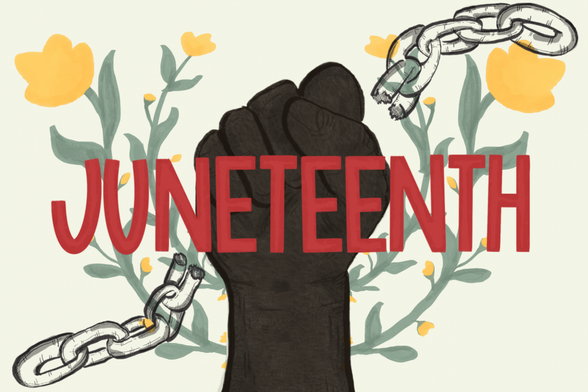
Illustration by Jen Garcia, College of Liberal Arts, UT Austin

"A common misconception exists that slaves were freed with the Emancipation Proclamation on January 1, 1863 or at the end of the Civil War on April 9, 1865, but the reality is southern states rejected Union laws and kept their slaves in the dark about their freedom in the hopes that they could still win the war. Some states, such as Delaware and Kentucky, remained in a state of rebellion....

1/
...and continued to allow slavery. As one of the most remote southern states with a low Union presence, Texas served as a refuge for slave owners—a place to hide enslaved Africans...in hopes of keeping what they considered to be their 'property.' Texas saw an influx of over three times as many slaves after the proclamation was issued. It wasn’t until Union Major General Gordon Granger arrived on the island of Galveston, Texas on the morning of June 19, 1865 and read the following words...

2/

...that many enslaved Africans found out about their freedom: 

"'The people of Texas are informed that, in accordance with a proclamation from the Executive of the United States, all slaves are free. This involves an absolute equality of personal rights and rights of property between former masters and slaves, and the connection heretofore existing between them becomes that between employer and hired labor. The freedmen are advised to remain quietly at their present homes...

3/

...and work for wages. They are informed that they will not be allowed to collect at military posts and that they will not be supported in idleness either there or elsewhere.'

"From these words, Juneteenth was born.

Still, this day in history did not end the practice of slavery entirely. Thousands of accounts from Black Americans document their continued enslavement beyond Juneteenth—some not freed until as late as the 1960s...

4/