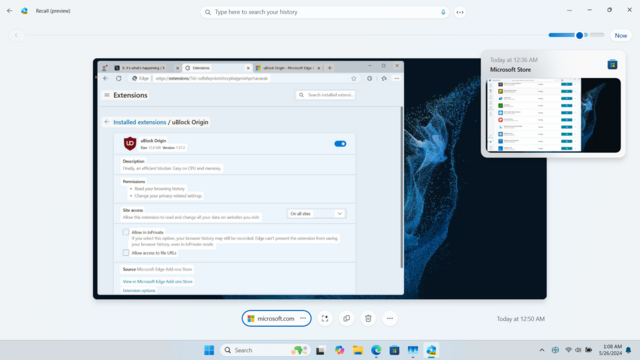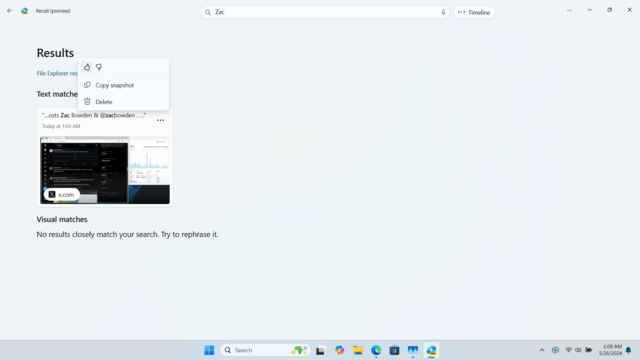
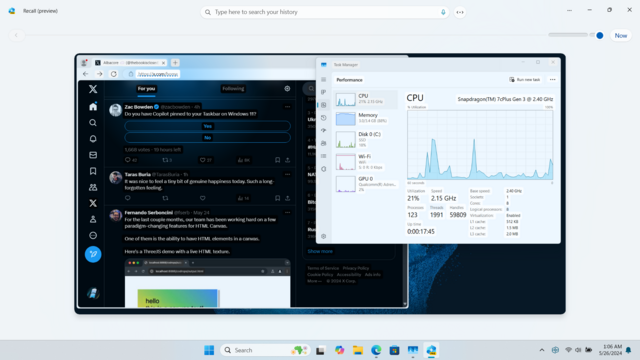
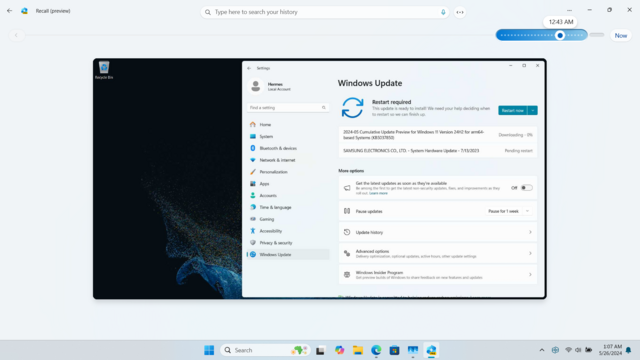
I was able to get Recall working on this bad boy 😎
Snapdragon 7c+ Gen3, 3.4 GB of RAM, no NPU in sight

Will cook up a tutorial soon, it's surprisingly good even on something this low spec 😊 If you have any questions I'll do my best to answer them ✍️
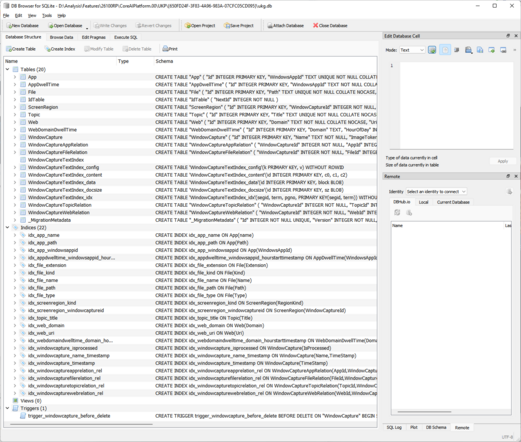
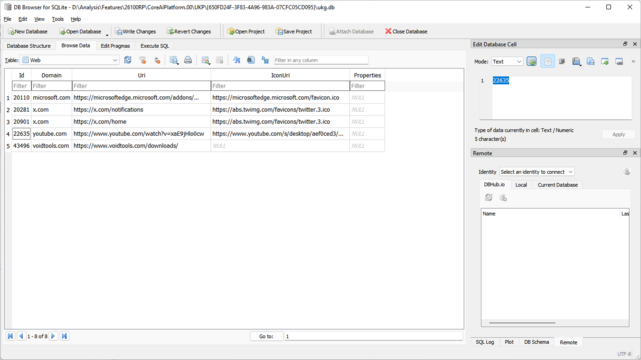
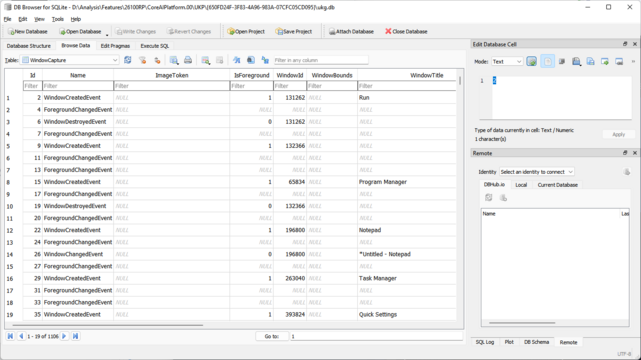
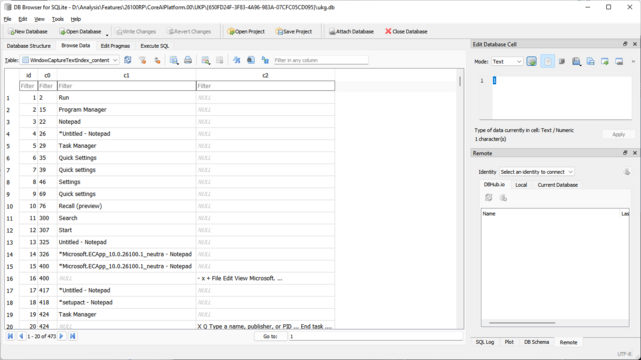
Can confirm that Recall data is indeed stored in a SQLite3 database. The folder it's in is fully accessible only by SYSTEM and the Administrators group. Attempting to access it as a normal user yields the usual "You don't currently have permission" error. Here's how the database is laid out for those curious, figured you might appreciate a few screenshots.
@detective Considering most Windows user accounts are Administrators if they didn't manually create a second account for admin use, I wonder if that would still allow easy access.
@DrewNaylor File Explorer always runs unelevated, Administrators also have access to C:\Program Files\WindowsApps yet you simply can't open it in File Explorer without breaking ACLs no matter how you try.
@detective I was wondering about programs besides Explorer, but if it requires elevation, then malware would still need to use an exploit to gain it without UAC which is possible.
@DrewNaylor @detective can you run unsigned code on a Secured-core Win11 machine?
@jazaval I assume you should be able to, otherwise it would destroy third-party unsigned FOSS applications (Microsoft would probably be happy). That wouldn't help anything though, because a lot of signed stuff like kernel-level anticheat with games and Word can have exploits that don't require any other executables to run besides the signed code. Signing keys can also leak and I think that may have happened before, not sure. I don't know what a secured-core computer is, though.

@DrewNaylor you can’t run unsigned code on any Mac made in the last 4 years or so: https://forums.developer.apple.com/forums/thread/678816

Secured-core is Microsoft’s answer to Apple silicon’s Secure Enclave and software notarization process: https://www.microsoft.com/en-us/security/blog/2020/03/17/secured-core-pcs-a-brief-showcase-of-chip-to-cloud-security-against-kernel-attacks/

Microsoft calls it “chip-to-cloud”.

Filesystem privileges in an unsign… | Apple Developer Forums

@DrewNaylor you can self-sign with what’s known as an ad-hoc signature, but this signature only works on that machine
@jazaval That's really sad they're limiting what can be run like that.
@DrewNaylor you can run anything you want, you just need to be a developer (not paid or anything). it might make you cringe but it also makes it very difficult to write malware that targets more than one system. by only allowing apps that have been scanned and can be remotely revoked, widespread malware is nearly impossible. Win11 on ARM will go the same way, just watch.
@DrewNaylor I can’t imagine a scenario in which a non-developer needs to run unsigned code.