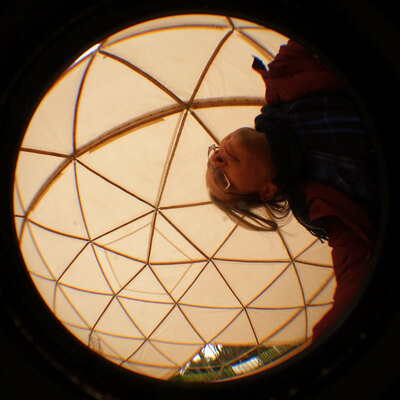
I saw that a study says that #actuallyAutistic don't like going outside in nature. Well, nature is a must for our mental health! I love the botanical garden. It provides good visual stimming.

The other point is that I hike quite a lot and being in nature is vital for my anxiety.

It's another good example of how we are misunderstood. It's another example of how we are seen as a deficit. It's totally dehumanizing us. We are human with human needs. It's not because somes don't understand our cognition that we aren't fully human.

@actuallyautistic @neurodiversity

@Autistrain @actuallyautistic @neurodiversity Was the study conducted by allistics by any chance?

Lifelong nature lover & autistic.

@sentient_water

I read it yesterday and don't remember clearly. To do some sarcasm, I could answer “I assume”.

@actuallyautistic @neurodiversity

@Autistrain @sentient_water @neurodiversity could you poke through your browser history to see if you can find it again? I've spent some time on various search engines, including Google scholar, but using the word "nature" throws up a lot of "the nature of x in autism" type articles.

@Aerliss @Autistrain @neurodiversity This isn't the one I'm talking about but it illustrates the same point.

https://www.sciencedaily.com/releases/2014/01/140131130630.htm

Autistic brains create more information at rest, study show

New research finds that the brains of autistic children generate more information at rest -- a 42 percent increase on average. The study offers a scientific explanation for the most typical characteristic of autism -- withdrawal into one's own inner world. The excess production of information may explain a child's detachment from their environment.

ScienceDaily
@sentient_water @Autistrain @neurodiversity thank you! You're a star. I'll have a read over my next cup of tea.

@Aerliss @Autistrain @neurodiversity Found this other one too. Where the fact that we have more neurons in our prefrontal cortex is still pathologized!

https://www.spectrumnews.org/news/autism-brains-have-too-many-neurons-study-suggests/

Autism brains have too many neurons, study suggests

Children with autism have an abnormally large number of neurons in the prefrontal cortex, a brain region important for abstract thinking…

Spectrum | Autism Research News
@Aerliss @Autistrain @neurodiversity This seems to be like saying your computer is broken because it's got too much RAM & memory.

@sentient_water @Aerliss @Autistrain @neurodiversity

It really isn't.

Brain development comes in two phases.

From birth through childhood, the amount of neurons people have increases steadily, forming pathways based on our experiences and sensations.

But from puberty to maturity, the number of neurons decreases through a process called synaptic pruning, where the pathways get trimmed down in order to get rid of 'cross wiring' and synaptic 'dead ends'.

@sentient_water @Aerliss @Autistrain @neurodiversity

Having more neurons, therefore, doesn't make you smarter.

It's less like having more RAM and more (but not exactly) like having the RAM connected with multiple cables, so that your RAM keeps getting conflicting or fragmented inputs because the signals don't all take the same route and don't all arrive when they're expected to.

@robrecht @Aerliss @Autistrain @neurodiversity I don't think the paper or me said it made you "smarter" in case you missed the start of this thread it's about how nearly all studies of autism view every single aspect of being autistic through a medicalised, pathologized lens.

@sentient_water @Aerliss @Autistrain @neurodiversity

I'm sorry in advance at the sheer nastiness of this response, but I threw out my back earlier today and it hurts enough that I feel nauseous, so I'm in a terrible mood:

Oh, gee, a medical study by medical doctors medicalises things? Golly how absolutely awful.

Damn experts and their narrow field of focus! When the fire safety inspector wrote a report on my apartment block it said absolutely nothing about my interior decorating choices! 😒

@sentient_water @Aerliss @Autistrain @neurodiversity

Again, I'm sorry, but this is unavoidable. If a group of neurologists does research into autism, they're going to focus on the neurological aspects of autism.

And that's going to involve a lot of medical jargon, because they're doctors (and/or professors) of medicine.

@robrecht
The point is that there's a very consistent pattern in autism research of *assuming* autistic differences are deficits, or somehow automatically wrong.

@petercrosbie put together a great piece about this here a few years ago:
https://www.autism-advantage.com/autistics-less-biased.-researchers.html

@sentient_water @Aerliss @Autistrain @neurodiversity

Autistics: less biased. Researchers?

The Autism Advantage. Cognitive fallacies and biases in research with autistic subjects. Are researchers more biased than autists?

@robrecht
There's a very recent paper here showing how this keeps happening in verbal fluency research, and how looking at it in terms of #monotropism (or just generally identifying and questioning implicit assumptions) allows for completely different interpretations of the same data.

https://onlinelibrary.wiley.com/doi/abs/10.1002/aur.3071
@petercrosbie @sentient_water @Aerliss @Autistrain @neurodiversity

@ferrous @petercrosbie @sentient_water @Aerliss @Autistrain @neurodiversity

Thing is, Fergus...

This actually kinda highlights my issue.

Most medical autism research is focussed on ASD, the diagnosable mental health disorder that occurs in some autists.

Monotropism is a theory (with it's own flaws) regarding the autistic neurotype, including those for whom it doesn't lead to a disorder...

And...

@ferrous @petercrosbie @sentient_water @Aerliss @Autistrain @neurodiversity

I understand why people who identify with the autistic neurotype are not best pleased with the way medical research pathologises autism, I really do. I don't like it either.

But at the same time... A lot of the time they /aren't/ pathologising autism the neurotype, they're pathologising ASD, the mental disorder, which legitimately is a pathology.

This distinction is important to me because...

@robrecht @ferrous @petercrosbie @sentient_water @Aerliss @Autistrain @neurodiversity I'm not sure how adding the word "disorder" to something actually makes it a disorder.

If someone frames my love of computers as "specific routine and becomes disturbed at the slightest change" and says "hah, disorder!", is it now fair to frame it as a pathology?

@mnl

It's like Rick Deckard says about Replicants: If they're a benefit, they're not my problem.

If you don't suffer any harm from your neurochemical makeup, it is not a disorder.

But if you do suffer harm, it IS a disorder. Very simple.

A good example from another field is Ehlers Danlos syndrome (EDS). In a nutshell it is characterized as "hypermobility that causes harm". Plenty of people have hypermobility, but do not suffer harm. It's not a pathology unless both elements are present.

And, I believe autists who need help should be helped.

You gotta remember: Pathology is not something that lessens a person's worth. It is not something that should be eradicated. It's just a property of a person that means the person needs care or assistance.

The toxic notion that pathology is bad has roots in eugenicist beliefs, which were prevalent right up to the 1970s, but which should be demolished at sight.

@robrecht @ferrous @petercrosbie @sentient_water @Aerliss @Autistrain @neurodiversity

@androcat @robrecht @ferrous @petercrosbie @sentient_water @Aerliss @Autistrain @neurodiversity if i get bullied, and i suffer harm from my difference, is it a disorder?

@mnl

On the part of the bullies, probably a personality disorder.

But are you really not getting the point I made?

@robrecht @ferrous @petercrosbie @sentient_water @Aerliss @Autistrain @neurodiversity

@mnl

No harm, no disorder.
Harm, disorder.

Some autists experience harm.
Others do not.

@robrecht @ferrous @petercrosbie @sentient_water @Aerliss @Autistrain @neurodiversity

@androcat @robrecht @ferrous @petercrosbie @sentient_water @Aerliss @Autistrain @neurodiversity so being bullied would make it a disorder, not being bullied wouldn't? am i following correctly?

@mnl

Being bullied is an external factor. I don't understand why you are fixating on that.

Being unable to cope with stuff like bills, taxes, doctor's appointments is a harm.

Meltdowns are a harm.

Do you understand now?

@robrecht @ferrous @petercrosbie @sentient_water @Aerliss @Autistrain @neurodiversity

@androcat @robrecht @ferrous @petercrosbie @sentient_water @Aerliss @Autistrain @neurodiversity

Most the of the ASD criteria are not having trouble coping with bills, though. They're all about "abnormal behaviour" (special interests, communication, sensory differences).

@mnl

Sure, anxiety is a separate thing.

But there are plenty of people who manage OK with communication and relationships.
If they do not suffer harm, they do not have the disorder.

But others do spend a lot of time anguishing over what other people mean, what other people expect, feeling misunderstood or rejected.

That is harm, hence it is a disorder.

@robrecht @ferrous @petercrosbie @sentient_water @Aerliss @Autistrain @neurodiversity

@mnl @androcat @ferrous @petercrosbie @sentient_water @Aerliss @Autistrain @neurodiversity

So... There's really only two ASD criteria that have anything to do with behaviour.

There's A. which is (paraphrased) difficulties maintaining social relationships even though you do want to maintain them. And B. which is (paraphrased) some kind of repetition in action or thought that you keep doing even when you don't necessarily want to.

The other criteria have nothing to with behaviour. They are:

@mnl @androcat @ferrous @petercrosbie @sentient_water @Aerliss @Autistrain @neurodiversity

(All paraphrased to make them simpler to understand)

C: It has been this way since early childhood, not something that you developed later.

D: It's causing you significant harm.

E: It's not caused by some other condition that you may (also) have.

That last one's kinda important too, because it's where a lot of anti-psychiatry stuff comes from.

You see....

@mnl @androcat @ferrous @petercrosbie @sentient_water @Aerliss @Autistrain @neurodiversity

In order to diagnose ASD, they first have to rule out anything else that could they suspect could also be causing your issues.

That's where a lot of the 'I was misdiagnosed!' stuff comes from.

If you're clinically depressed, for instance, they first have to treat the depression. They can only diagnose ASD if the issues persist after that's under control.

But...

@mnl @androcat @ferrous @petercrosbie @sentient_water @Aerliss @Autistrain @neurodiversity

If someone quits their treatment for depression because it's not solving /all/ their issues then the psych can't diagnose autism, because the depression persists and that might still be the cause of the issues, so they'll try treatment for a different condition that involves depression.

Of course, a big part of this problem is with the psych not explaining this adequately.

@robrecht @androcat @ferrous @petercrosbie @sentient_water @Aerliss @Autistrain @neurodiversity I'm not sure where you see "but you do want to maintain them" and "you do not want to keep doing this activity / thinking these thoughts" show up at least in my naive reading of https://www.cdc.gov/ncbddd/autism/hcp-dsm.html

In any case, we agree on the meaning of disorder, I personally think that a lot of the things perceived by society at large as a disorder really isn't for me, if left to my own devices.

Diagnostic Criteria | Autism Spectrum Disorder (ASD) | NCBDDD | CDC

Learn about the standardized criteria used to help diagnose autism spectrum disorder (ASD).

Centers for Disease Control and Prevention

@mnl

This might be obvious, but I should point out that nobody here is claiming that you personally have a disorder.
Just that some people benefit from assistance, because they do have a disorder == experience harm from the properties of their neurological composition.

@robrecht @ferrous @petercrosbie @sentient_water @Aerliss @Autistrain @neurodiversity

@androcat @robrecht @ferrous @petercrosbie @sentient_water @Aerliss @Autistrain @neurodiversity what I think the general debate about this is getting at is that society tends to frame not wanting to do X (say, having small talk or talking about things more literally) as an actual harmful thing when it is mostly harmful because people say it's harmful. And that extends to the medical field as well. Say, framing autistic sense of justice as a "inflexible Moral rules" to cite a famous example.

@mnl

I think that's probably one undercurrent in the discourse, and it definitely has merit.

But no single undercurrent of the discourse is the end-all-be-all - there's plenty of theses and antitheses in there.

The synthesis is some sort of list of "x, but y, but z, but..."

@robrecht @ferrous @petercrosbie @sentient_water @Aerliss @Autistrain @neurodiversity

@mnl @androcat @ferrous @petercrosbie @sentient_water @Aerliss @Autistrain @neurodiversity

Yeah, that's because I'm sorta cheating and including the meaning of criterion D. early in A. B.

Mainly because a lot of people focus so much on criteria A. and B. that they forget (or ignore) criterion D. exists.

@robrecht @androcat @ferrous @petercrosbie @sentient_water @Aerliss @Autistrain @neurodiversity and even though I'm an adult and was able to "escape" the label (which I'm glad to because i grew up in France in the 80s/90s), there's plenty of people in authority in my life that decide what is normal or isn't, say police or managers at work, with non trivial impacts on my life. Anyway, not sure where I'm going with this, but I do much more align with the non pathologizing view of autism.
@robrecht @androcat @ferrous @petercrosbie @sentient_water @Aerliss @Autistrain @neurodiversity give actual disordered things like executive function disorder or sensory sensitivities or obsessive compulsive disorder the disorder name instead of blanketing such a wide spectrum with it, it can only help treatment as well.
@robrecht @androcat @ferrous @petercrosbie @sentient_water @Aerliss @Autistrain @neurodiversity and with that I'm ejecting from the conversation, thanks for the nice talk!

@mnl @androcat @ferrous @petercrosbie @sentient_water @Aerliss @Autistrain @neurodiversity

Alright. Have a good one! Sorry for the reply I gave after you said you were ejecting, didn't see that until after I'd made it.

Thanks for the interesting conversation :)

@robrecht yeah even among autistics it easy to misread debates in 500 character posts as arguments and not conversations, but also at times I'm tired/forget to put a "not arguing/genuinely curious" label up front...

@mnl @androcat @ferrous @petercrosbie @sentient_water @Aerliss @Autistrain @neurodiversity

No, the bullying is immaterial.

If you had an uncontrollable fear of loud noises, because the house you grew up in was near to a factory that produced a lot of loud noises and you were sensitive to loud noises, that would still be a disorder even though no one intentionally harmed you.

That uncontrollable fear, not the sensitivity to noise itself, would be the disorder, though.

@robrecht @androcat @ferrous @petercrosbie @sentient_water @Aerliss @Autistrain @neurodiversity

So why then are things like "repetitive motor movements/rigid adherence to routines/extreme adherence to routines" disorders more so than "this person reacts differently than I think they should".

We're not framing someone being sad after their parents died as a "grief spectrum disorder".

@mnl @androcat @ferrous @petercrosbie @sentient_water @Aerliss @Autistrain @neurodiversity

There actually /is/ a disorder that involves continuing to feel the full force of grief way past the point where the person experiencing it wants to. (Prolonged Grief Disorder)

As for the question: It's a disorder when the movements or adherence to routine get in the way of you doing what you want.

Or... If they get in the way if you doing what your parents want, if you're a minor.

Because...

@mnl @androcat @ferrous @petercrosbie @sentient_water @Aerliss @Autistrain @neurodiversity

One thing a lot of new faces in the autism community don't get when they go along with the insistence by old hands that others don't get to say whether we're 'disabled' doesn't refer to psychs so much. It refers to parents.

Because in many places parents have complete control over their kids and so psychs legally have to go along with what the -parents- think is normal and healthy for their kid to do.

@mnl @androcat @ferrous @petercrosbie @sentient_water @Aerliss @Autistrain @neurodiversity

(Note: It DOES also refer to psychs, don't get me wrong.

But it refers most of all and most often to parents who decide their child is disabled because they don't act the way the parent wants and the psych can explain a thousand times to them that their kid is a perfectly normal autist and their behaviour, so long as it doesn't hurt others or themselves, is fine, they still won't listen.)

@robrecht @androcat @ferrous @petercrosbie @sentient_water @Aerliss @Autistrain @neurodiversity I'm very fine with the disability label, but I frame that as very different than disorder. In fact my "order" (the thing that is not harmful to me) is what causes my disability, say because k ask too many questions when I don't understand something, or because work settings are usually an assault on my hearing, or because dogs barking disrupt me to meltdown. Those disable me and need accomodation.

@mnl

The irony of that is that the whole reason mental health professionals use 'disorder' is that it doesn't have quite the negative connotations as disability' has for most people.

I'm fine with 'disorder' because to me it's better than 'disability', because 'disability' was the word when I was diagnosed and, if I understand it, you're fine with disability because it has less negative load for you, but not fine with 'disorder', because that is the word used now.

@robrecht I'm fine with it because it better frames what helps me: making things such that my "order" is not disabled by external factors. Bipolar and ADHD however I'm fine calling disorders, because indeed I can take a pill and I'm fine, and it's (mostly) a thing I can fix by myself. Sensory stuff similarly, I can just wear earplugs. If work forbids me from using headphones or Police singles me out because of it, then I'm being disabled.

negative connotations I actually dgaf (if I ever did)

@robrecht I have enough privilege and can pass well enough that I tend to be openly out about my various diagnoses and my substance abuse in the past, because that's a way if giving back and helping deconstruct the stigma.

Telling friends or even colleagues who appreciate me "people with x/who are x can look just like me" I think does a lot for awareness.

@robrecht

Also, there was a nazi doctor who used "diagnostic criteria" to decide which children should be exterminated.

And that heritage lives on in Autism Speaks, and other proponents of ABA and similar crap.

So, yeah, there are good reasons why many are concerned.

@mnl @ferrous @petercrosbie @sentient_water @Aerliss @Autistrain @neurodiversity

@androcat @mnl @ferrous @petercrosbie @sentient_water @Aerliss @Autistrain @neurodiversity

Yes, absolutely.

The great irony of the history of autism research is that the two fathers of the field are two austrians, one a jewish doctor who avoided the Holocaust and cared about the autistic kids he worked with (Kanner) and the other an out-and-proud Nazi who sent any autists with a co-morbid intellectual disability to the gas vans (Asperger).

And yet...

@androcat @mnl @ferrous @petercrosbie @sentient_water @Aerliss @Autistrain @neurodiversity

For many years people lionised Asperger and poo-poo-ed Kanner because Asperger's writing on autism was less focussed on intellectual disability and more on what autists could achieve, while Kanner focussed on the challenges they faced.

No one acknowledged that this was because Asperger only kept the ones with the high IQs around and had the others gassed and Kanner wanted to help all autists equally.