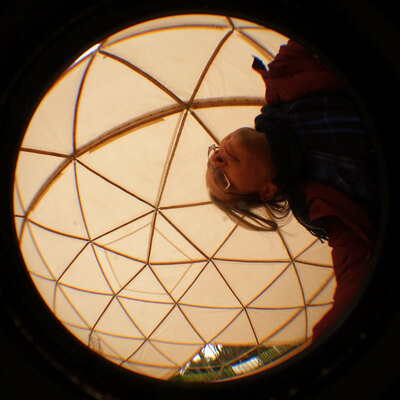
I saw that a study says that #actuallyAutistic don't like going outside in nature. Well, nature is a must for our mental health! I love the botanical garden. It provides good visual stimming.

The other point is that I hike quite a lot and being in nature is vital for my anxiety.

It's another good example of how we are misunderstood. It's another example of how we are seen as a deficit. It's totally dehumanizing us. We are human with human needs. It's not because somes don't understand our cognition that we aren't fully human.
@actuallyautistic @neurodiversity

@Autistrain @actuallyautistic @neurodiversity Was the study conducted by allistics by any chance?

Lifelong nature lover & autistic.

@sentient_water

I read it yesterday and don't remember clearly. To do some sarcasm, I could answer “I assume”.

@actuallyautistic @neurodiversity

@Autistrain @sentient_water @neurodiversity could you poke through your browser history to see if you can find it again? I've spent some time on various search engines, including Google scholar, but using the word "nature" throws up a lot of "the nature of x in autism" type articles.

@Aerliss @Autistrain @neurodiversity This isn't the one I'm talking about but it illustrates the same point.

https://www.sciencedaily.com/releases/2014/01/140131130630.htm

Autistic brains create more information at rest, study show

New research finds that the brains of autistic children generate more information at rest -- a 42 percent increase on average. The study offers a scientific explanation for the most typical characteristic of autism -- withdrawal into one's own inner world. The excess production of information may explain a child's detachment from their environment.

ScienceDaily
@sentient_water @Autistrain @neurodiversity thank you! You're a star. I'll have a read over my next cup of tea.

@Aerliss @Autistrain @neurodiversity Found this other one too. Where the fact that we have more neurons in our prefrontal cortex is still pathologized!

https://www.spectrumnews.org/news/autism-brains-have-too-many-neurons-study-suggests/

Autism brains have too many neurons, study suggests

Children with autism have an abnormally large number of neurons in the prefrontal cortex, a brain region important for abstract thinking…

Spectrum | Autism Research News
@Aerliss @Autistrain @neurodiversity This seems to be like saying your computer is broken because it's got too much RAM & memory.

@sentient_water @Aerliss @Autistrain @neurodiversity

It really isn't.

Brain development comes in two phases.

From birth through childhood, the amount of neurons people have increases steadily, forming pathways based on our experiences and sensations.

But from puberty to maturity, the number of neurons decreases through a process called synaptic pruning, where the pathways get trimmed down in order to get rid of 'cross wiring' and synaptic 'dead ends'.

@sentient_water @Aerliss @Autistrain @neurodiversity

Having more neurons, therefore, doesn't make you smarter.

It's less like having more RAM and more (but not exactly) like having the RAM connected with multiple cables, so that your RAM keeps getting conflicting or fragmented inputs because the signals don't all take the same route and don't all arrive when they're expected to.

@robrecht @Aerliss @Autistrain @neurodiversity I don't think the paper or me said it made you "smarter" in case you missed the start of this thread it's about how nearly all studies of autism view every single aspect of being autistic through a medicalised, pathologized lens.

@sentient_water @Aerliss @Autistrain @neurodiversity

I'm sorry in advance at the sheer nastiness of this response, but I threw out my back earlier today and it hurts enough that I feel nauseous, so I'm in a terrible mood:

Oh, gee, a medical study by medical doctors medicalises things? Golly how absolutely awful.

Damn experts and their narrow field of focus! When the fire safety inspector wrote a report on my apartment block it said absolutely nothing about my interior decorating choices! 😒

@sentient_water @Aerliss @Autistrain @neurodiversity

Again, I'm sorry, but this is unavoidable. If a group of neurologists does research into autism, they're going to focus on the neurological aspects of autism.

And that's going to involve a lot of medical jargon, because they're doctors (and/or professors) of medicine.

@robrecht
The point is that there's a very consistent pattern in autism research of *assuming* autistic differences are deficits, or somehow automatically wrong.

@petercrosbie put together a great piece about this here a few years ago:
https://www.autism-advantage.com/autistics-less-biased.-researchers.html

@sentient_water @Aerliss @Autistrain @neurodiversity

Autistics: less biased. Researchers?

The Autism Advantage. Cognitive fallacies and biases in research with autistic subjects. Are researchers more biased than autists?

@robrecht
There's a very recent paper here showing how this keeps happening in verbal fluency research, and how looking at it in terms of #monotropism (or just generally identifying and questioning implicit assumptions) allows for completely different interpretations of the same data.

https://onlinelibrary.wiley.com/doi/abs/10.1002/aur.3071
@petercrosbie @sentient_water @Aerliss @Autistrain @neurodiversity

@ferrous @petercrosbie @sentient_water @Aerliss @Autistrain @neurodiversity

Thing is, Fergus...

This actually kinda highlights my issue.

Most medical autism research is focussed on ASD, the diagnosable mental health disorder that occurs in some autists.

Monotropism is a theory (with it's own flaws) regarding the autistic neurotype, including those for whom it doesn't lead to a disorder...

And...

@ferrous @petercrosbie @sentient_water @Aerliss @Autistrain @neurodiversity

I understand why people who identify with the autistic neurotype are not best pleased with the way medical research pathologises autism, I really do. I don't like it either.

But at the same time... A lot of the time they /aren't/ pathologising autism the neurotype, they're pathologising ASD, the mental disorder, which legitimately is a pathology.

This distinction is important to me because...

@robrecht @ferrous @petercrosbie @sentient_water @Aerliss @Autistrain @neurodiversity I'm not sure how adding the word "disorder" to something actually makes it a disorder.

If someone frames my love of computers as "specific routine and becomes disturbed at the slightest change" and says "hah, disorder!", is it now fair to frame it as a pathology?

@mnl @ferrous @petercrosbie @sentient_water @Aerliss @Autistrain @neurodiversity

Good question. The answer, really, is 'it depends'. If you do actually become disturbed at the slightest change in a way that causes you discomfort and affects you even when you don't want it to and you wish it didn't, but you have no way to prevent it, then yes, that's what constitutes a disorder.

And...

@mnl @ferrous @petercrosbie @sentient_water @Aerliss @Autistrain @neurodiversity

A large part of the issue there, then, isn't that that's what psychology/psychiatry considers a disorder, but the perception that having a disorder is some kind of personal failing.

And that's not a perception that is caused by psychologists and psychiatrists, but by the general public as a whole.

@robrecht @ferrous @petercrosbie @sentient_water @Aerliss @Autistrain @neurodiversity

so is my focus on computers a disorder, because physicians said so, and i just shouldn't be ashamed of it because it's not a personal failing, or is the situation more nuanced maybe?

You could replace "computers" with being gay, as well.

@mnl

Let me respond with an anecdote:

I was diagnosed with Asperger's Syndrome in 2001, at the age of 16. I spent five years telling myself and everyone else that would listen that the diagnosis was bullshit and there was nothing wrong with me, it was society that was bad.

Then I spent a year at home with autistic burnout... And the people surrounding me cared enough to remove all pressure from me.

I had no goals except the ones I set for myself and no demands from outside.

And...

@mnl

I still had all these issues.

Issues that couldn't possibly be coming from society, because the people I cared about were intentionally providing a wall between me and any interaction with society I didn't personally seek out.

That was what awoke me to the notion that half of the stuff I was saying about how what was causing me issues was just 'who I am and that's fine' was me trying to avoid acknowledging there was a problem.

@robrecht what where the issues? because to me most of the diagnostic criteria for ASD seem to be "the world doesn't like what you're doing" much more so than "this thing causes you harm on its own".

Even things like sensory sensitivities, which surely are things that I would like to not have, how much are they a "disorder" vs. the sign of a disordered environment.

I am bipolar and while that's part of my neurotype, I much more easily see the disorder part there.

@mnl

One example: I had executive dysfunction for things outside my special interest. Even for goals I set for myself and was deeply passionate about pursuing.

I used to blame my executive dysfunction on people making me do stuff I didn't want, but turns out that I couldn't get myself to do that stuff even when I actively wanted to.

And my special interest is stories, which sucked when the thing I wanted to do was keep my room clean so I wouldn't be embarrassed to invite my girlfriend over.

@robrecht but that's not a criteria for autism. I totally put many of my ADHD traits squarely unde "disorder", and I'm very glad that I can take a pill to make it "order".

Not making eye contact/talking about cool shit/rocking back and forth? Not harming me very much, yet pathologized.

@mnl

That's because the criteria for ASD are not the same as the full symptomology of ASD.

The criteria are just the basic indicators that everyone with ASD has in common. Anything else can vary widely between people with ASD (and even more so when taking into account autists who don't have ASD).

That's why it's a spectrum.