

Edited 22/01/23: Sadly, my colleague's wife's condition has deteriorated to the point where she has near zero mobility, and is likely to need hospis care very soon.

I'm going to leave this thread up, in an edited form, in case someone else can make good use of the information and ideas that people very kindly offered. However, no further replies are needed.

You are more than welcome to link here, too.

Thank you all again x

~~~~

Calling out to the electronically minded. It's just possible you might be able to drastically improve someone's life!

I have a colleague whose wife suffers from #ALS. For anyone unfamiliar with this dreadful condition, you can have a read up here: https://www.als.org/understanding-als/what-is-als. Short version is that it's degenerative, cruel and, eventually, terminal.

There are a number of aids that sufferers can use. In this case, a button that can be pressed to summon help when needed. The cruelty here is that the person who needs to use it no longer has the finger strength to do so. [Edit: video removed as it no longer feels appropriate to share].

This is where you might come in. Is there someone out there who can design something better? Something that's soft-touch enough to be useful, but not so soft it causes a bunch of false alarms?

Thank you! x
#electronics #automation #help

What is ALS?

ALS, or amyotrophic lateral sclerosis, is a progressive neurodegenerative disease that affects nerve cells in the brain and spinal cord. There is no cure for ALS yet.

The ALS Association

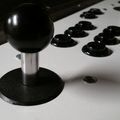
@TristanB My first thought is to look into low-activation-force microswitches, but that's because of my background in pinball and arcade stuff, read on only if you think it's relevant.

Microswitches are cheap and plentiful and simple and come in an enormous variety of activation forces. The most sensitive I have ready access to are the ones at the bottom of coin mechs, which can activate from the weight of a falling coin, and then they go up to the sorts used on pinball playfields and videogame control panels, which are designed to stand up to heavy use.

There's also the switches used in mechanical keyboards, which are a *sort* of microswitch, and which also come in a wide variety of "lightness" that range from "Tensing your fingers to press them" to "Tensing to *avoid* pressing them."

However you go, most microswitches provide an audible and tactile CLICK that tells the presser that they've been pressed. Most microswitches don't come with "buttons" per se, there'll just be a small nubbin that interfaces the button to the switch, but if your friend can still find/feel for the nubbin and just lacks strength, then leaving the nubbin bare might actually work pretty well for them.