 nixCraft 🐧
still thinking about this one
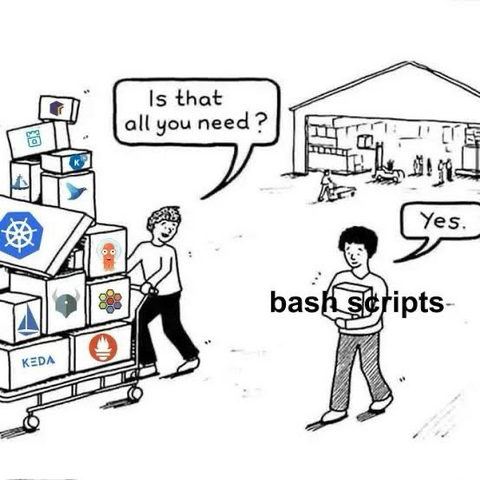
@anderseknert we wrote k8s in bash in 2015. We made mistakes. It caused problems. It was rocket surgery.
Moving to k8s very much helped make things manageable because there are docs and examples and help available. It is still really hard but there is now a realistic chance others can pitch in and build things in our environment.
In my bash script version I was doing multi-region which these days we'd call multi-cluster.
It deployed to Dallas, checked it was OK, then London, checked it was OK and then Sydney.
Except I got a boolean wrong in the check. One day it walked around the planet breaking each data center and moving on to the next one.
If my script was part of something big and well-used (such as k8s) then someone else would have spotted it before me.
@bassplayer I stayed off k8s for a while because it was immature and the team were just getting used to Docker.
It was quite a jump to move to k8s, but the team figured it out along the way and things were great.
 Anders Eknert
 MyForest
 cmdrSprocket
 Niklas Enns
 bassplayer
 Paul Lalonde