#Astronomy #Astrodon #HistoryOfScience #Science #Telescopes #MtWilson #VARDay
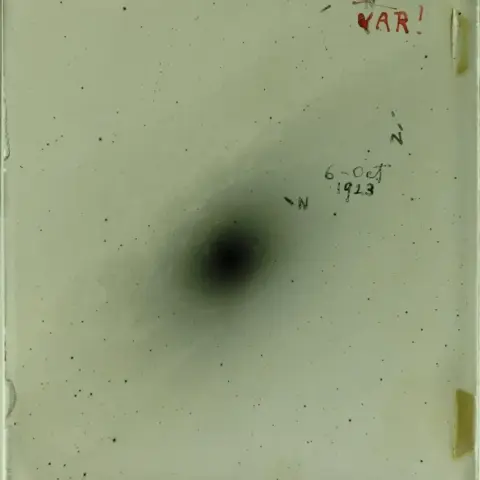
What's the VAR! plate, you ask? (I mean, I assume a few of you followed me because I'm an astronomer, right?)
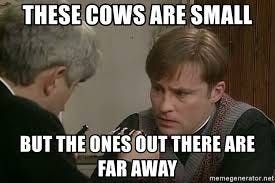
So, did you ever see the #FatherTed clip about cows -- these ones are small, those are far away? Space is pretty much like that. In this case, though, the cow was the Andromeda Nebula. Was it small, but close to us? Or huge and really far away? If the Universe was just the Milky Way, it had to be the former. If the latter? Then the Universe is a whole lot bigger!
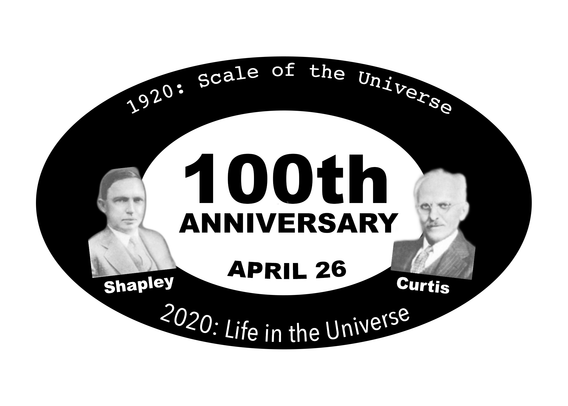
Astronomers will tell you that, at this time, there was a great debate -- no, a The Great Debate -- between two leading scholars at the Smithsonian Natural History Museum. This debate ignited public interest and set the stage for what was to come.
(These astronomers are probably *vastly* overselling how important this debate was. People with niche hobbies tend to do that with minor events.)
There's this relation -- now called the Leavitt Law -- that for stars that have periodic variations (bright, faint, bright, faint), you can connect how long it takes to complete a cycle with how *intrinsically* luminous it is.
If you know the period, you know how bright it is. Compare that to how bright it appears, and you know a star's distance. So, by finding a variable star in Andromeda, Hubble had found a way to directly measure its distance -- and to solve the Great Debate!