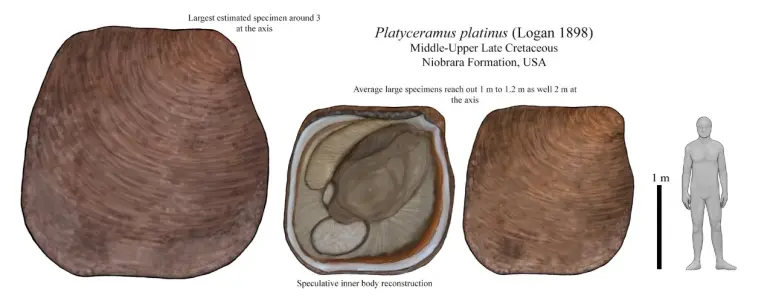
Today for #FlatClamFriday Platyceramus cycloides (prev. P. platinus), the biggest, flattest clams that ever lived. During the Cretaceous these meter-wide XXXL pizzas of the sea thrived in in a variety of habitats, particularly at the bottom of the Cretaceous Interior Seaway that covered much of N. America. Exceptional specimens have been found approaching 3 m in size! They hosted vibrant collections of symbiotic fish, bivalves, shrimp and other creatures in their shells! #clamFacts
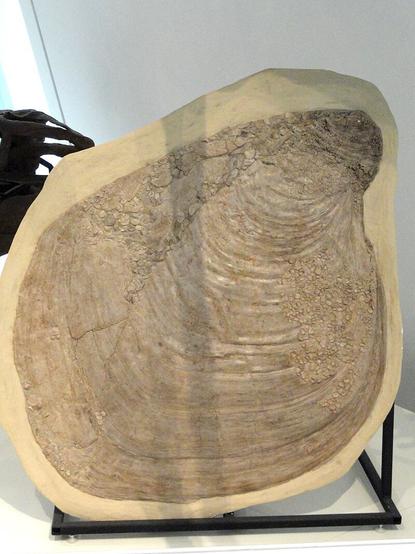
they really are thought to have reached 3 meters aka 10 feet (in rare cases)! astoundingly big clams (most reached about 1 m). artist source: https://twitter.com/FabioAleRomero/status/1472242914252185612
Fabio Alejandro on X

A god oyster Platyceramus represents the biggest bivalve ever, this flat wide square shaped Inoceramid lived on the seabed of the Western Interior Seaway at depths of 300 m, being host of some of the surrounding fauna which were sometimes preserved inside the shell

X (formerly Twitter)
@dantheclamman wow, how big is the actual animal inside of the shell is 3 m across?
@SteveWang251 they had comparatively thin shells and not very inflated (aka, kind of like a poofy flatbread), but it would still likely mean a very heavy animal on the order of hundreds of kilos, like a modern giant clam! Just read a paper about a rare specimen where traces of the elaborate gills were preserved https://onlinelibrary.wiley.com/doi/full/10.1111/pala.12046
@dantheclamman 3 meters 🤯 I am always fascinated with the
extreme sizes molluscs can attain. Any idea why they were that large (photosymbiosis, predation)?
@barankarapunar people speculate about chemosymbiosis as an energy subsidy, based on isotopic observations, environmental interpretation. There are no chemosymbiotic clams in modern day anything like this in size or growth though!

@dantheclamman I think we're going to need a bigger bucket.

and a LOT of butter.

@dantheclamman boosting in honor of the glorious hashtag #ClamFacts
@dantheclamman
I showed this to my brother and he inquires:
"Did they live in pebbled areas? Where they could actually dig in? I can't see something like that burrowing in sand, unless its foot is a shovel."
@jaimeJ they lived in low-energy muddy areas. There's been a ton of discussion of their mode of life and whether they buried at all, but they likely used their giant flat shape like a snowshoe to rest on the surface of the substrate and avoid being buried in the mud!
@dantheclamman I misread this as "three metres" at first but one metre is still really freaking big holy crap