 Rosamundi
Oh.
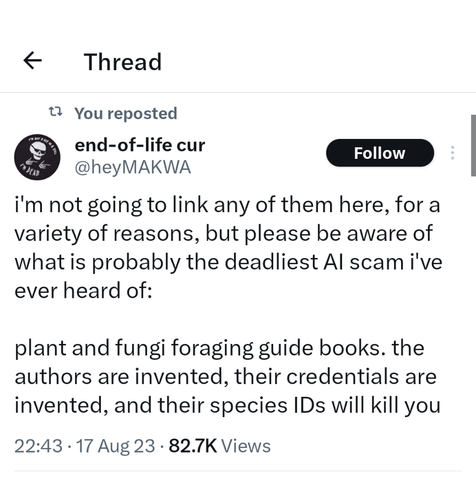
@scohoe @rosamundi I disagree. Nothing against the book itself, but we shouldn’t ignore the works of other foragers and different voices in the foraging world.
However you are touching on one thing we can be doing to mitigate this. Which is specifically focusing on books by authors we’re aware of and/or vouched for by trusted sources. (Though beware of fake books pretending to be by known authors, as that’s another thing that’s been happening.)
@Hanfbaum @scohoe @rosamundi absolutely. That was part of what I was referencing. I’ve seen some authors point out that even when they found out about books impersonating them on Amazon, they couldn’t actually do anything about it.
But if an author has an online presence, that’s one way to verify that a book should be theirs, barring books that flat out copy the title and cover.
Mind, the gravity of the situation hasn’t been in doubt in this convo.
@glitchontwitch @scohoe @rosamundi
How can we be aware when, as beginners, we have no guidelines for what is fake and dangerous? Names, titles, and determinants of fakery seem vital to me. Are the books published in hardcopy and sold in stores, or are they online pubs?
 Glitch
 scohoe
 Hanfbaum
 FreebirdFrolic