 Timon 🏳️🌈 🐻
 PulkoMandy
I have just realized a very annoying thing: the "Austr-" in "Austria" means East, from German Öster. The "Austr-" in "Australia", on the other hand, means South, from Latin Australis.
Thank you, have a nice day.
I have just realized a very annoying thing: the "Austr-" in "Austria" means East, from German Öster. The "Austr-" in "Australia", on the other hand, means South, from Latin Australis.
Thank you, have a nice day.
@arcepi apparently there is a Wikipedia page entirely dedicated to it: https://en.wikipedia.org/wiki/Name_of_Austria
If I understand well, it originally was the eastern border of whatever stood at its West at the time.
Which also reveals: the Romans called it Noricum, 'according to Heer, no- or nor- meant "east" or "easterns"' (and not North, of course)
So it looks they have just been trying to confuse people about cardinal points for 2500 years...
"This has led to much confusion [citation needed]"
English enjoys messing with our heads
@pulkomandy @arcepi "This has led to much confusion [citation needed]"
Did it?
The only people I've ever seen confused about it were American geography bloggers.
We all learn about the Romans in primary school and it never confused anybody here. They went north until the river Danube, which was a natural border and easy to defend. Where my home town of Linz (back then Lentia) was founded in 799AD.
Same way a 1000 years ago the Danube flowing to the east was used for trade.
@pulkomandy @arcepi so the Latin speaking people were in the "South" of the danube. The Germanic speaking people were in the west. When they colonised the area they called it "Ostarrichi" (996AD), simply empire to the east. Because they didn't speak Latin anymore.
If you think that is confusing read up about the name Deutschland aka Germany aka Allemagne
East the Danube. Which confuses a lot am American geography nerds still to this day. As Upperaustria is northwest of Loweraustria as the name follows the river Danube down stream. Has nothing to do with the position on a map.
@pulkomandy @timbray https://youtu.be/B14Gtm2Z_70
My apologies for the hours you're about to lose going through their video back catalogue...

@nikclayton my fav is still The West Wing "the maps are wrong" but this is also great 😂
Eta: the embed (mind the commercial fade break)

And Austrasia had nothing to do with Austria, Australia and Asia:
Yep, our defunct "Austral" currency had nothing whatsoever to do with Austria.
Unrelatedly: we liked the name.
@pulkomandy In the Belgian capital, there are three main train stations, one of which is called Bruxelles-Midi and it's not the middle one (which is called Bruxelles-Central), but South. https://en.wikipedia.org/wiki/Brussels-South_railway_station
Since this "Nord-South" connection is actually oriented Nord-East to South-West on the map, it is also used to connect East to West. I grew up in the East, so for me, Midi was the last station, meaning South, but actually gate to the West parts of Belgium. 🙃
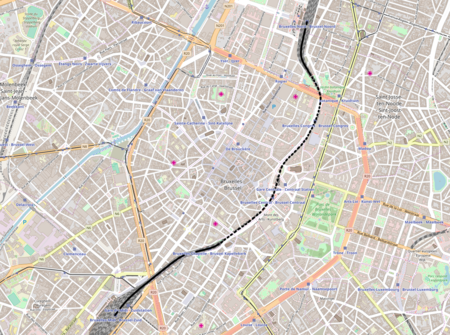
@SylviaFysica @pulkomandy They took the “midi” as in French, meaning “the moment of the day when the sun is the highest”, which in Europe means the South. :p
It’s just that the Belgian railway company never use Brussels South to name it, even in English (they use Bruxelles Midi/Brussels Zuid), although South is apparently the official name in English.
I guess they don’t want people to mix it up with the Brussels-South airport (which is in Charleroi, 50 km South, and where there’s no train).
@pulkomandy adding more detail for whoever might be interested:
I did not know (either 🤔) of those, and I am delighted that now I do!
@pulkomandy That's nothing.
September means the seventh month
October means the eighth month
November means the ninth month
December means the tenth month
Now you'll be confusing the names/numbers of the last third of the year, you're welcome.
@pulkomandy thanks, i hate it
they both come from the same root though, which does mean dawn rather than south https://www.etymonline.com/word/austral
 arcepi
 Deb4+ aka Deborah DT 🏳️🌈🏳️⚧️
 Newro
Newro David
David Çağatay Yiğit Şahin
 Hugh Young-Bish
 Tim Bray
 Nik
Nik Renée
Renée Pidj
Pidj Luo Binghe baculum truther
 Rihards Olups
 rag. Gustavino Bevilacqua
 (((Klefstadmyr)))
 Ángela Stella Matutina
 Landurologe 🔬🚲
 Sylvia Wenmackers 🦉🍀
 n3wjack
 meduz'
 Kevin
Kevin MizzBassie
 essjax
 dyke dragon 💜
 Dave Irving
 Edelruth, PBS Passport Holder
 Gurre Vildskägg
 Mori
Mori Virginicus
 Simon dē Gulielmō 🐧
 Joshu
Joshu aaron
aaron Janne Moren
 gullevek ☢️ 🇯🇵
 nev
nev Quinn 🌸🏳️⚧️
 llewelly
 Inken Paper 🇵🇸
 Danneau
 FiXato
 Juan Rafael Fernández
 Lstn2urmama 🇨🇦