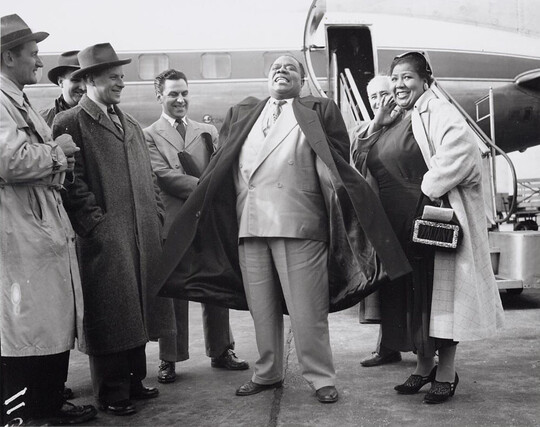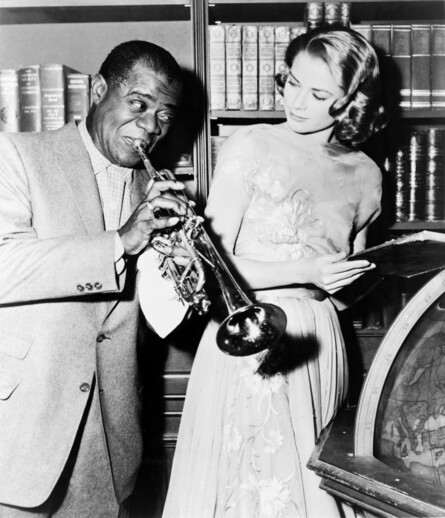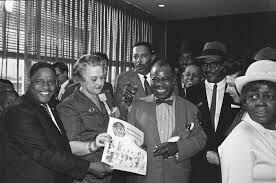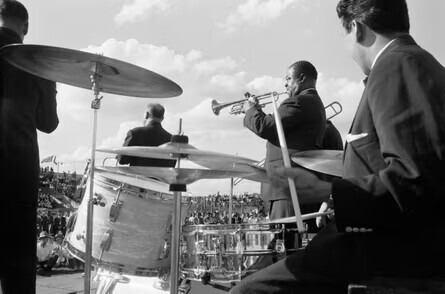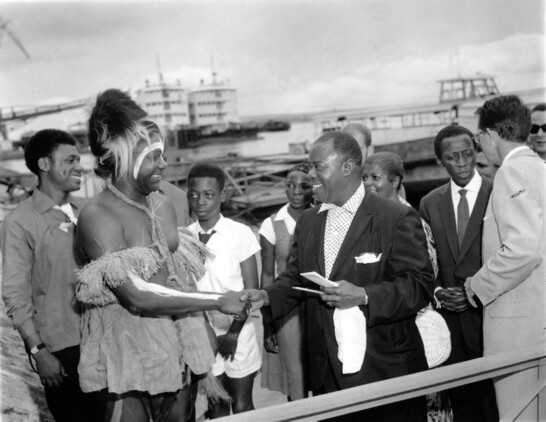
Born 122 years ago this week, Louis Armstrong's charisma & warmth captivated audiences globally. But, by the 1950s and 1960s, many Black Americans perceived him as outdated, out of touch with civil rights, and hesitant to voice his opinions—labeling him an "Uncle Tom." This deeply wounded Armstrong. But he was a far more complex & nuanced man than they knew.

https://youtu.be/WPspHmFoEYs

1/

@[email protected] @BlackMastodon #BlackMastodon #Histodons #History #StillWeRise #BlackHistory
#Music
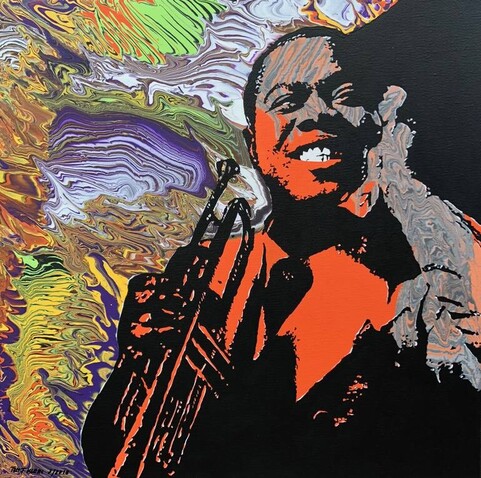
Louis Armstrong documentary

YouTube

Over his fifty-year span in the industry, Louis Daniel Armstrong witnessed jazz evolve from its foundational stages to the bebop, cool, and free forms cherished today. He wasn’t just a gifted trumpeter, Armstrong was also a celebrated singer known for his vocal improvisation and scatting abilities. Today, more than half a century after his death, his vast contributions to Western culture remain highly revered.

https://youtu.be/VqhCQZaH4Vs

2/

#BlackMastodon #Histodons #History #BlackHistory #music

Louis Armstrong - What A Wonderful World

YouTube

Louis’ early years were spent in New Orleans, LA, where he was born in poverty in 1901. Without a father, the young boy found solace and support with the Karnoffskys, a Lithuanian Jewish family. They embraced young Armstrong, offering him both employment and a nurturing environment.

3/

#BlackMastodon #Histodons #History #StillWeRise #BlackHistory
#Music

Through his interactions with them, he experienced a different facet of racism. In his 1969 memoir, he reflected on witnessing the discrimination the Karnoffskys faced from "other white folks", further shaping his understanding of racial prejudices.

4/

#BlackMastodon #Histodons #History #StillWeRise #BlackHistory
#Music

Louis Armstrong was most influenced by Joe “King” Oliver, a fellow cornet player and mentor, who played a significant role in shaping Armstrong’s early style. Although only 15 years older than Louis, Joe Oliver’s techniques and musical ideas had a lasting impact on Armstrong’s approach to playing the trumpet and improvisation.

5/

#BlackMastodon #Histodons #History #StillWeRise #BlackHistory
#Music
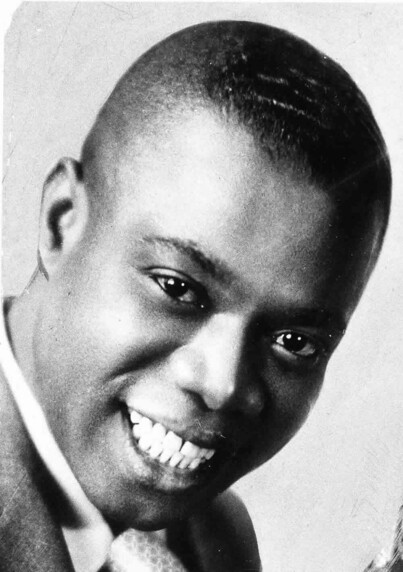
He made groundbreaking recordings in the 1920s and toured overseas as “Ambassador Satchmo,” at one point playing a concert behind the former Iron Curtain and throughout Europe and Africa; all the while upending the racist barriers put in front of him.

6/

#BlackMastodon #Histodons #History #StillWeRise #BlackHistory
#Music
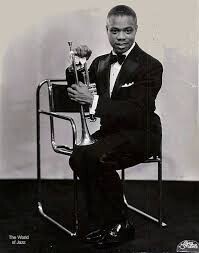
By 1932, young Armstrong was the biggest-selling artist in the recording industry and he began traveling with his orchestra around the country to expand the audience for his unique, and “full, huge, golden” musical sound and scat-singing—a form of improvised jazz singing.

7/

#BlackMastodon #Histodons #History #StillWeRise #BlackHistory
#Music
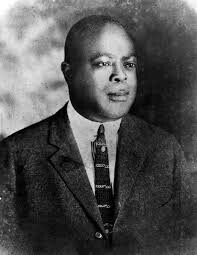
But it was not easy for Black American musicians on the road at that time. They couldn’t stay overnight in any of the hotels for White people, nor dine in many restaurants because of their skin color, nor have access to public rest rooms. They had to enter the back entrances of venues where they were scheduled to perform and leave the same way.

8/

#BlackMastodon #Histodons #History #StillWeRise #BlackHistory
#Music
But during the Swing Era, which occurred from 1935 until World War II in the 1940s, the music great was also “breaking down one racial barrier after another. Armstrong, for example, was the first Black musician to insert a clause in his performance contracts that stipulated he would not play in any hotel venues where he would be barred from overnight lodgings.

9/

#BlackMastodon #Histodons #History #StillWeRise #BlackHistory
#Music
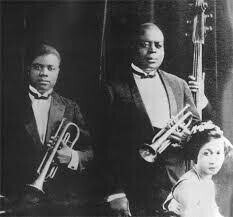
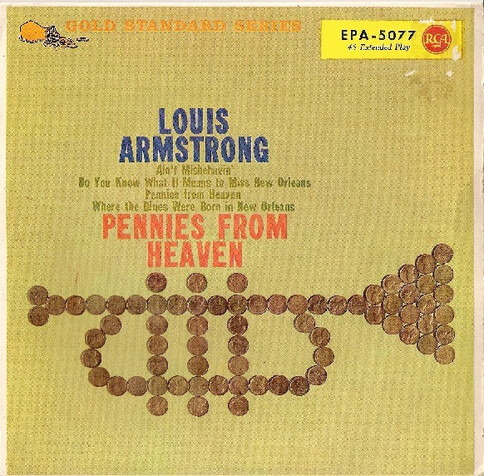
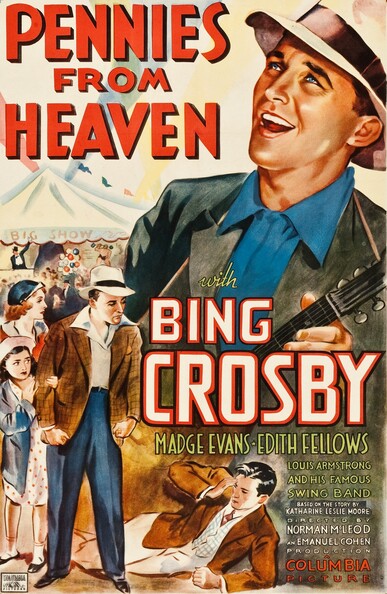
He was the first Black American musician to assume the role of announcer on radio broadcasts. In 1936, Louis became the first Black musical artist to get featured billing with fellow White performers in a Hollywood, CA, film (Pennies from Heaven), that also starred famed singer Bing Crosby.

10/

#BlackMastodon #Histodons #History #StillWeRise #BlackHistory
#Music
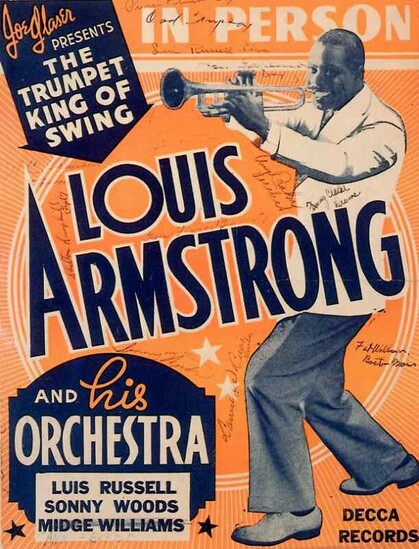
A pivotal aspect of Armstrong's legacy was his role as one of the pioneering Black-American artists to gain widespread acceptance across racial boundaries in mainstream entertainment. While America grappled with deep-seated racism, Armstrong skillfully navigated many of the challenges that Black-Americans confronted from the 1930s onwards.

11/

#BlackMastodon #Histodons #History #StillWeRise #BlackHistory
#Music
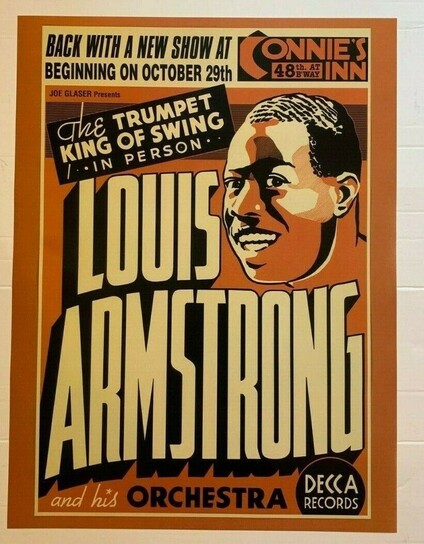
Though he enjoyed a level of acclaim and success typically reserved for white stars, he did not remain insulated from the racism of the time. Touring in the deep south, he faced constant rejection and found it hard to secure gigs due to racist promoters. Police harassment was another ordeal, exemplified when he was jailed in Memphis due to baseless suspicions.

12/

#BlackMastodon #Histodons #History #StillWeRise #BlackHistory
#Music
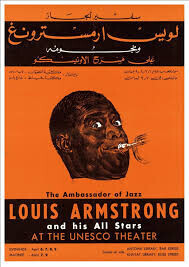
For much of his career, Armstrong tried to steer clear of overt political statements, focusing on his music. This led some to believe he was avoiding the fight for civil rights. Armstrong's role in the civil rights movement offers a unique insight into his views on American race relations. Known for his trumpet skills and singing, Armstrong was a figure of many talents: a goodwill ambassador, film star, writer, and collage artist.

13/

#BlackMastodon #Histodons #History #BlackHistory
#Music

Despite his prominence, the "Father of Jazz" remained silent on racial issues for a long time. He refrained from marching or appearing alongside civil rights leaders. When questioned about his stance, Armstrong would say, “I don’t get involved in politics. I just blow my horn.”

14/

#BlackMastodon #Histodons #History #StillWeRise #BlackHistory
#Music
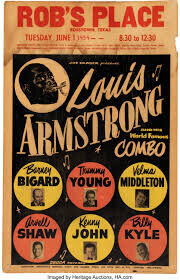
Armstrong’s reticence on some racial matters might have been strategic; perhaps he aimed to effect change from the inside by achieving unparalleled success and then pioneering integration in music. As evidence, he was part of historic integrated musical collaborations in 1929.

15/

#BlackMastodon #Histodons #History #StillWeRise #BlackHistory
#Music
Eventually , he faced criticism during his lifetime from some Black activists and intellectuals who labeled him an “Uncle Tom.” Armstrong’s jovial and entertaining stage presence, including his broad smile and tendency to laugh, was sometimes seen as pandering to white audiences or reminiscent of minstrelsy.

16/

#BlackMastodon #Histodons #History #StillWeRise #BlackHistory
#Music
While Armstrong did believe in racial integration and spoke out against segregation, his methods were different than the more confrontational tactics of civil rights activists in the 1950s and 1960s. He believed in winning white audiences over with his talent and humanity.

17/

#BlackMastodon #Histodons #History #StillWeRise #BlackHistory
#Music
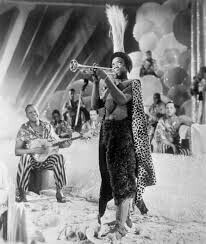
Despite these criticisms, many overlooked the nuance of Armstrong's position. As one of the first Black-Americans to be welcomed into elite white circles, he walked a tightrope between two contrasting worlds.

18/

#BlackMastodon #Histodons #History #StillWeRise #BlackHistory
#Music
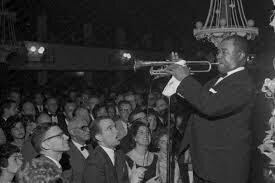
Highlighting his convictions, Armstrong once even canceled a planned tour of the Soviet Union for the State Department, stating, "The way they're treating my people in the South, the government can go to hell". He asserted that representing a government at odds with its citizens was hypocritical. This outspokenness led to the FBI maintaining a dossier on him, challenging the 'Uncle Tom' narrative.

https://archive.org/details/LouisArmstrongFBI/page/n1/mode/1up

19/

#BlackMastodon #Histodons #History #StillWeRise #BlackHistory
#Music
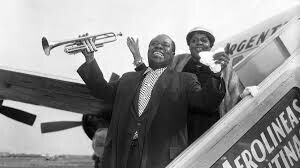
Louis Armstrong : Federal Bureau of Investigation : Free Download, Borrow, and Streaming : Internet Archive

FBI file on Louie Armstrong

Internet Archive

The smash success of Hello, Dolly! was preceded by a change in attitudes toward Armstrong among younger Black musicians that emerged during the early and mid-1950s.

After years of breaking down all of those racial barriers and being a hero in the Black American community, Louis Armstrong started seeing a shift in his status.

20/

#BlackMastodon #Histodons #History #StillWeRise #BlackHistory
#Music
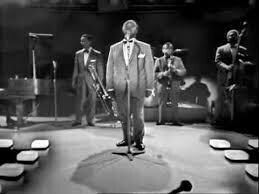
A new generation of Black jazz musicians like Miles Davis and Dizzy Gillespie viewed him as a relic and pressed him to speak out more against racial injustice.

To Armstrong’s mind, he was leading his fellow Black Americans by example, but now people wanted him to come out and say more.

https://youtu.be/ZO1uMjz3n3w

21/

#BlackMastodon #Histodons #History #StillWeRise #BlackHistory
#Music
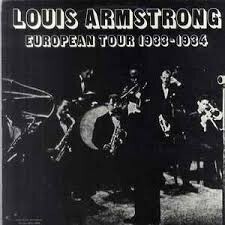
Dizzy Gillespie & Louis Armstrong - Umbrella Man

YouTube

@Deglassco i like this, but at the same time, there's an element to it that's a bit demeaning. "dance for me, negro"

for a long time, white Americans would *only* like a black person if they could entertain.

there was less of this stuff in Europe. The Beatles insisted on playing to mixed audiences when they came to America. they wouldn't play a room that wouldn't let everyone in.

@thor the Beatles were white. It was different for Black performers.
@Deglassco
I know it was a movie so he didn't write it but I've always felt uncomfortable about the way he plays 'himself' in High Society. (Way more than, for instance, as in Hello Dolly.)
@AlisonW that is the feeling of lots of people, but try placing it within the context of the era. That’s what I do.

@Deglassco

Of course it was strategic. His

@Deglassco

Working with Bing? Poor Louis must've wanted to scream or something.

@canusfeminacanis yes, he did. Many performers faced these challenges.

@Deglassco

Hotels that hired black musicians but wouldn't accommodate them overnight was a massive problem for all musicians at the time. A lot of bands were not mono-racial. Rehearsal space could be difficult to find, and travel plans could get screwed up by band members lodging in two or three different places.

@Deglassco I read "Satchmo Blows Up The World " years ago and wondered what the State Dept was doing behind the scenes while he was entertaining everyone. Like there's a secret history there that hasn't yet been shown. [ Not that Armstrong himself was involved in it ].
Maybe not, but there's enough bad stuff we know about to make me suspicious.

Link for those not familiar with the book. https://www.hup.harvard.edu/catalog.php?isbn=9780674022607

@edwilk I wonder if they put him on a civil-service per diem.

@Deglassco @[email protected] @BlackMastodon
Love, love, love your profiles.
What a great way to learn more about the people we thought we knew and remember what we've forgotten about the past.

Please, keep it up

@Deglassco @[email protected] @BlackMastodon Louis was wonderful. Both as a human being AND as a musician. One of the few celebs whose passing made me cry. I was only six years old, but I knew a legend had left the stage.
@Sorien yes, when he died, people really realized what a special human being he had been. There was an outpouring of appreciation for him.
@Deglassco @[email protected] @BlackMastodon Thank you for this incredible thread! I grew up on Armstrong’s music, but I didn’t know a lot of this.
@Deglassco @[email protected] @BlackMastodon looking at Armstrong- I think a lot of pressure is placed on famous people- especially those of the global majority- to 100% always be on point and pushing the envelope. It’s got to be a hard place to exist in on a daily basis.
@Htaggert He certainly had pressure to speak up. But it didn’t come naturally to him. But the clamor got so loud he couldn’t ignore it in the end.

@Deglassco @[email protected] @BlackMastodon

Just wanted to mention (unless I missed it somewhere within your thread) that he did not like his first name pronounced like "Louie" (as though he was a "boy"). He was "Lewis".

Thank you for this thread on the man Pat Metheny called "the single most important figure in our music...probably the greatest jazz musician that has ever lived."

@duaneaubin yes, he said that only white people called him “Louie.”