 mbulskov
 Joanne Fisher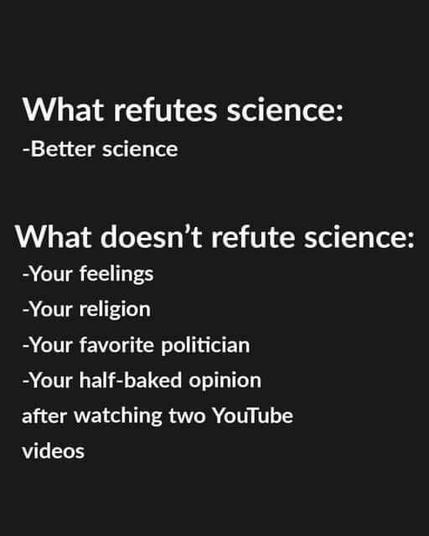
 Baphnedia
@Jedigirl
..but after watching THREE youtube videos I can calculate the hypotenuse of my idiocy? XP
@soatok
-Your fully baked opinion after watching Fox 10 hours a day.
Can you please give a pointer to an example?
@mfamelis we do a lot of work on mythology, for example, somewhat in the tracks of Levi-Strauss, the famous structuralist. In Mythologiques, analysis of almost 1000 Amerindian stories, he came very close to demonstrating a universal structure through transformations of myth. We think he was successful in that demonstration but not in explaining why it was there (he had various mentalist reductionist ideas, and no background of evolution whatsoever). So in our research, we think this kind of data, from myths and cosmology, is very important for archaeologists studying human origins to take on board as a field of data where predictions can be made or models constrained.
There are many other areas where Indigenous ecological and zoological knowledge are simply much more deepgoing in understanding of ecosystems and Western science plays catch up (I could cite examples e.g. about eland behaviours, which figure centrally in ritual of African hunter-gatherer groups).
That's just for starters...
@mfamelis
Another great example of a scientist getting to grips with Australian First Nations knowledge in astronomy.
Indigenous cosmologies operate via metaphor and analogy (as does science, because that's how humans think). Science just needs a lot more respect of expertise that's been accumulated over very long periods of time in sustainable systems.

The First Astronomers is the first book to reveal the rich knowledge of the stars and the planets held by First Peoples around the world.Our eyes have been drawn away from the skies to our screens. We no longer look to the stars to forecast the weather, predict the seasons or plant our gardens. Most of us cannot even see the Milky Way. But First Nations Elders around the world still maintain this knowledge, and there is much we can learn from them.These Elders are expert observers of the stars. They teach that everything on the land is reflected in the sky, and everything in the sky is reflected on the land. How does this work, and how can we better understand our place in the universe?Guided by six First Nations Elders, Duane Hamacher takes us on a journey across space and time to reveal the wisdom of the first astronomers. These living systems of knowledge challenge conventional ideas about the nature of science and the longevity of oral tradition. Indigenous science is dynamic, adapting to changes in the skies and on Earth, pointing the way for a world facing the profound disruptions of climate change.'This book marks a profound paradigm shift in our understanding of Indigenous scientific traditions, how they are transmitted, and their relevance to life today.' - Professor Marcia Langton, University of Melbourne'A ground-breaking book of enormous scope.' - Brian Schmidt, Nobel Laureate in Physics'A glimpse into Indigenous ways of reading landscapes reflected in the night sky through ancient processes of inquiry.' - Dr Tyson Yunkaporta, author of Sand Talk'A wonderful combination of scholarship and poetry.' - Dr Annette S. Lee, Lakota astrophysicist'Beautiful, engaging, and startlingly profound.' - Alan Duffy, Professor of Astrophysics
 Julie Sqveakaroo
 MadisonMonkey
 T Kennedy
 Hawkmoon
 Menno
Menno Radical Anthropology
 Michális Famelis/Φαμέλης
 MárciaW 🇸🇩
 Rocannon
 ⚡️ Kozmo Voted Blue ⚡️