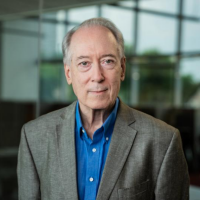
Great Wired read about a Wikipedia editor who's making sure that no one gets away with Nazi reputation-laundering. https://getpocket.com/explore/item/one-woman-s-mission-to-rewrite-nazi-history-on-wikipedia?utm_source=pocket-newtab

"...history is an edit war. Truth, factual and moral, hangs in the balance."

One Woman’s Mission to Rewrite Nazi History on Wikipedia

Ksenia Coffman’s fellow editors have called her a vandal and a McCarthyist. She just wants them to stop glorifying fascists—and start citing better sources.

Pocket
@dangillmor how do we subscribe to her patreon?
@dangillmor It is an edit war. And she has my utmost respect.

@dangillmor - I can relate. Unless you are very committed, like Ksenia, it's hard to correct articles that are part of someone's skewed world view, state propaganda, other interest.

Perhaps #Wikipedia should do away with anonymous editing and pay #historians to curate certain topics. Let them fight edit wars, not anonymous amators.

As it is, don't assume that Wikipedia is objective or even correct, although it is usually more about the imbalance and selection of quotes than about obvious lies.

@tom_andraszek

IP editors are usually *less* anonymous than logged-in users; and often do very constructive edits [3].

Paying historians would be a can of worms.

Anecdotally, one recent (IP) editor claiming to be a historian got blocked for a month in relation to the #SashaKorban versus #Jorit murals in #Mariupol [4][5], due to not refraining from personal attacks after multiple reminders.

[3] https://en.wikipedia.org/wiki/Wikipedia:Not_every_IP_is_a_vandal

[4] https://en.wikipedia.org/wiki/Sasha_Korban

[5] https://en.wikipedia.org/wiki/Jorit

@dangillmor

Wikipedia:Not every IP is a vandal - Wikipedia

@boud @dangillmor - why would paying a professional to do their job be "a can of worms"?

I consider most users with login accounts (there is no identity verification there) and IP addresses, as anynonymous/unverified. A book or an article should have an author/editor who takes responsibility for it. I can think of two books that have unclear/unknown authors: The Old Testament and The Protocols of the Elders of Zion. An encyclopaedia should be like neither of them.

@tom_andraszek

1/2
Can of worms:

- WP:NOR [6] - historians are mainly paid to do original research; reviews by historians typically include their WP:SYNTHESIS;

- WP:PAID [7] - paid historians would have to mostly edit talk pages; unlikely that they would be patient enough;

- unpaid volunteers, who do most of the editing work, would lose motivation

- who would decide which historians to pay? how much? what contracts?

@dangillmor

[6] https://en.wikipedia.org/wiki/WP:NOR

[7] https://en.wikipedia.org/wiki/WP:PAID

Wikipedia:No original research - Wikipedia

@tom_andraszek

2/2
The whole point of review in Wikipedia is that the source of the information is
not Wikipedia authors, it's the external information sources that count: WP:RS [8].
The authors of *those* sources take responsibility for the information; Wikipedians
only take responsibility for fairly summarising that info.

An encyclopedia should have known *sources*, and transparent editing. Wikipedia has these.

@dangillmor

[8] https://en.wikipedia.org/wiki/WP:RS

Wikipedia:Reliable sources - Wikipedia

@boud @dangillmor - there is a problem. The first step to fix it is to acknowledge it. "A 2008 paper in Reference Services Review compared nine Wikipedia entries on historical topics to their counterparts in Encyclopædia Britannica, The Dictionary of American History and American National Biography Online. The paper found that Wikipedia's entries had an overall accuracy rate of 80 percent, whereas the other encyclopedias had an accuracy rate of 95 to 96 percent." from: https://en.wikipedia.org/wiki/Reliability_of_Wikipedia
Reliability of Wikipedia - Wikipedia

@tom_andraszek

2008 is 15 years ago.

The problem is well-known and well-acknowledged:

1: peer-reviewed original research papers contain errors and misleading statements

2: Wikipedia WP:NOR reviews contain errors and misleading statements

It's called #epistemology.

1 has many limited resources in the #CommonPoolResource [10] sense (tools, observed/experimented world, researcher salaries); 2's main CPR limited resource is time.

@dangillmor

[10] https://en.wikipedia.org/wiki/Elinor_Ostrom#Design_principles_for_Common_Pool_Resource_%28CPR%29_institution

Elinor Ostrom - Wikipedia

@dangillmor My grandfather spent years in a Fascist PoW camp; now I live in a city where almost 100,000 of us were dragged out of their homes by Nazis, to meet miserable deaths in concentration camps.

This woman, Ksenia Coffman, is performing a service for the world. All hail.

@TomSwirly @dangillmor In Spain? My grandfather was imprisoned after the Civil War. Not sure how long.

@chris @dangillmor

And, wow, that's intense and sad. One of the few bits of really good news in my lifetime was the liberation of Spain from Fascism...

@dangillmor @taylorlorenz Thanks for sharing, that was a great read about her important work with all sorts of education for the reader too!
@dangillmor I liked the property maintenance metaphor. She's treating nazi apologist edits like black mould. They need to be scrubbed away, because they are poisonous.
@http_error_418 @dangillmor poisonous AND will infest AND spread if gone unchecked!!
@dangillmor excellent

@LindaPotter @dangillmor

That's the 7 Sep 2021 article [1].

You can see the detailed evidence that Coffman collected in the recent (2023) Arbitration case at [2] in relation to one editor. It was discovered during the proceedings that that editor is a sockpuppet - and so is now indefinitely banned. I was quite impressed by Coffman's careful and clear presentation of the evidence in this complex case.

[1] https://archive.today/2021.09.07-170821/https://www.wired.com/story/one-womans-mission-to-rewrite-nazi-history-wikipedia

[2] https://en.wikipedia.org/wiki/Wikipedia:Arbitration/Requests/Case/World_War_II_and_the_history_of_Jews_in_Poland/Evidence#Evidence_presented_by_K.e.coffman

@dangillmor the headline was worth taking a look, and I'm glad I did. Thanks for sharing

@dangillmor this is a great profile.

I am fascinated by the ‘keepers of the flame’ so-to-speak that help untangle historical narrative. It feels a lot like Heather Cox Richardson’s Letters from an American in purpose.

I am very curious about what keeps them going - there is the obvious but also a very strong motivation to contribute so much, so consistently and thoroughly.