As dilettante I keep myself perplexed why it is that remains isolated/divided/splitted across too many sub-fields —except when asking individually, all are top-fields ;) — then even with competing foundational theories within & across them..
ie: still makes sense to keep differentiating cognitive psychology & cognitive neuroscience?
ps: Check this CFP for a Berlin October workshop on: Neuroscientific Explanation
https://zirk.us/@MatejKohar/110666968974729314
CFP: Berlin Workshop on Neuroscientific Explanation (12th-13th October) Consider submitting an abstract and joining us at the TU Berlin if you are interested in the philosophical questions connected with the nature of explanation in #neuroscience. Deadline: 6th August. Keynote speakers: Galia Avidan (University of the Negev) Nir Fresco (University of the Negev) Friedemann Pulvermüller (FU Berlin) Peter Schulte (Uni Zürich) More info: https://www.tu.berlin/philkognition/events/neuroexp-2023 #philosophy @[email protected]
During pandemic's first/second year, on the bird site, I wrote something like:
» New day, new long in the making paper, plus also includes an extra section that proposes a new #neurotheory «
Then
@DrYohanJohn replied something like:
» You must be new in neuro «
And absolutely I was ;)
2/3
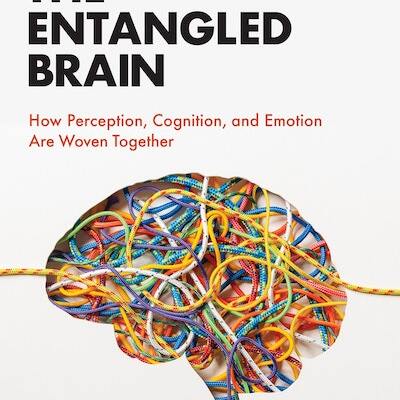
Latest #neuropod gem interaction:
@docartemis » talk about how the ideas in your book diverge from traditional thinking «
@PessoaBrain » Let me just say one thing:
figuring out exactly what is traditional thinking is really hard in neuroscience
...
people say, ok what's so different?
so, there's a whole spectrum, ...
when you push the field a little bit maybe too much,
they push back by saying either we knew ... or it's not what we really meant «
https://brainsciencepodcast.com/bsp/2023/209-luiz-pessoa
3/3
@teixi @Neurograce @docartemis
I said that?? I kind of like it 😁
By the way, I've had the experience you quoted so many times. It feels like every time we would take a colloquium speaker out...