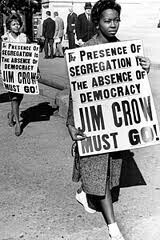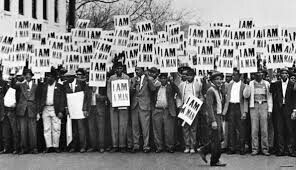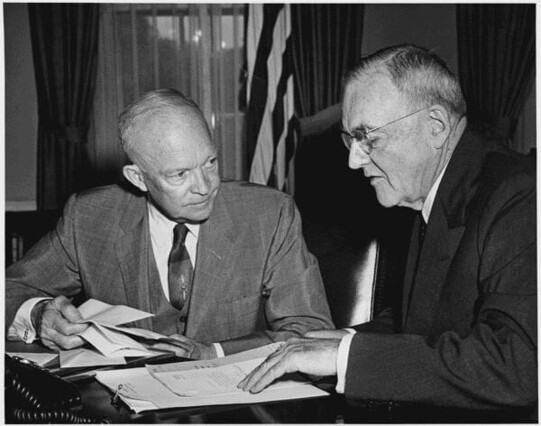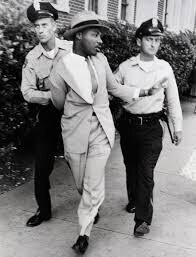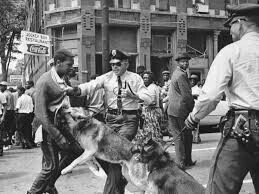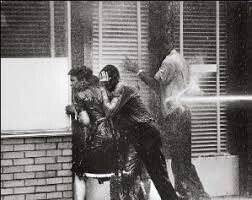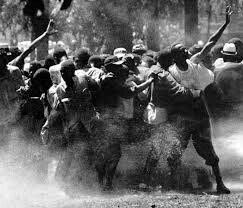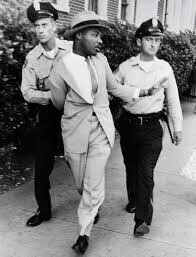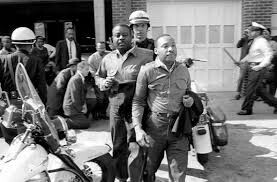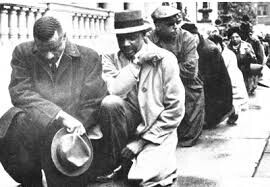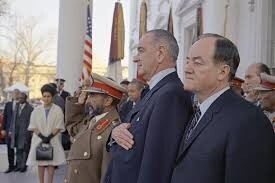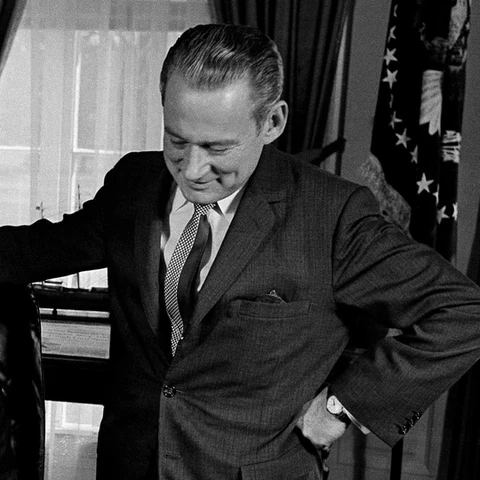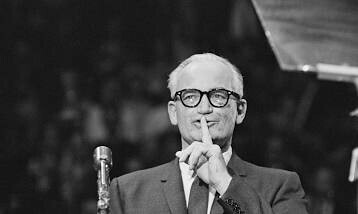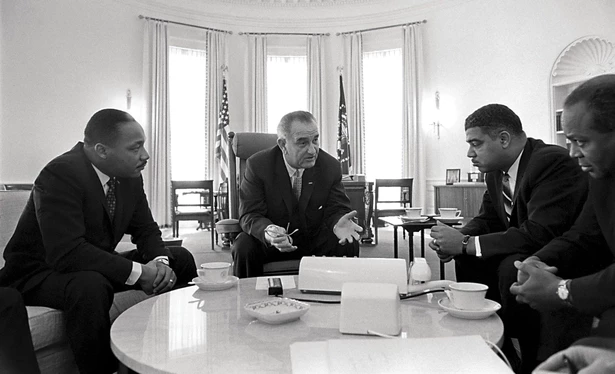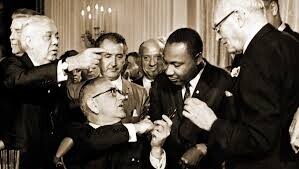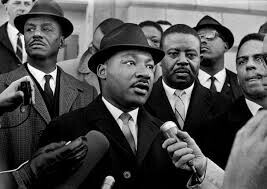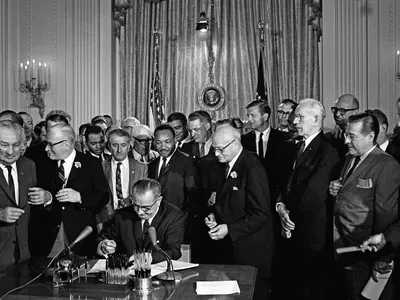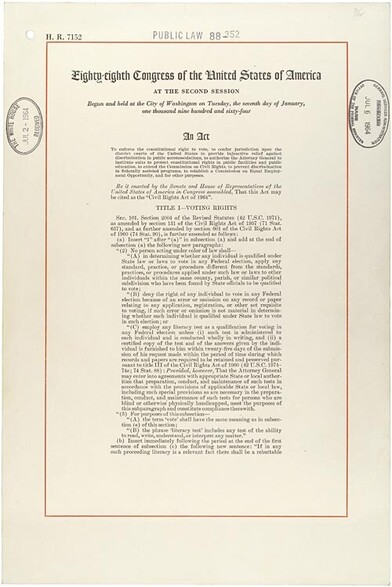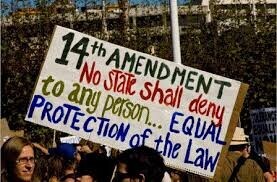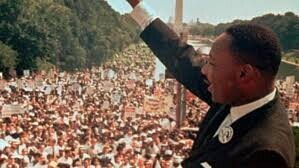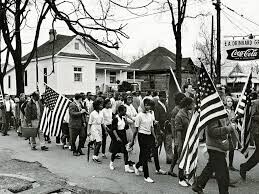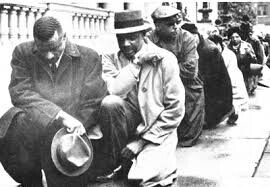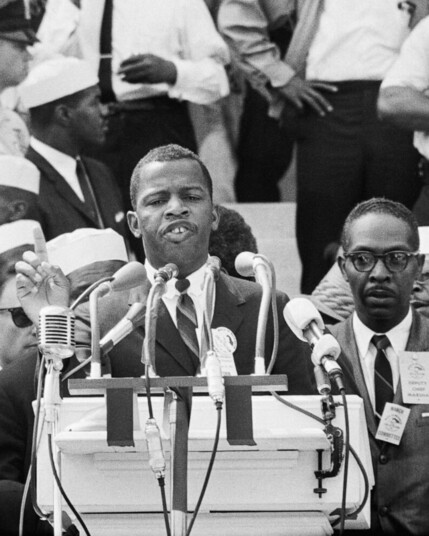
59 years ago, Pres. Johnson signed the 1964 Civil Rights Act, shaping America as we know it today. 60 years ago, everyday activities like dining, hotels, & public trans were pockmarked by segregation & discrimination. This Act is the most comprehensive civil rights legislation since Reconstruction, & we owe it all to the tireless efforts of ordinary citizens in the American civil rights movement.

1/39

#StillWeRise #BlackHistory #BlackMastodon
#Histodons #History
@[email protected] @BlackMastodon
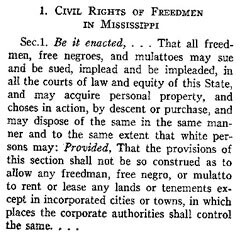
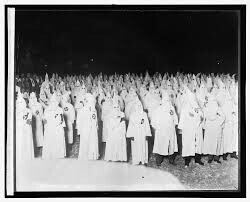
After the Civil War, a series of constitutional amendments were enacted. The 13th abolished slavery, the 14th granted citizenship to formerly enslaved, and the 15th ensured the right to vote for all men regardless of race. However, numerous states employed tactics like poll taxes, literacy tests, to disenfranchise Black citizens. They also enforced strict segregation through "Jim Crow" laws and tolerated violence the KKK.

2/39

#StillWeRise #BlackHistory
#BlackMastodon
#Histodons #History

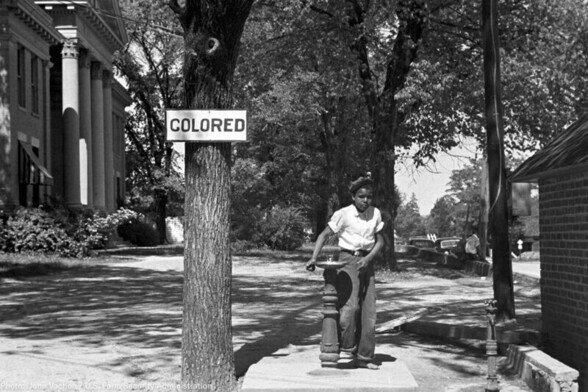
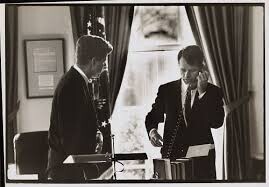
Following Reconstruction, the U.S. Congress did not pass any civil rights acts for several decades. Much of the South was characterized by "Jim Crow" laws, which legally enforced racial segregation. These laws relegated African Americans to the back of buses and mandated separate facilities for drinking, restrooms, and dining areas.

4/39

#StillWeRise #BlackHistory
#BlackMastodon
#Histodons #History

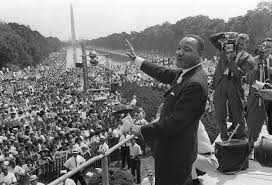
The Supreme Court's landmark 1954 ruling in Brown v. Board of Education, which declared racially segregated public schools unconstitutional, sparked the civil rights movement's efforts for desegregation and equal rights. Eventually, in 1957, it established a civil rights section within the Justice Department and a Commission on Civil Rights to investigate discriminatory conditions.

5/39

#StillWeRise #BlackHistory
#BlackMastodon
#Histodons #History

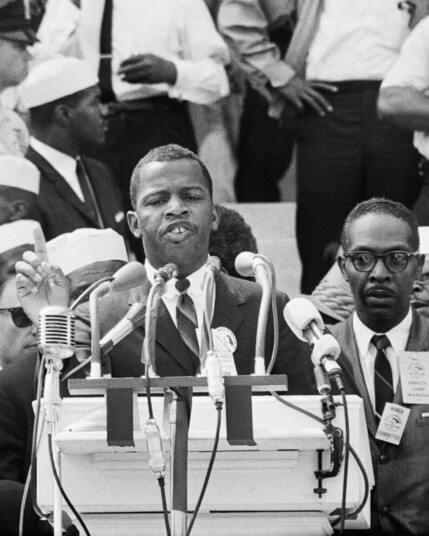
Three years later, Congress introduced bills allowing court-appointed referees to assist Black people in registering to vote. However, both of these bills were significantly weakened to overcome opposition from the southern states. The nation was deeply disturbed by the severe treatment of peaceful demonstrators across the Southern states.
This outcry led to the introduction of civil rights laws in 1957 and 1960.

6/39

#StillWeRise #BlackHistory
#BlackMastodon
#Histodons #History

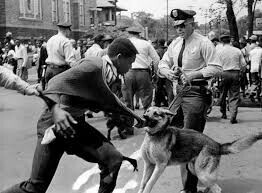
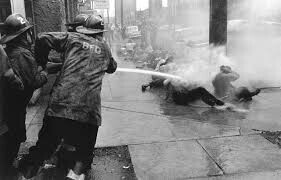
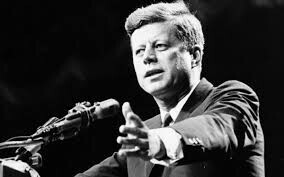
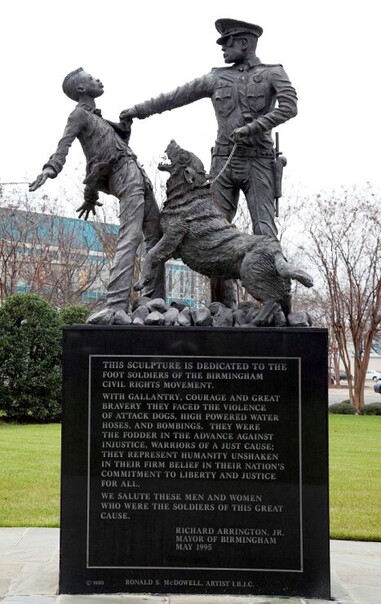
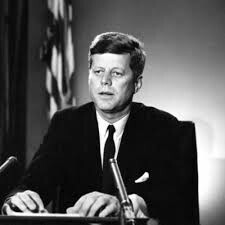
Upon entering the White House in 1961, President John F. Kennedy initially hesitated to endorse further anti-discrimination measures. Nevertheless, as protests erupted throughout the South, notably in Birmingham, Alabama, where police brutally suppressed nonviolent demonstrators using dogs, clubs, and high-pressure fire hoses, Kennedy felt compelled to take action.

7/39

#StillWeRise #BlackHistory
#BlackMastodon
#Histodons #History

The Kennedy administration witnessed the beginning of significant events such as sit-ins at Southern lunch counters, freedom rides to integrate interstate transportation, and the notable demonstrations led by Dr. Martin Luther King and the Southern Christian Leadership Conference in Birmingham during the spring of 1963.

8/39

#StillWeRise #BlackHistory
#BlackMastodon
#Histodons #History

These demonstrations were met with brutal police tactics including the use of police dogs and high-pressure fire hoses, causing them to be knocked to the ground and stripped of their clothing. These distressing images, depicting such violence in the "land of the free and home of the brave," were broadcasted worldwide via national television and other media outlets, appearing on front pages of newspapers globally.

9/39

#StillWeRise #BlackHistory
#BlackMastodon
#Histodons #History

The impact was profound, shocking President Kennedy & the entire country. Kennedy recognized the situation tarnished America's reputation in the Cold War and was deeply disturbed by how the Soviets exploited it. Even those who resided outside the South were greatly affected. These events stirred the conscience of righteous individuals worldwide and were widely believed to be the catalyst for legislative action.

10/39

#StillWeRise #BlackHistory
#BlackMastodon
#Histodons #History

President Kennedy had reservations about advancing civil rights legislation in his first term because he anticipated the possibility of serving a second term, during which he believed the bill would have a better chance. The Congress, particularly the Senate, was under the complete control of southern delegations who vehemently opposed integration.

12/39

#StillWeRise #BlackHistory
#BlackMastodon
#Histodons #History

While acknowledging the detrimental effects of segregation, Kennedy exercised caution in not rushing the process. He also sought support for other initiatives, including a tax cut, foreign policy endeavors, the space race, the Peace Corps, and programs aimed at income redistribution to alleviate poverty. He was reluctant to risk jeopardizing these liberal programs by giving Southerners a reason to oppose him on civil rights.

13/39

#StillWeRise #BlackHistory
#BlackMastodon
#Histodons #History

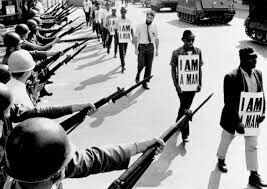
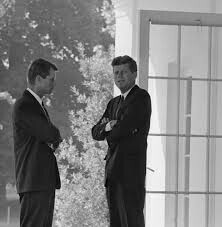
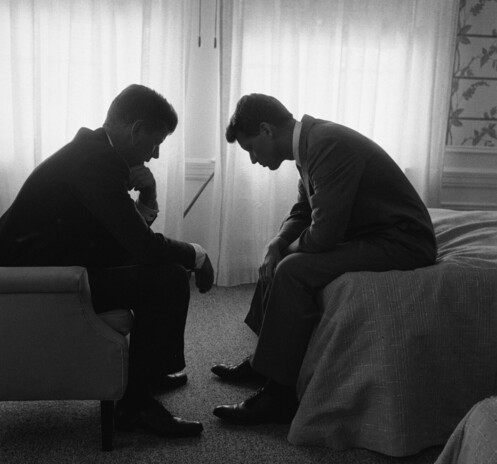
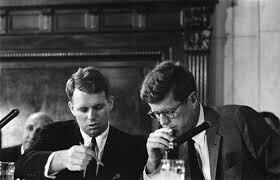
Ultimately, Kennedy's hand was forced due to the escalating civil rights demonstrations nationwide, which triggered violent reactions from both southern officials and ordinary citizens in the South. To quell the unrest, Kennedy and his brother, Attorney General Robert Kennedy, realized that proposing a new law to end discrimination would be their best chance to suppress the protests.

13/39

#StillWeRise #BlackHistory
#BlackMastodon
#Histodons #History

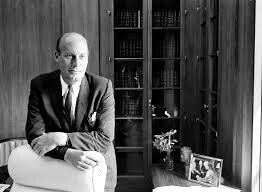
Nicholas Katzenbach, the deputy attorney general at the time, believed that some members of Congress supported the passage of the law not purely out of idealism, but as a practical measure to restore calm and put an end to the demonstrations. These protests persisted throughout the 1960s and eventually escalated into riots by the end of the decade.

14/39

#StillWeRise #BlackHistory
#BlackMastodon
#Histodons #History

The March on Washington was the trigger for legislative action, as civil rights organizers were determined to compel Kennedy to propose reforms. During the planning phase of the March, both President Kennedy & Bobby Kennedy expressed great concern. They dreaded the possibility of violence erupting in the streets of Washington, D.C. It was their worst nightmare to witness scenes of violence unfolding during the event.
15/39

#StillWeRise #BlackHistory
#BlackMastodon
#Histodons #History

The Kennedys were adamant about avoiding a march that seemed like an invasion, particularly one that would take place inside the Capitol or its hallways. They were also cautious about extreme pressure from protesters invading the offices of otherwise persuadable senators and congressmen, as it could potentially alienate them.

16/39

#StillWeRise #BlackHistory
#BlackMastodon
#Histodons #History

To address these concerns, they took charge of the aspects of the organization that involved government entities, police, and the military. They aimed to ensure the event could be run efficiently and effectively, guaranteeing its success. When their attempts to postpone or obstruct the March failed, they shifted their focus towards making it a significant success, which it indeed turned out to be.

17/39

#StillWeRise #BlackHistory
#BlackMastodon
#Histodons #History

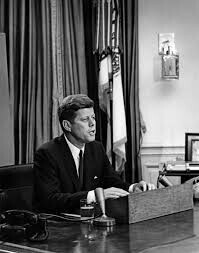
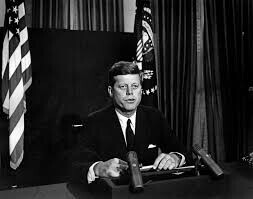
In a tv address on June 6, 1963, Kennedy called on the nation to take decisive steps to ensure equal treatment for every American, regardless of race. Shortly after, Kennedy put forth a proposal to Congress, urging them to consider civil rights legislation that would encompass various aspects such as voting rights, desegregation of schools, public accommodations, nondiscrimination in federally assisted programs, and more.

18/39

#StillWeRise #BlackHistory
#BlackMastodon
#Histodons #History

In Birmingham police's response to a peaceful desegregation demonstration in May 1963 outraged. Their use of fire hoses & dogs to disperse demonstrators prompted President Kennedy to deliver a speech on June 12, where he introduced the Civil Rights Act. He posed the crucial question, "Are we to say to the world, and much more importantly, to each other, that this is the land of the free except for the Negroes?”

19/39

#StillWeRise #BlackHistory
#BlackMastodon
#Histodons #History

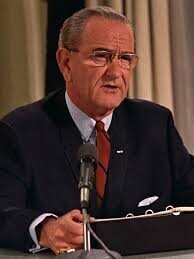
Following President Kennedy's assassination in November 1963 in Dallas, his successor, President Lyndon B. Johnson, swiftly embraced the cause of civil rights. In his inaugural State of the Union address, Johnson declared, "Let this session of Congress be known as the session that accomplished more for civil rights than the last hundred sessions combined."

20/39

#StillWeRise #BlackHistory
#BlackMastodon
#Histodons #History

However, the path to passing the Civil Rights Act was challenging. Opponents, particularly in the House of

Representatives, used various arguments, including claims of unconstitutional infringement on individual liberties and states' rights, to block the bill's progress. The bill became entangled in the House Rules Committee due to opposition within the House.

21/39

#StillWeRise #BlackHistory
#BlackMastodon
#Histodons #History

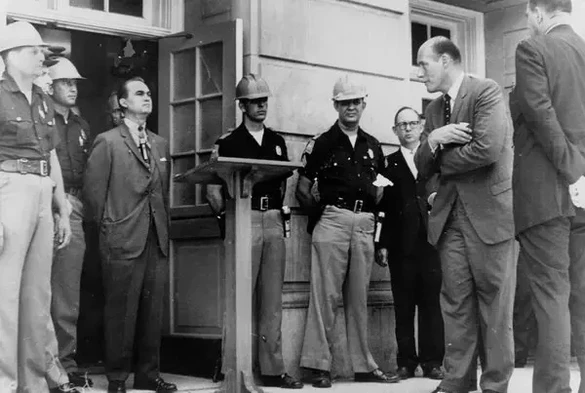
In 1964, opponents of the Civil Rights Act contended that it flagrantly violated the freedom of every American to associate, do business, and even dine with whomever they chose. Southern Democrats, known as Dixiecrats, portrayed the legislation as an assault on the "southern way of life" and evidence of the federal government's intention to impose racial integration on the South.

22/39

#StillWeRise #BlackHistory
#BlackMastodon
#Histodons #History

The notion of a civil rights act revived long-standing resentments among segregationists, who, just a decade earlier, had initiated the "massive resistance" movement to impede the implementation of the Supreme Court's Brown v. Board of Education decision, which ended legal segregation in public schools.

23/39

#StillWeRise #BlackHistory
#BlackMastodon
#Histodons #History

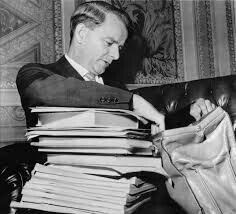
More than 100 other hostile amendments attached to the Act had to be defeated. Eventually, the House approved the bill with bipartisan support, garnering a vote of 290-130. Although the House passed the bill on February 10, 1964, after 70 days of public hearings and testimony from over 275 witnesses, a filibuster in the Senate prevented the final vote from taking place.

24/39

#StillWeRise #BlackHistory
#BlackMastodon
#Histodons #History

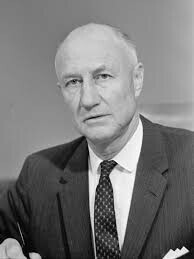
Strom Thurmond employed rhetoric of the Confederate era to lead a historic filibuster and block the Act. He spoke 24 hrs on the Senate floor, arguing that the federal gov was trespassing on the affairs of states & interfering in the lives of free citizens. Democrats carried out a filibuster for 75 days, the longest in U.S. history. Senator Robert Byrd of WV, spoke for over 14 consecutive hours during this effort.

25/39

#StillWeRise #BlackHistory
#BlackMastodon
#Histodons #History

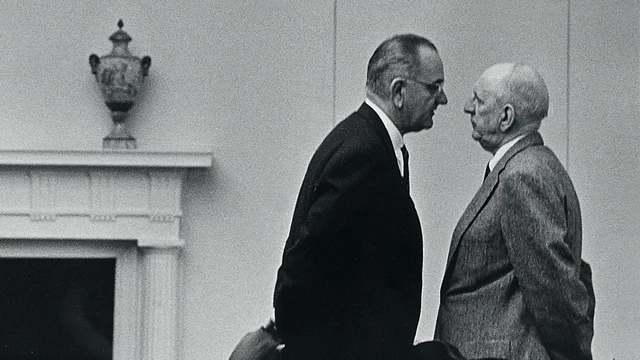
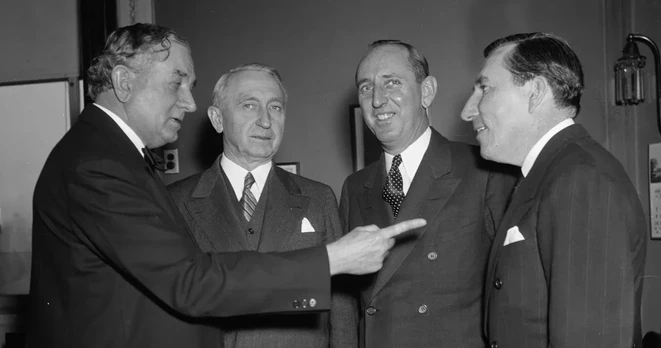
However, the Senate filibuster was eventually overcome through the leadership of Senator Hubert Humphrey of Minnesota, the strong support of President Lyndon Johnson, and the efforts of Senate Minority Leader Everett Dirksen of Illinois. Dirksen successfully persuaded enough Republicans to support the bill, surpassing the opposition from fellow Democrats.

26/39

#StillWeRise #BlackHistory
#BlackMastodon
#Histodons #History

Through behind-the-scenes negotiations, the bill's proponents managed to secure the two-thirds votes required to end the debate. Notably, Senator Clair Engle of California, who was too ill to speak, indicated his support for the bill by pointing to his own eye. When the compromised version of the bill was finally put to a vote in the Senate, it passed with a vote of 73 to 27. Applause broke out in the Senate galleries.

27/39

#StillWeRise #BlackHistory
#BlackMastodon
#Histodons #History

This marked a significant reshaping of the nation's racial and political landscape. Sen Barry Goldwater, who voted against the Civil Rights Act, made it a central theme of his 1964 presidential campaign for the Republican Party. Sen Thurmond, once a Democrat, showed his political solidarity by endorsing Goldwater. Thurmond also encouraged southern Democrats to leave their party and join Goldwater & the Republicans.

28/39

#StillWeRise #BlackHistory
#BlackMastodon
#Histodons #History

Johnson, a Democrat told an aide that he believed they had effectively handed the South to the Republican Party for the future. This prediction largely turned out to be true, as it marked the initial step towards the Republicans establishing firm political control over the South. Since 1964, the GOP has consistently relied on the South as its electoral base, supporting every Republican president in the past 5 decades.

29/39

#StillWeRise #BlackHistory
#BlackMastodon
#Histodons #History

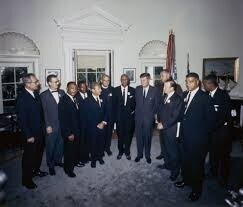
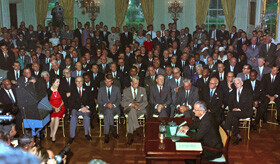
During the signing ceremony, President Johnson used multiple pens to sign the Civil Rights Act of 1964, distributing them to supporters of the bill like Hubert Humphrey & Everett Dirksen, as well as prominent civil rights leaders such as Martin Luther King Jr. and Roy Wilkins.

Dr. King described the Civil Rights Act of 1964 as nothing short of a "second emancipation."

30/39

#StillWeRise #BlackHistory
#BlackMastodon
#Histodons #History

The Civil Rights Act of 1964 brought an end to segregation based on race, religion, or national origin in various public spaces, such as courthouses, parks, restaurants, theaters, sports arenas, and hotels. It marked a significant change where Black people and other minorities could no longer be denied service solely due to their skin color.


31/39

#StillWeRise #BlackHistory
#BlackMastodon
#Histodons #History

Moreover, the Civil Rights Act of 1964 established a framework within the federal government to combat discrimination. The U.S. Attorney General was given the authority to file discrimination suits, the U.S. Commission on Civil Rights had its mandate expanded, and the creation of the Equal Employment Opportunity Commission provided a platform for reviewing employment discrimination complaints.

32/39

#StillWeRise #BlackHistory
#BlackMastodon
#Histodons #History

The Act also prohibited the use of federal funds for discriminatory programs, authorized the Office of Education (now the Department of Education) to assist with school desegregation, empowered the Commission on Civil Rights, and prevented the unequal application of voting requirements. Over time, the Civil Rights Act expanded its scope to include disabled Americans, the elderly, and women in collegiate athletics.

33/39

#StillWeRise #BlackHistory
#BlackMastodon
#Histodons #History

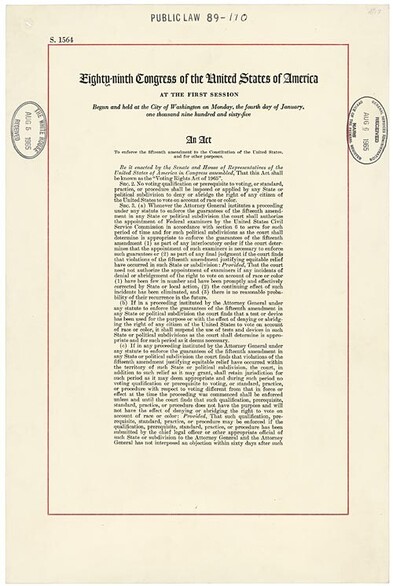
Furthermore, the Civil Rights Act of 1964 set the stage for two significant subsequent laws: the Voting Rights Act of 1965, which banned discriminatory voting practices like literacy tests, and the Fair Housing Act of 1968, which prohibited discrimination in property sales, rentals, and financing. While the fight against racism persisted, legal segregation had been severely weakened in the United States.

34/39

#StillWeRise #BlackHistory
#BlackMastodon
#Histodons #History

The Civil Rights Act's pivotal provisions, continue to fuel contentious debates surrounding affirmative action. In the 21st century, it is widely accepted that all Americans, regardless of race, sex, or religion, have the right to dine in any restaurant and stay in any hotel. This notion is largely unquestioned in acceptable circles. However, the Act ignited enduring racial debates spanning over four decades.

35/39

#StillWeRise #BlackHistory
#BlackMastodon
#Histodons #History

These debates encompass issues like whether minority students should receive preferential treatment in admissions or if minority business owners should have access to contract set-asides. Furthermore, the Civil Rights Act of 1964 initiated prolonged legal and political battles about court-ordered initiatives aimed at integrating excluded black & female individuals in police & fire departments, as well as labor unions.

36/39

#StillWeRise #BlackHistory
#BlackMastodon
#Histodons #History

Despite the challenges, the Civil Rights Act of 1964 represents the most comprehensive civil rights legislation ever enacted by Congress, setting the stage for subsequent landmark laws. Despite facing significant opposition in Congress, the assassination of President Kennedy, President Johnson's lobbying efforts, and the influential March on Washington created immense pressure for the bill's passage.

37/39

#StillWeRise #BlackHistory
#BlackMastodon
#Histodons #History

The 1964 Civil Rights Act: Then and Now

Forty years after the passage of the 1964 Civil Rights Act, it is hard to understand and even remember the furious battle over the passage of that law. Today, in 2004, with more than a third of the nation made up of African Americans, Hispanics, and Asians, it seems as if the impassioned filibuster in Congress took place in a different century and maybe on a distant galaxy.

Books

Todd Purdum. An Idea Whose Time Has Come: Two Presidents, Two Parties, And The Battle For The Civil Rights Act Of 1964, Henry Holt, 2014.

Robert D. Lovey. The Civil Rights Act of 1964: The Passage of the Law that Ended Racial Segregation.New York: State University of the New York Press, 1997

Fobert Mayer. The Civil Rights Act of 1964. Michigan: Greenhaven Publishing, 2004.

39/39

#StillWeRise #BlackHistory
#BlackMastodon
#Histodons #History

@Deglassco

TY for this thread

@TomSchmidt @Deglassco ditto. I feel like the Civil War never actually ended. It became a Cold War. I don't mean that in a way that minimizes the very heinous and violent committed against black people. It should have ended when one side won. This country was supposed to go through a Reformation, and the entrenched powers have been fighting every effort to let black people have a seat at the table. Likewise with every other group that White, Christian and of European descent--mostly WASPs.
@AnotherDayInHell if only it were that simple. Just because people lost the war, did not mean they gave up.
@Deglassco I just noticed I forgot to type the word "isn't" at the end of my post. I probably should have included "male" with white christian. My thumbs are faster than my brain lol. I'm sure you got it though.
@Deglassco As a Canadian I don’t have the knowledge to speak to this, but it strikes me that the SCOTUS that is in place now may work to dismantle the acts and work that has been done and be lauded for it. ☹️
@Gromit1996 sadly, that’s exactly what they’re doing.
@Deglassco Another excellent and well documented 🧵 . TY so much for your timely and on point posts. #BlackHistory #VoteLikeBlackWomen

@Deglassco

A wonderful thread, very moving and educational. I was alive then & although I remember many of the events, much of the political details, especially around the Kennedys, were unknown to me. I was younger then & the Assassinations were yet in the future.

@Deglassco until the day when the color of a man's skin is of no more significance than the color of his eyes, there will be war. These laws have made a vast difference, but it's not over with.
@Wolleysegap @Deglassco the day the colour of a man's skin stops mattering will be the day the colour of his eyes start. Fear and hate of difference seem to come easily to people and it's encouragement is a useful tool of control.
@stewartvm @Deglassco Essentially there will always be some who encourage and incite one group against another and so cause an in group and an out group? I agree, and thousands of years of human history would back that up. It is my hope that we can be more able to spot those kinds of people and not allow them to so easily spread the fear and hate. Big job, how do we do such a thing? It will take change, and the kind that only occurs over time. We can learn to reject faulty reasoning, but that is only part of it. To see all people as every bit as human as you are, that's a start.
@Wolleysegap no, it’s not. The work continues.
@Deglassco Hi! I'm seeing your posts via the #history hashtag. I just wanted to point you to the "unlisted" setting for long post threads. If the first post is public (has a globe), everyone sees it, but then all following posts can be set to Unlisted so that the thread doesn't monopolise everyone's timelines. Just click the globe icon while composing the posts.
@mwt thank you for the suggestion. I am new here. Only a few months. I’m still learning.
@Deglassco my first response is kick the South out of the US because nothing of value will be lost. Then I remember all the people being held hostage in that region and realize we have to get them out first.

@yosasocial @Deglassco

Thank you🫂 I'm in Texas😕

@MysticaRose @Deglassco Get everyone out who doesn't vote republican, then kick the South out.

Or take off and nuke the site from orbit.

@yosasocial @Deglassco

If I could get out, I would and I would gladly help anyone else escape.

@yosasocial @Deglassco
We can convince the a-holes to move out of the USA rather than cede any territory to them and abandon our fellow Americans to their crap. We fought a major, painful war over that principle, today is the anniversary of The Battle of Gettysburg btw, although we're still waging the Civil War in a lot of ways.

Anyways, I don't think that surrendering to them is the right approach personally.

@GreenFire @Deglassco good point. What if we offered them a trip to Russia? Think they would take that?

@yosasocial @Deglassco
Russia is preparing for expat MAGAts actually:

Russian authorities will launch construction of a village outside Moscow for conservative-minded Americans and Canadians next year, the state-run RIA Novosti news agency reported. https://www.themoscowtimes.com/2023/05/11/russia-to-build-migrant-village-for-conservative-american-expats-a81101

Russia to Build ‘Migrant Village’ for Conservative American Expats

Russian authorities will launch construction of a village outside Moscow for conservative-minded Americans and Canadians next year, the state-run RIA Novosti news agency reported Thursday.

The Moscow Times
@GreenFire @Deglassco shit I’ll pay to ship the MAGAts there.
@yosasocial @Deglassco
I expect that many of them will self-emigrate soon if Trump moves there to avoid jail as I suspect he might.

@yosasocial @Deglassco

Wouldn’t it be great if all our black & brown brothers and sisters could get political power instead and remake these states? Reading about Black Tulsa before the massacre astounds me with how much these people achieved in so short a time between slavery and freedom. I would love to see all that intelligence and creativity that resides in people free to remake the states in healthful ways. Everybody would benefit.

@Deglassco
Excellent thread by the way. It will help so much for more people to learn better how hard it is to turn our ship around and how hard we've been trying for so long.

Things still have a long way to go, but we have made progress!

@Deglassco Yes. This is such a significant point. This is when the Republicans and Democrats essentially swapped sides in the divide over race in America. Like all broad generalizations, one can find exceptions. But in a broad sense it is true. The year I was born.

@Deglassco

Republicans in the South would rather keep their racism than anything else.

These are things sacrificed to keep racism
1. Universal health care
2. Inexpensive college educations
3. International standing
4. Public education & health
5. Climate action
6. Voting rights
7. Reproductive rights
8. Financial stability
9. Economic growth
10. Reputational damage
11. Gun safety legislation
12. Democracy

@Npars01 @Deglassco
The greatest irony is that #Evangelicals are willing to sacrifice everything in *this* life in hopes of the "eternal life" The Bible promises them.

…AND YET, they cling to their guns out of fear of dying at the hands of anything/everything that frightens them. They seek to DESTROY any & all they deem "immoral" that threatens the comfortable *life* they've imagined their life on Earth is *supposed* to be… despite living every day pining for the day they'll die. 🤔

@Deglassco
Seems I recall reading a report from Joy Reid suggesting that when the GOP lured southern, conservative Dems to join their party ( The Southern Strategy), the GOP also absorbed a lot of bigotry, which has quite successfully taken a foothold in the party.
@stargazersmith interesting. I’m sure there’s a lot to go around.
@Deglassco
I think bigotry is a kind of scapegoating, relieving one of responsibility of their own failures.