 concrete_baby
Why the galactic barrier and transporters don’t match real science, and why warp drive might
 SeeJayEmm
I always thought the least believable part of transporters was that they worked without a pad on both ends.
Right? Absolutely no point to the pads, since you can dematerialize anywhere and rematerialize anywhere else. They might as well hide the equipment and make a nicer reception area.
I think the 'pad' is just basically a guaranteed good area, although could also be specific technology there does improve your ability to transport successfully?
There's some hand-wavey technobabble about annular confinement beams and whatnot but the real reason was because TOS didn't have the money or time to show a shuttle land or receiver pad sent down, etc. It was cheap to depict and the audience bought it without much explaining (step into booth, shimmer, be someplace else).
It was just a sciency-looking version of what I Dream of Jeannie did.
Sure, and I 100% understand that. But, we're talking about what if it could be real.
I think transporters would work better if they just said they pushed you through a subspace portal of some kind vs. the whole matter-to-energy-and-back again process described. That sidesteps some of the thornier physics issues and makes more sense why it would work at a distance.
... Can't believe I've never thought about that, but now I'll never fail to notice... Damn it
 Nmyownworld
I accept transporting to somewhere without a pad because mumble, mumble, Star Trek science. What I always wondered about was how blasé folks usually were about transporting to somewhere that didn't have a transporter pad. Who makes sure no one is standing in the beam to area. Does the transporter have safety protocols to just not transport if there is something of a certain size in the way? Transporting someone partially into rock has been shown in Star Trek (one instance, PIC s2e9). Weaponized use of a transporter, maybe by overriding transporter safety protocols? That was done intentionally, but still.
 Tom Riley
@Nmyownworld @SeeJayEmm @startrek I mean, if you’re OK with ship sensors that can analyze space in tiny detail, it’s reasonable that transporter tech makes sure the target area is safe/unobstructed, and safety protocols prevent transport if there’s risk. We often see a human operator scanning for good transport locations too.
There’s obvious issues with the concept of course, but Star Trek is the type of scifi that you can trust with your suspension of disbelief, and you’ll usually be rewarded.
A transporter tech checking that area is clear for transport makes sense. And, Star Trek is excellent at getting me to suspend disbelief (in its tech). I'm going to roll with your idea.
Even if nobody is standing in the beam there is still at least air.
Could be head canon but I'm pretty sure the air is dematerialized when the people are rematerialized. Not sure how they keep more air from rushing in.
Even if the area was clear when the process started, what is stopping some space tumbleweed from blowing in there right after it starts?
If the safety protocols fail, resulting in a space tumbleweed hybrid, then Division 14 steps in. D-14 will send the affected to a medical spa on Endicronimas V, where they are pampered and tended to like a precious gem. (Lower Decks, "Much Ado About Boimler" s1e7)
Warp drive matching real science isn't too much of a surprise. The current theoretically possible model for a real-life warp drive is the Alcubierre drive, and Miguel Alcubierre came up with it because he was inspired by the warp drive from Star Trek, and wanted to see what it would take to make it real, for want of a better word.
Funnily enough, it's kinda more like SW hyperdrive than warp. Point-shoot-pray, can't see outside, can't change direction, lots of calculations needed to find an unobstructed path
 Haus
HausI'm with you on the transporters, but the fly in the ointment for me has always been inertial dampeners. If it's possible to sidestep conservation of inertia, I'd be pretty surprised. If not, the crew will be converted into stew the first time a ship slows down or makes a course correction.
The other part of that is, of course, that they don't seem to use the technology (or artificial gravity or the tractor beams for that matter) for anything else. In particular no weapons or defence systems.
 zalack
The Final Architecture series by Adrian Tchaikovsky uses artificial gravity as the basis for almost all its tech.
Seriously, once the shields are down why aren't they just dematerializing parts of the enemy ship?
And why bother with fussy warp cores? Just de-materialize random junk and use that energy.
I wonder if there's a technical manual out there that tries to explain it. It seems like energy manipulation is something startrek tech excells at.
 killall-q
Because teleportation is murder. Whatever comes out on the other side may look and act like you, but isn't you, because you're now dead for having been disassembled by the teleporter.
 DoucheAsaurus
Nah it just feels tingly.
Teleporters are interesting because when you think about it long enough, you realize the person on departure end died.
Then you think about it more, and if the person that comes out the arrival end is an exact replica, down to the atom, and has continuity of thought... if you accept that they died then you kind of also have to accept that the "you" of any given instant is constantly dying and giving way to the "you" of the next instant. That person living that experience at that exact moment will never exist again.
So then you're kinda back to transporters being business as usual again, but with a fun new existential crisis on the side.
In practice, I agree with you. The transporter scans, disintegrates, and reconstructs the thing being transported. But when the thing being transported is reconstructed at a subatomic level it is effectively identical.
I can imagine the society we see in startrek having already worked through the moral and philosophical implications. I would have loved to see that addressed in an episode tho.
Is one carbon atom the same as another carbon atom, philosophically? Can you keep your identity when all your atoms are replaced by other atoms of the same kind? It's the ship of Theseus problem
 Durran Durrandon
@concrete_baby @SeeJayEmm True, but we are all the Ship of Theseus, we are all being replaced cell by cell, all the time.
Irrelevant to the transporter as the same matter is moved by the matter stream and reassembled in the same order. This is less asking if the ship of Theseus is the same ship after the hull and the mast were replaced and more asking if my kitchen table is still the same after I took the leaf out, folded the legs in, put it in a truck, moved to a new house, and set it back up
Outside of measure of a man-type episodes, I don't think they've ever had a super in-depth discussion on selfhood and the soul as characters see it in universe. , but it seems like materialism is the generally accepted philosophy. Post Enterprise, people who have hangups on the transporters (perhaps more based in dualism) are treated as weirdos.
More evidence for materialism: Q, the godlike being who might be able to tell the difference, treats Golem-Picard the same entity. And last I checked nobody's going around saying that Thomas Riker and William Boimler are p-zombies.
(I guess Gray Tal is the odd man out, since there was some consciousness that got somehow ceremonially split off before shoving it in a golem. Maybe that's just trill symbiont weirdness though).
The fact that everyone treats Golem-Picard as True-Picard felt to me like confirmation that, in the ST universe, what makes you you is your mind. Memories, thought patterns, etc... I know it was tv-show hand wavery but the fact that no one mourned the death of their friend, or really ever once questioned the validity of the golem taking his place bothered me a little.
Also, M’Benga’s daughter is still the same person, despite being an energy being now, without a physical body.
If my consciousness is continuing, especially into a physical form that looks exactly like myself, what practical difference does it make?
but it seems like materialism is the generally accepted philosophy.
Which is absurd as souls objectively exist in Star Trek and at least two major species objectively have them-- which implies most do.
It's not just effectively identical, it's completely identical. The same matter, the same quantum state, the same consciousness.
Star Trek's transporters and Stargate's Stargates are cloning devices
The real question is why they wouldn't use the transporter buffers effectively as backups for away teams. Have an away team member killed? No problem, rematerialize them from the buffer.
 Bear the Dad
@taladar @dustojnikhummer Why not just let the crew member stay on the ship and just send dozens of copies of them to the planet to overwhelm any danger with sheer numbers?
Well, it makes sense to me to want to have the away mission in the memory of the crew member you retain long term unless something happened to them on the away mission.
The simplest answer would be because it doesn't ordinarily work that way.
Well, Thomas Riker proves you can create duplicates and the doctor's daughter in Strange New Worlds as well as some other episodes prove that the patterns can be stored in the buffer for extended periods of time.
Here's the thing: Does Tom Riker actually prove that? That's the explanation suggested in the episode, but the preponderance of information about the mechanisms of transporter technology, as given both before and after, conflicts with it. But there's another hypothesis, a simpler one, and one that we know for a fact transporters are capable of, because it's a recurring element in Star Trek: Thomas Riker is from another universe, brought to the Prime universe by similar means as many of the various visits to and from the Mirror universe.
 The Gay Tramp
Are stargates cloning devices? Aren't they wormholes? I haven't watched a lot of SG-1 so forgive me if they covered that
They frequently mention the Stargate operates using wormholes, but also that things dematerialize and get reconstructed on the other end. The iris works because it's so close to the wormhole that it doesn't leave enough room for things to be reconstructed. Also Teal'c got stuck in the Stargate "buffer" once when the power was cut prematurely from the other end.
Amazing, every word in that sentence is wrong.
Dr. McCoy famously hated the Transporter. He always complained that his atoms were being mistreated, but never once did he voice the opinion that the transporter killed the transported. Also I don't believe even with Badmirals abounding, that Starfleet would allow such a death machine to be in regular use.
if the consciousness transfers, then what is the practical difference, though?
 Lockely
This is refuted by in-universe POV accounts. We have traveled through the transporter with several characters, and not once is their stream of consciousness or even vision broken.
Barclay even observes creatures slightly out of phase in the transport stream and manages to pull them in. (TNG, "Realm of Fear")
I know it's described as disassembling and reassembling, but in practice it looks more like they're being adjusted out of phase, pushed to their location using the annular confinement beam, and resequenced into phase with the rest of the universe. This is what happens with Geordi and Ro in TNG, "The Next Phase."
It doesn't explain transporter clones or most transporter accidents, or even TNG, "Relics" but the transporter as a whole is kinda sorta space magic anyway.
If our consciousness is just a series of electrical impulses, as long as the transporter keot those impulses intact, makes sense that we would still be us at the other end. But I’d think nearly any transporter accident would kill the person being transported since it would mess that up.
No the fuck it isn't. Dualism is clearly true in Star Trek's universe and even if it weren't we see consciousness is maintained while beaming but is normally too brief to be perceived. (TNG: "Realm of Fear")
Beaming is no more death than sleeping, or existing for longer than a single Planck unit of time is.
@concrete_baby Today, I learned that Star Trek ALSO has a galactic barrier. Not hear even, I was catching up on Discovery earlier. So now I am coming across Star Trek's galactic barrier twice, for the first time, on the same day. (Though, I must have seen it referenced on TOS at a some point.)
According to Memory Alpha, the barrier appears in at least three TOS episodes: "Where No Man Has Gone Before", "By Any Other Name", and "Is There in Truth No Beauty?"
@concrete_baby I swear I have seen all of TOS multiple times, but it has all faded. Mean while, the first thing I thought of was the galactic barrier in Star Wars canon, which seems less out of place, because, you know, space wizards.
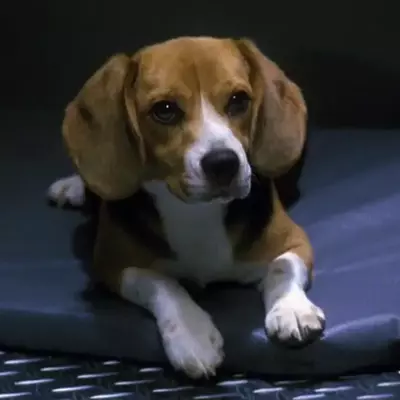 porthos
I kind of love the galactic barrier in how weird and obviously differing from our reality it is, scifi shows don't need to make their universes behave the way ours does.
I realllllly loved the discovery episode where they went out the galactic barrier, it was just so damn weird.
As long as the characters behave with a scientific frame of mind, it doesn't really matter if the physics of star trek are absurd. It doesn't matter if the calculations do or don't add up for some fantasy tech in star trek, it matters how characters interact with the unknown and approach trying to understand (where the heart of science really lives). The 4th season of Discovery did an amazing job with this in my opinion, it was cool to see the crew sent to meet with 10-C stumbling through the logic of trying to figure out a way to make contact (or even WHAT 10-C was before they found them).
@porthos I'm not objecting to it. The point of Star Trek isn't realism. It was just weird to see the same device used in both universes.
Sorry, I didn't mean to insinuate you specifically were, I meant it more as a general point in response to discussions I see about star trek tech.
@porthos No offense was taken. I understood you.
I’m confused, which is the other universe?
@FormerGameDev Star Wars has the same thing, a barrier at the edge of the galaxy that prevents hyper space travel.
oooh… introduced in Rise, apparently to explain why they needed to have fancy devices to pinpoint how to get to things. I thought it was just because they legit didn’t know where these places were, rather than that they had no direct path.
@FormerGameDev Introduced probably with novelizations in the 80's, so still long after TOS, but it never really appears outside of novels until Rise. This stuff that blocks hyperspace travel at the edge of the galaxy is found through out the galaxy as well, which is why they have to have well charted hyperspace routes. I think Rise is the first movie where they mention hyper space lanes as well, which sounds contrived the first time you hear it, but finding new routes is actually very risky.