 German Tebiev
A little #tea diary.
In this thread I will document my tea tasting journey.
A little #tea diary.
In this thread I will document my tea tasting journey.
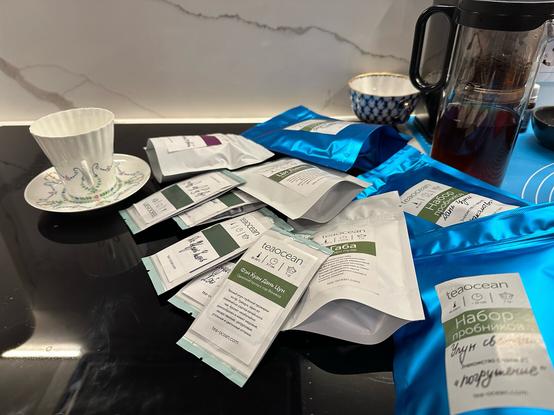
I was expecting to start this thread much later, somewhere in May, but then I discovered that I had a sample.
The first one here would be the so-called Gaba (https://en.wikipedia.org/wiki/GABA_tea) Gold tea. In the case of teas, I don't know how to provide an international name, but I will try my best to translate.
I enjoyed the tea, it has the expected intense taste. However, I seem to enjoy Gaba Diamond more.
While I don't have new teas to taste, I have the ones that I liked and ordered.🙃
I'll write about them.
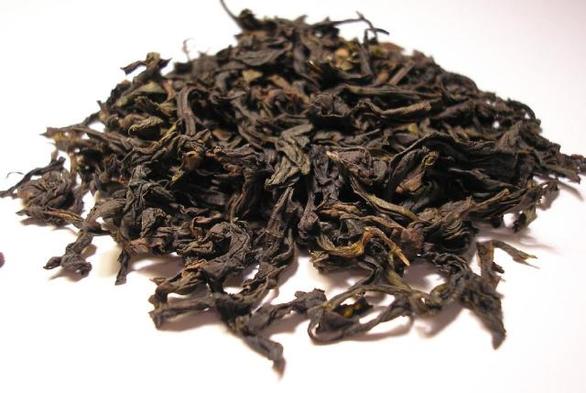
Today I brewed the 𝙳𝚊 𝙷𝚘𝚗𝚐 𝙿𝚊𝚘 (https://en.wikipedia.org/wiki/Da_Hong_Pao) #tea. On Wikipedia, it's written to be extremely expensive, but there are different kinds, and mine is very basic and not very expensive.
The tea is roasted, and it's the main flavour it has. However, this roast is gentle and fluid. I have another tea which name I couldn't translate, and it's roast is forceful.🔥
I am back from vacation, and it’s time to continue the #tea journey.🙂
Today I have a special one. Some time ago, the tea shop where I buy tea wrote a beautiful letter that they could arrange a purchase of the Yue Guang Bai grown on the mother trees. I joined and purchased my humble 50 grams collected in the autumn of 2021. These trees are claimed to be more than 500 years old.
The taste of tea is hospitable and tender. I would recommend it to tea lovers.
Yesterday, a #friend of mine visited us. We didn't meet for a few years, and what could I do besides serve him several good teas to taste?😃 So in one teapot I had Tie Guanyin Xiang Hua #oolong, and Lao Dan Tsung Mi Lan Xiang oolong in another.
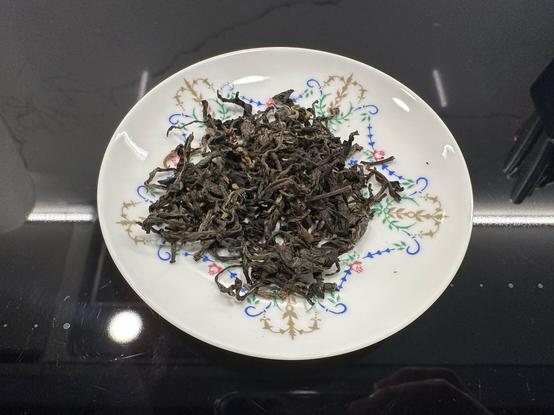
Also, I've discovered a more visually aesthetic way to photo teas.
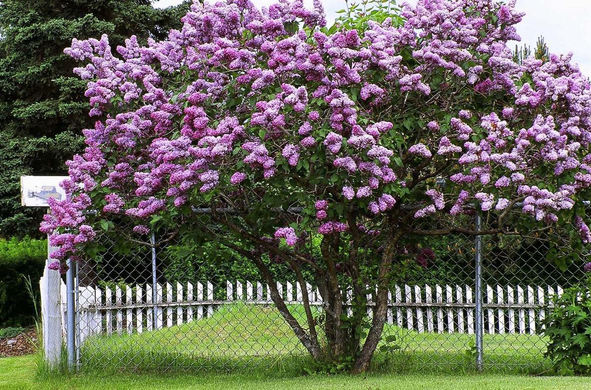
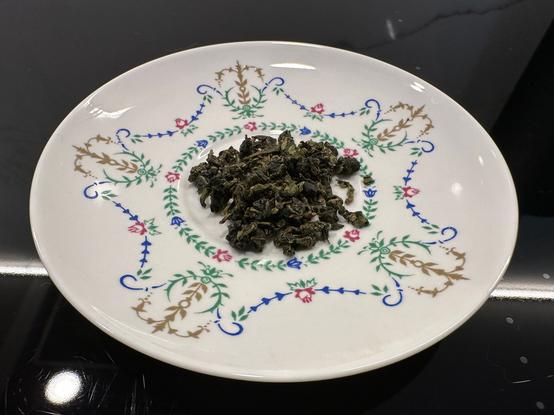
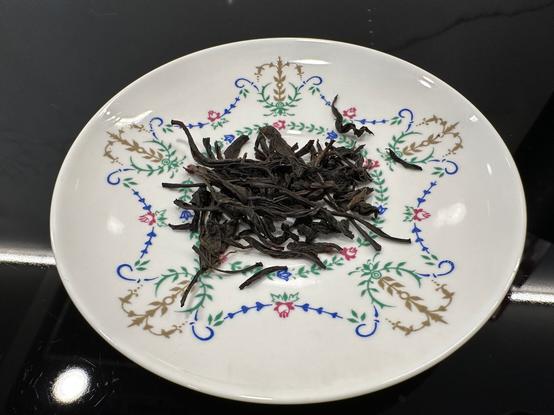
Today’s #tea is Lao Cha Tou or “Old Tea Heads”. It’s an unusually looking shu #puer tea, which lasts multiple brews. Also, these heads do not split apart.🙂
However, I don’t understand how good it is because I don’t understand #shu puers at all.🙈
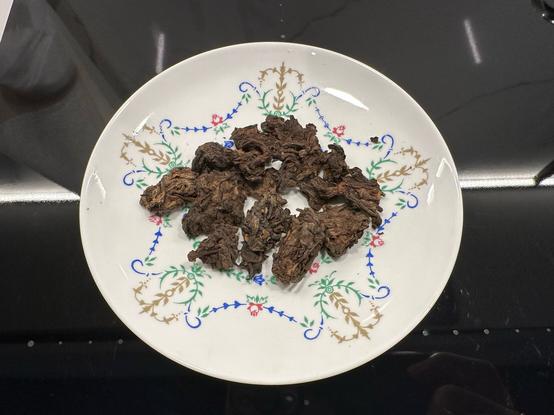
The Xiao Zhong #tea. For me, it tasted like the default black (or red) tea. It was similar to the Ceylon tea I am quite familiar with. The only difference I felt was the prolonged aftertaste. I see it as a good basis for every tea collection.
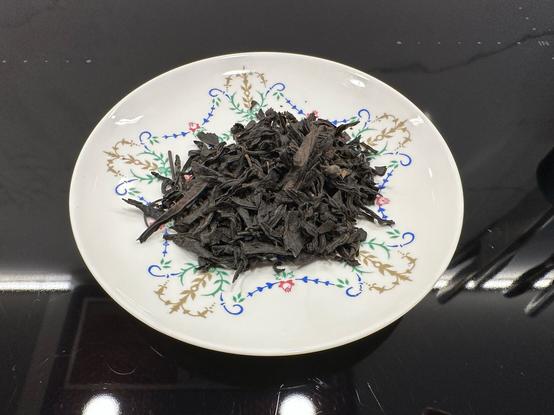
The Bai Jian #whiteTea. It’s as good as its brother, the more famous Yue Guang Bai #tea. I have two types of the second one, so I am not sure that I will buy something extra, but it would be interesting for me to taste Bai Jian and Yue Guang Bai simultaneously.
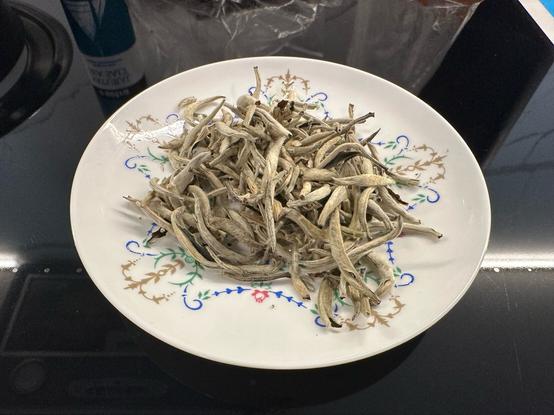
The Jin Luo Golden Snail #blackTea (or #redTea). This #tea reminded me of my beloved Jin Jun Mei. It has a close eloquent aroma and taste. Maybe if you don’t have either of the named two, I would recommend getting this one, as it's more visually interesting.
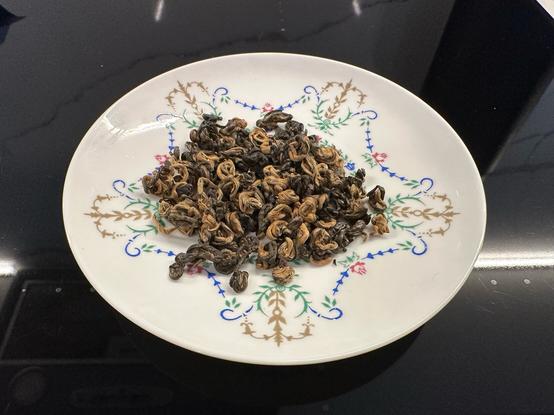
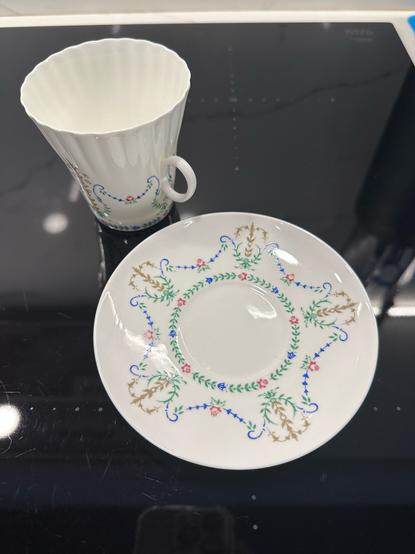
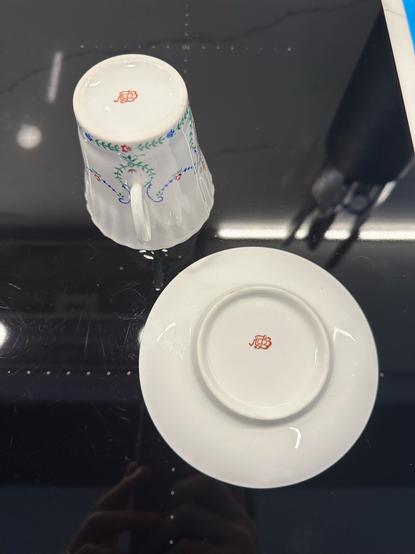
A little story about the saucer that I use. It’s a product of the Imperial #Porcelain Factory of Saint Petersburg. The factory is old, 279 years in 2023. During the soviet times, the name was Leningrad Porcelain Factory. Back then, my grandparents bought these dishes, so they are more than 30 years old!😃 The “ЛФЗ” on the bottom refers to the “Ленинградский фарфоровый завод”. I admire how vibrant are the colors, nothing besides the letters tells about the age.
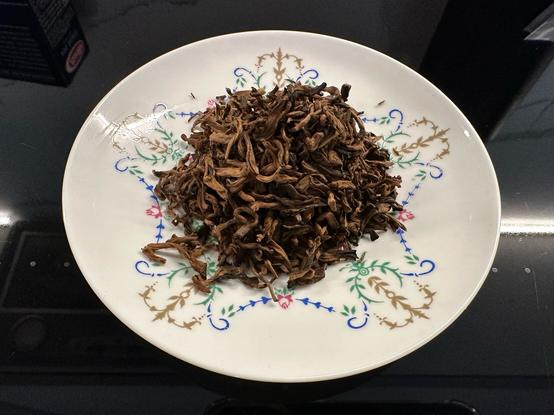
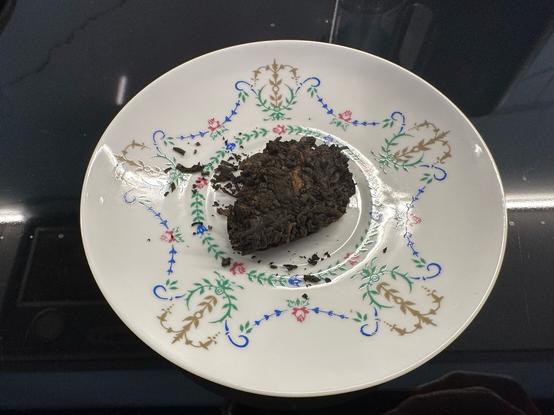
These days, I’ve tried two different shu puerhs: “Golden Buds” Jin Ya shu #puerh and Xiaguan shu puerh. I feel like I am yet to understand the big shu puerhs’ idea.😁
This #GABA opal made from Hong Shui #tea was as good as my beloved GABA diamond. Or maybe I was not that attentive when tasting it to discover any kind of significant difference.🙃
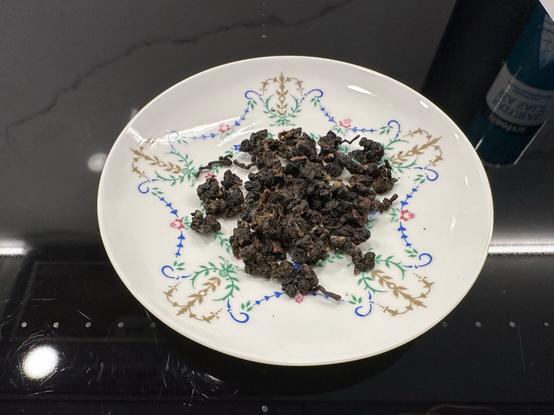
Recently, when talking about the #Xiaozhong #tea, we first identified it incorrectly as the Zhengshan Xiaozhong. No, these two are quite unfamiliar.😅
I didn’t expect that much from Zhengshan Xiaozhong after the previously mentioned, but it turned out to be fascinating. It was the first tea I decided to put in my collection, just feeling its aroma on the first, “technical” flush.
Highly recommend it!
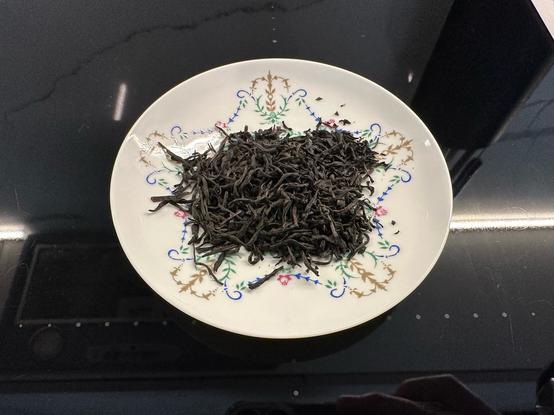
The Da Jin Zhen “Big Golden Needles” black (red) #tea. It has an elegant but insistent and not shrill aroma. Added it to my collection of the desired teas.
Da Yi shu #puehr tea. I can’t say that my not very big understanding of shu puehrs has changed, but at least this one had a little more gentle taste than the previous ones.
The story of Xiao Zhong #tea continues. Now in a Lapsang Souchong fashion.
When talking about Xiao Zhong, @babelcarp shared an article about the Zheng Shan Xiao Zhong. It's described as known as Lapsang Souchong in the West. Well, if you sometimes face a choice between the last two, I warn you to choose carefully.😅
If doing the rude comparison, Zheng Shan Xiao Zhong is a plum juice, while Lapsang Souchong is a drink from stewed prunes.
However, Lapsang Souchong is still cool, and having it in a personal collection would give you a source of interesting experience.
Let me quote the description of the Liu Bao #tea:
> An ancient variety of Hei Cha from the province of Guangxi, which arose long before Shu #puerh. Liu Bao's technology is listed in China's intangible cultural heritage. The aroma of tea is specific, combining shades of mushrooms, wet wood, nut shells, fermented milk products and beets.
The red Dian Hong Mao Feng #tea. In my opinion, it tasted like a slightly milder version of Zhen Shan Xiao Zhong. It might be interesting to have in one’s collection as it has some visual attractiveness.
#GABA Amethyst #tea. Heavily roasted GABA tea differs from its siblings and strongly reminds me of Da Hong Pao. It has some GABA-specific aroma, but not enough to compete with its roast. And if it was the case, I would surely add it to my collection. It would then be the “brutality” tea.
Another interesting characteristic is that leaves do not unwrap on brewing.
Hei Jin Black Gold red #tea. Being a member of Xiao Zhong family, its aroma strongly reminds of Zhen Shan Xiao Zhong. However, its visual glance looks interesting and pleasing, so it’s a good alternative for the fashionable tea lover.🙂
Unfortunately, the photo doesn’t reflect the glance fully.
The Tai Ping Hou Kui “Peaceful Monkey Leader” #tea (https://en.wikipedia.org/wiki/Taiping_houkui). It’s a famous tea, and its fame is a deserved one. The taste and aroma are very gentle however vivid and present, not elusive.
Alishan Jin Xuan #oolong #tea. It’s the one which inspired people to create the milk oolong.🙂 I hoped to be surprised before trying it, and my hopes were granted.
Dian Hong Mao Feng red #tea. I remember this one being a good member of the Dian Hong family.
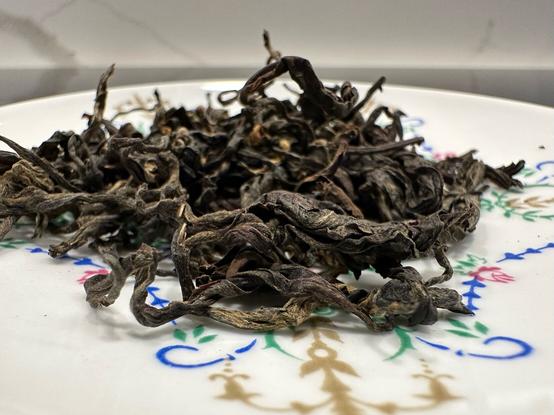
Also, I came up with an idea to photo tea closely.🙂
Tan Yang Gong Fu red #tea. It’s a good one from the Xiao Zhong family. I recommend this one.
The Li Shan #oolong tea. Almost indestructible in terms of the number of brews. It has a creamy and floral aroma. The creamy aroma is more straightforward than the one Alishan Jin Xuan has, but it’s still very delicate. I recommend this one.
White #tea from old Mengku mother trees.
White tea from 200-year-old trees from Mengku village, harvested in autumn 2022.
It’s straightforwardly sweet at the very beginning, dried-fruit later and delicate with sweet aftertaste then.
It’s different from its 500+ years old predecessor, and I recommend both if you have a chance someday.
After some time, the #tea path continues. This time it might be not that long as I’ve purchased 10 samples, not 30. The teas are from Taiwan and Japan.
The first one tasted is the Taiwanese #oolong, Tang Bei Dong Ding. It has the strong roasted aroma with the oolongish aftertaste. I didn’t add it to my collection, as these days I have absolutely no wish to drink roasted (Da Hong Pao-like) teas.🙃
The Bi Lo Chun green #tea. It’s not from the samples I purchased, but from the collection. I like its fresh taste and recommend it to tea lovers.
The Kukicha Japanese green #tea. It has a stable aroma and taste lasting multiple brews. I can’t say that I was amazed by the qualities mentioned, but it is a good tea with an interesting look, which is the result of mixing leaves with young twigs.
Unfortunately, the whole-plate view picture occurred to be a low-quality one, so it’s only close look now.
What always astonishes me is the size of #oolong #tea-leaf after brewing compared to its initial size.😃
The Da Yu Lin #Taiwanese #oolong #tea. Either yesterday my tongue was too sensitive, or this oolong has some kind of “explosive” taste, slightly pricking the tongue at the time of drinking and then.😃 The aroma is strong and energetic, full of flowers. It was an interesting experience!
The Gyokuro “jade dew” #Japanese green #tea.
There is a thing about green teas that almost no tea is green once brewed. It’s usually yellow. On the other hand, there is yellow tea, which was once the drink of the emperor and one's circle. As you see, I don’t have a clear picture of tea coloring and naming.🙂
Nevertheless, Gyokuro’s drink color is indeed green. I don’t remember its taste clearly, but it was good enough to purchase more.
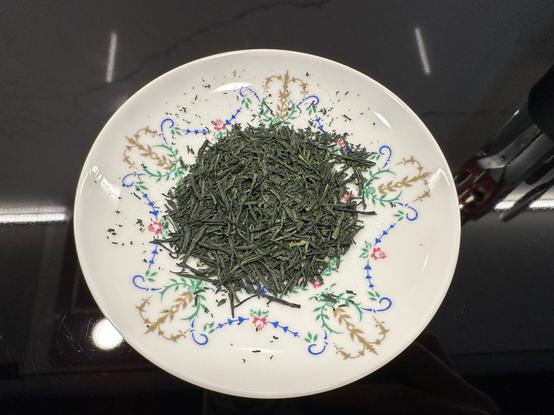
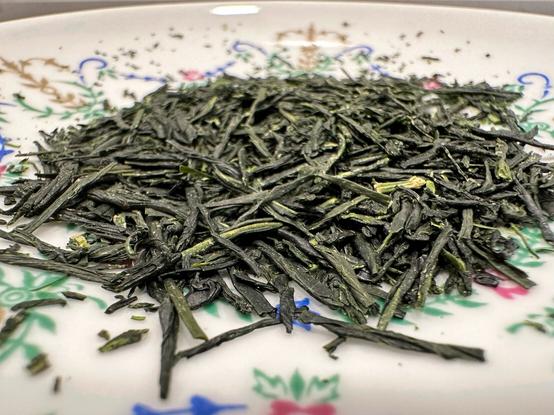
The Shan Ling Xi #Taiwanese #oolong #tea.
After drinking this one, I decided that drinking oolongs so often is not the path that I want to go. This kind of tea is highly nuanced, so I feel like I need some time to rest and miss it before taking the next one.
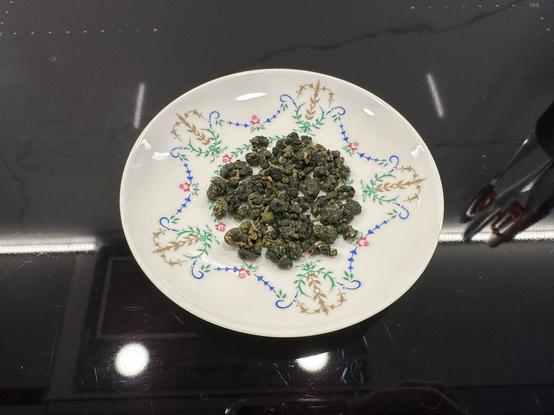
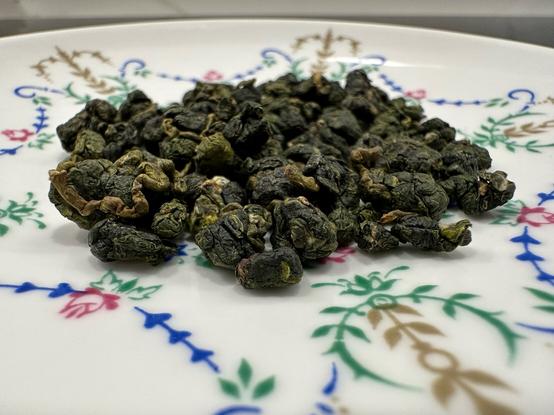
The Genmai Cha #Japanese green #tea.
Well.😅 Usually the whole point of drinking teas like a boss is to take what’s derived from Camellia sinensis and feel the rich taste without any extra aromatization. However, this doesn’t work for Japanese teas as far as I can see. Here is the #greenTea mixed with… roasted rice. Altogether brewed, it feels like a popcorn.🤪
For me, it’s a tea attraction, something like Lapsang Souchong.
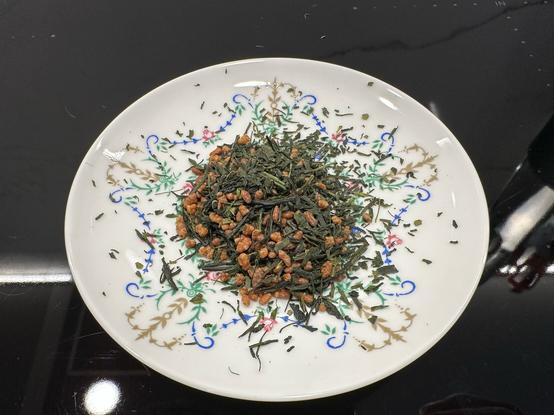
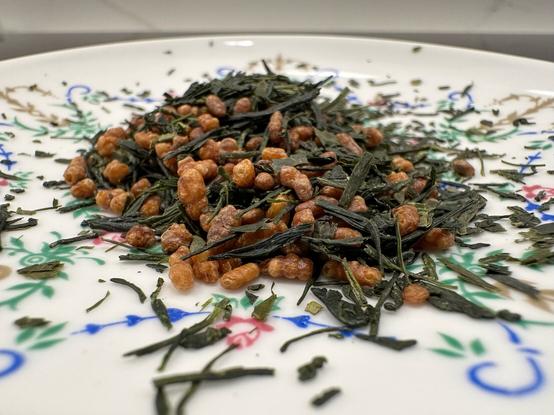
However, as I can read from Wikipedia, the original idea was to make a tea cheaper as it was not that affordable for everyone. Only later, the combination became spread across all Japanese society circles.
I also know a story about similar economical attempts in Russia. Do you feel like interested in reading them?🙃
The #Japanese Hojicha roasted green #tea. If you look for something like Da Hong Pao but with a milder taste, consider this one.
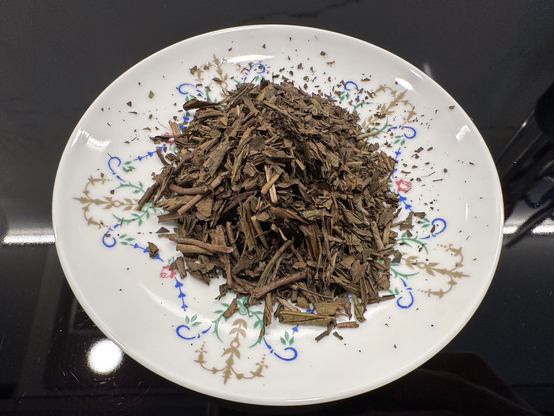
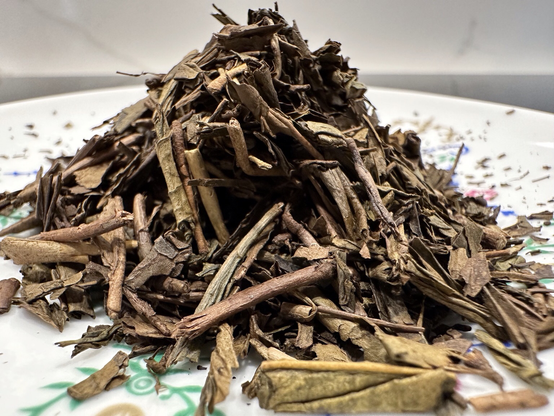
Could I expect this color from the white (!) tea already brewed for more than 10 (!) times?!
It’s Yue Guang Bai from 500+ years old trees.
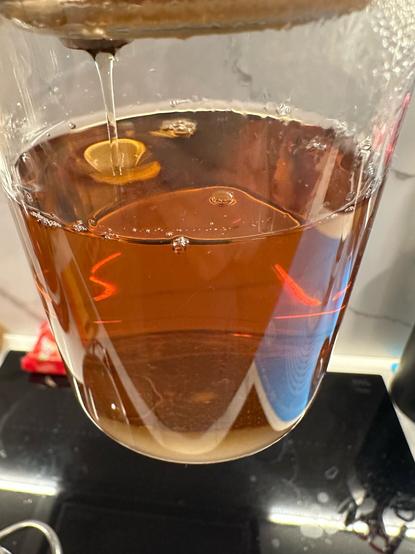
In my personal top, the most capricious tea I met to the moment is Da Jin Zhen. It is a red #tea, and brewing it with 100 °C water makes it sour.😳 The same at 90 °C works better, but I still look at it quite suspiciously. On the other side, it’s quite resistant. It somewhere around 10th brew, and it’s still strong.💪
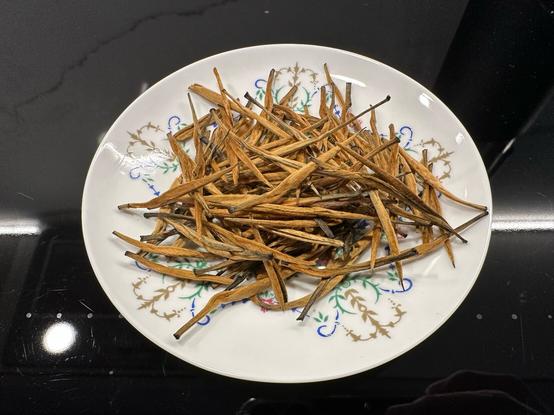
What is interesting about teas is their dynamic nature. Well, there are two dynamic natures: tea's taste and my perception.
These days, I percept the majority of teas as too sweet. Dan Cong Mi Lan Xiang which I previously thought of rather roasted and brutal one, feels very delicious today.
Preparing for the new #tea journey through India and Georgia. Visiting the Dan Cong as well as light #oolong families.🙂
The most unusual thing to taste — #GABA Shen Puehr.
@turbobureaucrat I’m guessing “Dan Tsun” is Dancong. Where did you see that spelling?
@turbobureaucrat Sour, really? Are you sure you don’t mean astringent? When you get an undesirable taste at 100°, how long are you steeping it?
@babelcarp, indeed sour! Occasionally, I can confuse words as I am not very confident about the most suitable English words for the tea topic, but here the tea is sour and not astringent.😧 I usually steep it for a few seconds as I do with other teas.
I even wrote to the tea shop, and they said that sometimes they also have troubles with this tea. Once the taste is as desired, and another time it’s like beer went sour.
Eh, it seems like it’s a little bit opposite side of the Earth.😬 It’s from a tea shop in Moscow.
However, if you are interested in some extra investigation, here is more data:
• 200+ years trees, Spring 2022: https://tea-ocean.com/products/belyi-chai-s-materinskikh-derevev-sorta-tszingu-da-bai-cha-200-let-vesna-2022-goda
• 200+ years trees, Autumn 2022: https://tea-ocean.com/products/iue-guan-bai-so-starykh-derevev-iz-derevni-menku-200-let-osen-2022-goda.
• 500+ years trees, Autumn 2021: https://tea-ocean.com/products/belyi-chai-s-materinskikh-derevev-sorta-tszingu-da-bai-cha-500-let-osen-2021-goda,
• 500+ years trees, Spring 2022: https://tea-ocean.com/products/belyi-chai-s-materinskikh-derevev-sorta-tszingu-da-bai-cha-500-let-vesna-2022.
• The tea shop email: [email protected].


 Lew Perin
 Hiro
Hiro