#Prehistoric #Planet #Season2 #Episode5 :D
I will hide all replies to this post as I break down whats shown for those who cannot see it themselves.
But I really hope you watch it yourself. Get a free trial here, the more viewers the more likely we are to get even more of this masterpiece - https://tv.apple.com/channel/tvs.sbd.4000?at=1001l369U&ct=trd-au-1426840862471170600
#dinosaurs #Dinosaurmedia #PrehistoricPlanet #Season2 #David #Attenborough #Renew #RenewPrehistoricPlanet
Apple TV+ | Apple TV

Browse all movies, TV shows, and more from Apple TV+. Watch all Apple Originals here and on the Apple TV app across your devices.

Apple TV
Today we look at the final episode of Season 2, North America.
Im kind of sad that we never touched on anything out of Australia. Maybe season 3... #RenewPrehistoricPlanet
We open on a shot of a random beech. We see a herd of Alamosaurus ( https://en.wikipedia.org/wiki/Alamosaurus ).
There are about a dozen of them. At the back of the herd is an older male. Said to be in its 70s.
He is at the point his body is giving up on him and he collapses.
The herd moves on as he breaths his last breath.
Alamosaurus - Wikipedia

The next morning a group of Troodontids ( https://en.wikipedia.org/wiki/Troodon ) finds the body. They climb onto it but they cant break the skin.
A roar.
Troodon - Wikipedia

A T rex approaches and they scare off the Troodontids.
Its has no issue breaking the skin and getting a meal.
While eating small chunks of meat get launched around the area.
A plucky Troodontids sneaks up the neck and grabs a bit while the T rex watches it.
The Troodon screams "Remember the Alamosaurus" as its scared off for a second time.
Alone the T rex feeds.
Then some larger critters appear, a Quetzalcoatlus ( https://en.wikipedia.org/wiki/Quetzalcoatlus )
It tries to intimidate the T rex. And fails
The T rex is about to return to feeding when a second Quetzalcoatlus arrives.
Quetzalcoatlus - Wikipedia

The T rex tries to intimidate them.
It doesn't work
They move in to attack.
And the battle begins, swooping, swiping, and snapping.
In the end the T rex withdraws from the area, leaving the Quetzals to eat their fill.
We move under the ocean, in the gulf of Mexico, and a Globidens ( https://en.wikipedia.org/wiki/Globidens ).
The teeth on a Globidens have evolved to be shell crushers.
It hunts Ammonites breaking their shells, releasing the air and forcing them to sink.
We see some Sphenodiscus ( https://en.wikipedia.org/wiki/Sphenodiscus ).
They are swimming in a large shoal. The Globidens approaches and starts to bite into the shells.
Globidens - Wikipedia

The Globidens starts to mass kill the Sphenodiscus.
Its shown breaking the shell on about a dozen or so.
They all sink to the bottom.
In the end it pulls the animal from the shell and eats them
It keeps doing this until its had its fill.
But only a tiny fraction of the Globidens are killed.
The rest make their way to the breeding grounds. Ready to lay their eggs.
After laying several egg pouches the adults leave
The eggs are safe in these reefs until they hatch.
We move on to a salt lake. The Rockies formation has caused it to be cut off from the nearby rivers. The minerals are being concentrated into toxic levels as the water evaporates.
For most its deadly to drink.
But for flies, they love it.
Flocks of Styginetta ( https://en.wikipedia.org/wiki/Presbyornithidae ), relatives of modern day ducks, congregate out in the waters to rest.
Theres also a family of Pectinodon ( https://en.wikipedia.org/wiki/Pectinodon ).
They are here to hunt insects and larger prey
Presbyornithidae - Wikipedia

The Pectinodon chicks start to hunt the very abundant flies.
They quickly pick up a strategy needed to gather many.
After a while father sneaks off for his own hunt.
And he skillfully grabs a Styginetta out of the sky as it takes off.
The father returns to the chicks, food in mouth.
They all run over to greet him.
He breaks it up a little for them.
Soon the flies will leave. And so will the dinosaurs, both flying away and running off to hunt somewhere else.
We now move elsewhere. This time to the north. The Rockies are slowly rising that pine forests are starting to grow.
In them, Triceratops start to breed.
We see a young male, bellowing and stamping around. Trying to get the females attention.
It doesn't work
An older male arrives.
The two males clash.
And the fight begins. The older male is several tones heavier than the younger one. He can easily out muscle the juvenile.
He eventually pushes it to the ground. Breaking one of the juveniles horns in the process.
The juvenile leaves, defeated
The older bull does the deed with the females in the area.
We now move north to the Artic Circle.
We see a flock of Ornithomimus ( https://en.wikipedia.org/wiki/Ornithomimus ) running in the melting snow.
They stop to feed.
A Nanuqsaurus ( https://en.wikipedia.org/wiki/Nanuqsaurus ) approaches. After a bad winter, she needs to make a kill.
There's nowhere to hide, so there's no chance to do a surprise attack.
Ornithomimus - Wikipedia

Instead she tried to panic the flock into a mistake.
she charges at them and they scatter. Fleeing at top speed away. They are easily faster.
But on slipper terrain, speed isn't the only factor at play.
The flock splits.
The Nanuqsaurus follows the larger group. She is mostly keeping up with them.
But the Ornithomimus are too fast and Nanuqsaurus gives up on the chase.
The smaller break away group has stopped for some food.
With the weather getting worse, and a rocky outcrop that can be used for cover, Nanuqsaurus is able to sneak in closer before attacking.
Round 2, is a go.
She scatters the group and gives chase
The Ornithomimus outrun her again, but as they split an indecisive Ornithomimus makes a mistake, and stumbles a little
Isolated from the rest of the group the Nanuqsaurus gives chase.
AS the ground gets slipperier and slipperier the Ornithomimus eventually falls.
The Nanuqsaurus takes advantage of this mistake claims the kill

But this kill isn't only for her.
She picks it up and carries it off.
Up a ridge line, well hidden, her chicks appear.
And join her in consuming the body.

And that ends season 2 of Prehistoric Planet.
I'm hoping for a season 3 beyond, set at different time periods, highlighting different species from all throughout time.
This series is top tier, and you need to get Apply plus to boost the ratings.
Please, we need more of this.

@TheDinosaurDave Probably no Australia because it was all set in the late Maastrichtian and we just don't have any record of vertebrates in Australia from that time period (save a single pterosaur bone from WA, AFAIK)
@alcootatooter Yeah, I know. We need more Aussie stuff outside of the Ablian and Cenomanian. Its just my own wishful thinking.
@alcootatooter Unrelated. I am looking at doing a road trip out of Brisbane later this year to check out different fossil sites and museums all over the country. What little known place would you suggest, outside of the obvious Winton, lark quarry, etc.
I'm trying to see as many things as I can, while I can.

@TheDinosaurDave As far as small museums go, if you are passing through the red-centre may I suggest our own Megafauna Central in Alice Springs, It is a display dedicated to the unique site of Alcoota.
https://www.magnt.net.au/megafauna-central

As for sites, it is probably better I DM, as I'd rather not widely advertise localities on a public forum.

Megafauna Central Alice Springs

​Megafauna Central in Todd St Mall, Alice Springs, showcases the unique megafauna that roamed Central Australia 8 million years ago. Meet the world's largest bird and a fearsome crocodile from the Miocene epoch. Catch a glimpse of palaeontologists at work in the lab. Free entry.

MAGNT
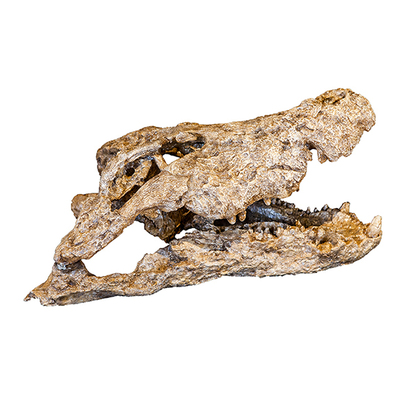
@alcootatooter DM away, i cant wait to see them all. Im currently designing a lego Quinkana if u want a preview lmk