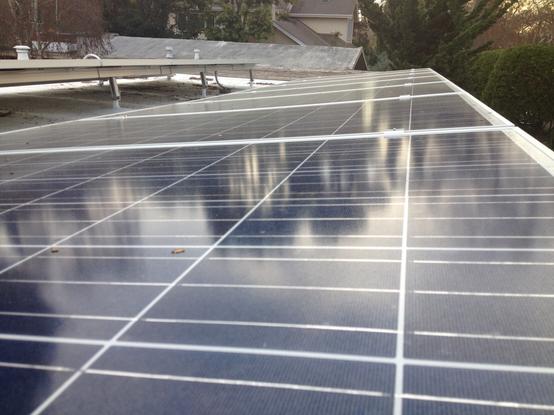
China is installing 12 GW of solar PV capacity per *month* now, up from last year's average of 7 GW/month!
https://taiyangnews.info/markets/china-solar-pv-news-snippets-12/
#solarenergy #solarpower #SolarPV #renewables #electricity #energytransition #china

That means China is now installing around 1 million solar panels of 400 Watt each per day, weekends included.
On a per capita basis, the Netherlands has been installing even more solar PV capacity in recent years than China is doing now.
Our 4 GW/year would translate to 320 GW/year for China, while the current 12 GW/ month will "only" get it to 144 GW in a year :)
Nice race developing for new solar PV capacity per capita between China and EU in 2023.
Projected for China: 102 Wp/capita
Forecast EU: 53.6 GW = 120 Wp/capita
https://www.solarpowereurope.org/press-releases/new-report-reveals-eu-solar-power-soars-by-almost-50-in-2022
New report reveals EU solar power soars by almost 50% in 2022 - SolarPower Europe

SolarPower Europe

History of global solar PV deployment:
1 GW per year was achieved in 2004
1 GW per month was achieved in 2010
1 GW per week was achieved in 2016
1 GW per day will be achieved in 2023
To get an idea: 1 GW now means 2.5 million solar panels of 400 Watt each. Back in 2004, a GW probably took more like 6 million solar panels, smaller and less efficient.
One of the developments that made this enormous growth possible.
An average 400 Watt solar panel is about 2 meters long, so imagine a 5,000 km long line of solar modules flowing out into the world every day. Average speed over 200 km/h! (That's 3000 miles of solar panels flowing at 125 mph, in US units)
So every 8 days, the world produces and installs a band of solar panels that would span the circumference of the earth.
@Sustainable2050 We need more and ways to store it. We are in year 5 of our 5kWp array and it is still going strong. I had been wanting a battery set up and the recent spat of power outages convinced my wife. So we are looking at a powerwall or other option