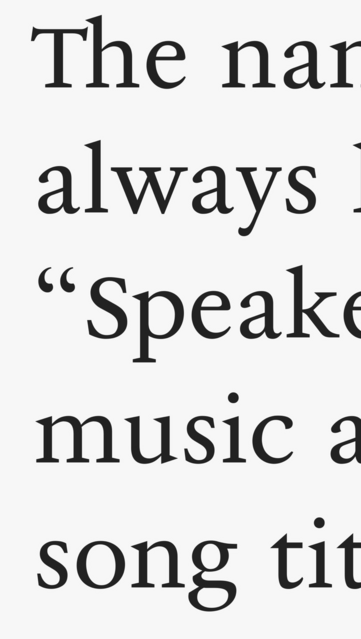
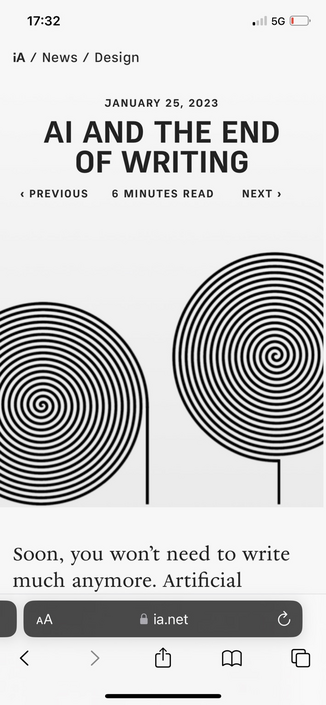
New site is online. New structure, new typeface, new teasers, new videos, new support section, new buy, new everything. Still a little raw on the edges, here and there.
Tell me if you find broken bits and pieces. HTTPS://iA.net
iA - Home

We build fast and beautiful information systems that focus on their core purpose.

iA
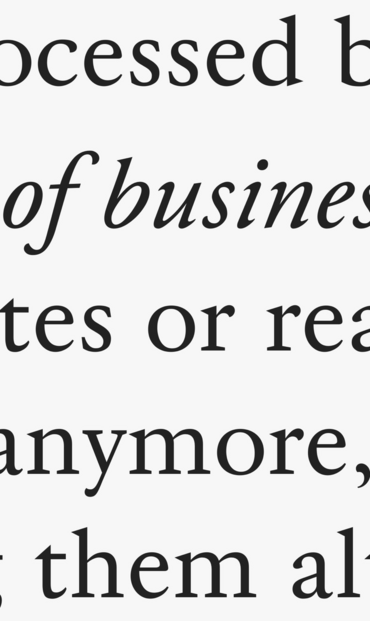
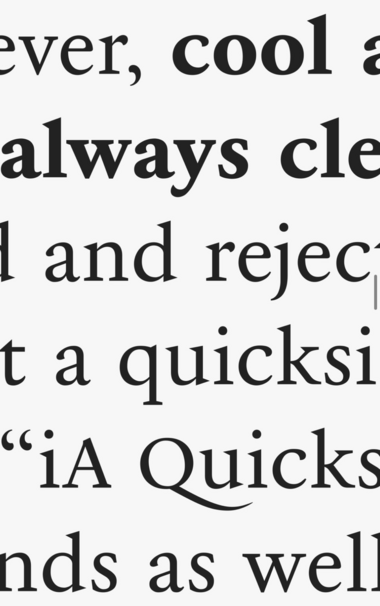
I've looked at these for a couple of months now from very very close. Fonts are code and the nature of code is that it's never perfect.
It had to be done, as the Garamond I wanted just didn't exist. Started feeling a bit weird after three months working on variable cap height regular, bold, 2 italics, and bold italics like a madman, so I brought it to a close. Two weeks ago, I read how Jony Ive spent the last 4 years on his Baskerville with a group of type specialists, and I went: "Ha!" https://www.fastcompany.com/90888571/jony-ive-spent-the-last-4-years-perfecting-his-typeface-heres-why-hell-never-be-done
We always deal with interpretations of music, and we always deal with interpretations of typefaces (printed, processed on different screens). Pure form, whether it's a triangle or a Garamond a only exists in our mind. A lot of the early Garamonds were photocopying the shape of the metal, ignoring both the nature of print and the the nature of the screen. That's one reason why early digital typefaces were lacking soul. Studying Garamond's original prints, f.i., is like reading sheet music.
@reichenstein Early digital versions of “classics” were mostly based on master drawings for photo composition. These drawings were decades earlier usually based on prints of the largest sizes in metal. So they were already copies of copies. Adding insult to injury, early digital fonts were often digitised very hastily too in order to quickly fill the market gap.
@paulvanderlaan I see, I thought they simply transposed the shape in metal which would explain why most of them are so thin. I thought, yeah, "Metal is always thinner than the inked in letter and surrounding white light makes the letter look even thinner than the inked one". But being copies of copies and the hurry in which they were produced explains it even better. Thank you for the explanation!
@reichenstein @paulvanderlaan And some copied the relatively crude unit-isation from photo/metal as well.
@klim @reichenstein I’ve heard similar stories how the 18 unit system can be found back in some digital Monotype fonts but never found any examples.
@reichenstein @paulvanderlaan @klim Some time ago, @jenskutilek wrote some sort of app that analyzes fonts and reports how many widths they have. If I recall correctly, he could tell which fonts were still based on the 54-units system used by Linotype‘s phototypesetters
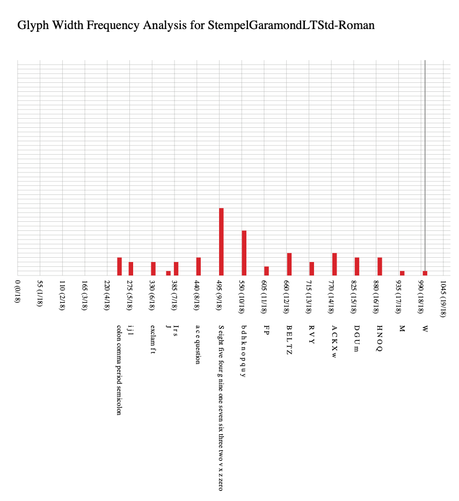
@typeoff @reichenstein @paulvanderlaan @klim That's right. Some are even on the older 18 unit spacing grid. Once a font has been published, the spacing was unlikely to be changed, except for the "Next", "Nova", etc. reworked versions. This is an example of Stempel Garamond LT, where only the J and punctuation seem to have been adjusted. (I wanted to check a newer version of the font, but apparently MyFonts don't even sell Stempel Garamond anymore ...)
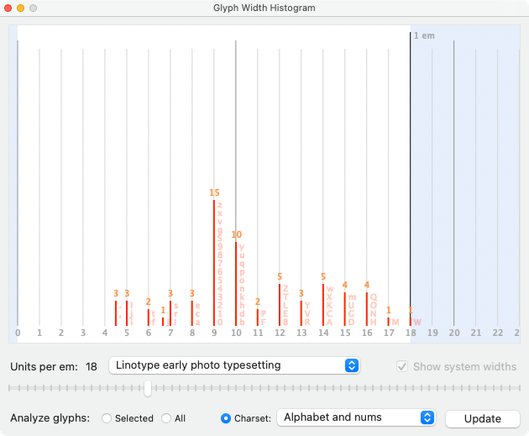
@typeoff @reichenstein @paulvanderlaan @klim Ah, I forgot, later I made an interactive RoboFont window from the script, where you could switch between different unitization systems.
RoboFont/Histogram.py at master · jenskutilek/RoboFont

RoboFont extensions and scripts. Contribute to jenskutilek/RoboFont development by creating an account on GitHub.

GitHub