 alfora
 Ars Technica
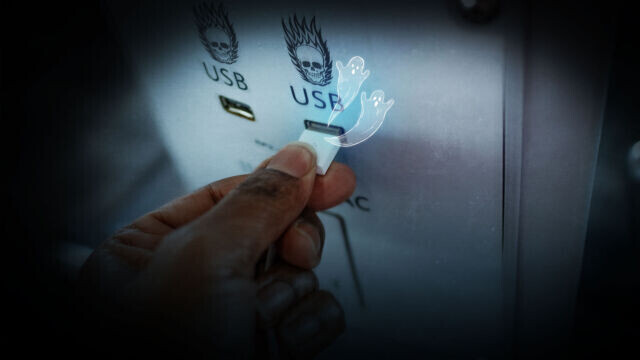
Fearmongering over public charging stations needs to stop. Here’s why
Juice jacking attacks on mobile phones are nonexistent. So why are we so afraid?
Fearmongering over public charging stations needs to stop. Here’s why
Juice jacking attacks on mobile phones are nonexistent. So why are we so afraid?
@dangoodin @arstechnica no real critique of the article itself.
I don't mind the govt warnings. I think there's some potential danger in using public charging infrastructure that normies wouldn't really think about. And so if an article in the NYT makes them a bit more cautious than they would have been, what's the harm in that?
@tob
The warnings are 100% useless. They instill an irrational culture of fear in people who'll never experience problems or know anyone who ever will. It is pure PR intended to make the audience lean pro-police-state by wrongly believing the state thugs did something useful for them.
The statistics around likelihood of such an attack being worthwhile mean it just isn't going to be done.
The harm is that you've just increased the fear level of the population who, like your PR dept, is incapable of understanding that this is a wholly irrelevant risk.
It's as useful as a press release warning people to beware of wolves when they go to the theater.
@gpshead @dangoodin @arstechnica I think you greatly overestimate both the level of concern among regular people and the amount they pay attention to these kinds of warnings.
If regular people were even marginally more paranoid about their personal data security, it would be a good thing.
@tob
People have limited time and attention spans, this isn't a high value thing that'll save a meaningful number of people from trouble. I appreciate that it makes some people think (good)... but not generally about the important things.
Ex: Why aren't the TLAs screaming to get a media cycle telling people that they're screwed if they don't have automatic software security updates and reboots enabled? That one device health behavior improvement would save many orders of magnitude more potential victims than "don't do promiscuous charging."
@dangoodin @arstechnica
@arstechnica "target of nation-state hackers" — so everyone with a youtube-channel these days.
The war against Ukraine has significantly stepped up risk for everyday people.
@arstechnica while it is possible that a person can pass edibles out to children for Halloween, does it actually happen?
This has the same energy.
@arstechnica Here is the deal... the cybersecurity threat may not be real, but the fact the port or its internal transformer can be damaged and fry your device is very real.
That's what I honestly worry more about. I only charge my phone with my own charger, I reserve public ports for my watch charger only.

 Gabriele Pollara
 Tom Bellin
 Dan Goodin
 Gregory P. Smith (he/him)
  🚲🦝
🚲🦝 
 ArneBab
 Urethramancer🐀
 Haelwenn /элвэн/
 B’Mal Suj
 PetterOfCats
 Lstn2urmama 🇨🇦
 Rastal
 Brittle Anxious Nonlinear Inco
 JamesTDG
 Jason "JK" Keirstead
 kepler