Last week @terjefjelde asked me about my #composing techniques, use of #musicTechnology, and thoughts about #musicProduction, and I promised to reply when I had more time. Here’s a too-long thread about this and other things that came to mind…

1/18

@composers @contemporarymusic #composers #ContemporaryMusic

https://mastodon.social/@terjefjelde@mastodon.social/110220685067926603
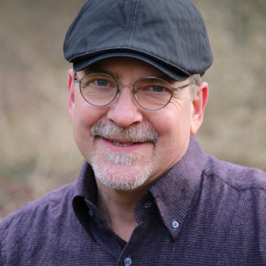
In terms of my #composing methods, I’m basically a dinosaur. I scribble sketches with pencil and paper, check them out on a piano, and I used to prepare scores and parts in careful calligraphy with a fountain pen. No tech involved except what’s been around for centuries.
2/18
For the last 20 years or so, I have at least used #musicEngraving software. This isn’t so much faster for score entry, and it doesn’t especially look better: what it gains in crispness it loses in personality. But it makes extracting parts much easier and less error prone, and it facilitates editing. If I decide a certain phrase needs two more measures, I can just stick them in. In my fountain pen days that would have meant recopying everything.
3/18
One thing I do appreciate about #notation software is the playback feature, which can be helpful for judging questions of pacing, or identifying phrases or ideas that need a little more or less time. It also helps me protect against a worst-case, overly literal, unfeeling interpretation—by demonstrating just what that would sound like. If I can get even the #MIDI playback to sound okay, it’ll surely be safe in the hands of a sympathetic human.
4/18
So playback is good for checking pitches and harmonies, pacing, and a robotic reading of rhythm. Surprisingly, it’s not that great for tempo. The tempo at which I hear music in my head is almost always faster than the tempo that feels right when it’s carrying the weight of real sound. #MIDI playback also tends to sound better faster than live instruments do—I guess because it’s also somehow not fully “real” sound.
5/18
And until recently, the timbres available for #MIDI playback have been consistently horrible. That hasn’t bothered me much, because I’ve only ever used it as an aid to aural imagination. Sometimes I even deliberately set the mappings to something cheesy and terrible, so I can’t accidentally get used to the MIDI version and let my imagination get lazy.
6/18
One disadvantage of using software playback as a compositional aid is that it discourages the use of non-standard notation that the software wouldn’t know how to interpret, even if it might communicate more clearly or elegantly to #performers. I try never to let my musical choices be funneled one way or the other by what’s convenient for a software program. But what’s convenient and helpful to the performers is always a main concern.
7/18
Everything I’ve said so far is about composing for live #performance, and specifically about preparing music (on paper) to be brought to life by #performers who are trained to interpret it. That’s most of what I do in music. But I would love to work more with #improvising players and explore that side of my musicianship again. Either way though, I’ve always depended on performers, and #liveMusic has always been my focus.
8/18
I can’t express enough gratitude to the players who have made my musical life possible. I’ve had wonderful performances, many of which were recorded. And that’s what nearly every recording I have is, except for one proper studio track and a couple of demos where I was able to get a few takes and edit them together. I’ve always thought one of these days I should make a real studio album, but it’s very expensive and complicated, and that’s not where I’ve focused my attention.
9/18
Most of my listening has been live too; in the last 10-15 years, I found myself getting out of the habit of listening to records, but I would hear two or three live performances every week. I live in a city with a very active musical culture, and I used to work at a conservatory, so there was always something good to hear. But now we’re in year 4 of the pandemic, I’m caring for vulnerable immunocompromised family members, and I haven’t heard a concert since 2019.
10/18
I’ve got nothing against #electronicMusic, but I respect how difficult it is to do well. When you #compose for a good #musician, you don’t just get back the right frequencies, durations, intensities and timbral spectra. They come connected, shaped, and imbued with centuries of oral tradition and thousands of hours of individual practice on the instrument.
11/18
Not to mention personality and individuality. A #tenorSax is a tenor #sax, but you can still tell Lester Young from Coleman Hawkins from Sonny Rollins from John Coltrane based on a few milliseconds of their raw sound. Every player has their own voice.
12/18
Using pure #musicSynthesis, you either have to forego all that, and settle for a characteristically sterile sound, or else make up for it by your own painstakingly detailed efforts, which I haven’t had the patience to learn to do. On the other hand, the possibilities of #algorithmic processes (not “AI”) and live interaction (e.g. #MaxMSP) are quite attractive. And using #samples rather than synthesis can preserve the organic complexity of sound that I like—as long as you don’t overcook it.
13/18
Okay so what about #musicProduction? I agree with @terjefjelde that #liveMusic and recorded music are two different things—even when it’s a #recording of a live #performance.
14/18
Many times I’ve had the experience of being really pleased with a #performance when I heard it live, and then a little disappointed when I heard the #recording of the same performance. And I think that’s because there’s a kind of magic to a committed performance that evaporates from the recording, leaving me bugged by minor flaws that didn’t bother me at the concert.
15/18
I’ve participated in professional #recording sessions for #contemporaryClassical music, where the goal is to capture the natural ensemble concert sound. Typically, instruments may be individually mic’d but they’re not isolated, and tracks aren’t separately recorded. And I’ve used Samplitude (years ago) and Reaper (more recently) to touch up and edit my own live recordings, but there’s no #multitracking, no #mixing to do, basically you get what you get.
16/18
I have no experience at all with #musicProduction techniques developed from the pop side of things. When people I follow here talk about their #mixing and #mastering methods, the effects they use, the gear… I honestly have no idea what you all are talking about. But I’m curious! Because I see a lot of people making polished #recordings at home, using #VST, #MIDI, their own instruments, I don’t know what else—and I’d like to be able to do that too. Where do I start? What do I need to know?
17/18
If you made it this far, thanks! That’s all I've got—but I look forward to learning from your replies.
18/18 end
@mcmullin Great to learn all this about you. Thank you.

@mcmullin I usually avoid threads as they annoy me greatly (I love long form reads but only in a blog post, an essay etc) — however, this one kept me glued until the end.

Really appreciated the honesty and how clear these notes are. I come from a different background and although I lived through an intense phase of music studies, I stopped writing my material on paper. Ever since I'd decided to pick up an instrument and let it go, it all changed.

I now only produce in the studio.

@m2m I was thinking about what you said in your first paragraph.

I've only written two or three 4-5 part threads on Mastodon, but every time I thought "I have a website and a blog! Why don't I just post it there, and link to it??"

And if I'm completely honest, it's probably because I was afraid that I would lose my audience, and that no one would click!

And I always put it to myself that I only ever post on Mastodon for my own sake, haha.

But I agree, long form is better in a blog post.

@terjefjelde totally. Also, it's not true that you would 'lose your audience' in here. First and foremost, I stopped thinking in terms of 'audience' and 'content', but above all, people here are real, and are around to get to know other people, get enriched by the relation, and often learn new things.

Write posts and link them here, with a tl;dr abstract in your Mastodon post. It's good.

@m2m

If they were REALLY "followers", wouldn't they FOLLOW you?

And if not, then what did you lose? 😏

@terjefjelde

@teledyn @m2m No worries, it's just me exploring my irrational side! 😂😭

@m2m You're right. And it's completely ridiculous of me to think in those terms at all – I don't have any 'goals' with my social media presence.

Still, it strikes me as an oh-so-human thought. Or maybe I'm just projecting my irrational anxieties onto humankind, haha!

@m2m
Thanks! Paper notation is just another tool too. But it’s a great one if you have players you can rely on. My trombone skills alone were never going to take me very far…

@mcmullin This is gold – and I think it speaks well for our times that you can still compose and make a living doing it the old way. It's a part of the equation that we don't often hear about, at least not outside of academic circles. I guess it drowns in the constant stream of shiny new tech stuff, and tech-loving musicians talking about tech'y things on tech platforms! #musicAndCommunication

Thanks for taking the time to write such a thoughtful response!

@terjefjelde
Of course, I don’t actually pay my bills this way for the most part, but that’s a whole other topic. A composer is someone who composes. Most composers mostly get paid for other things they do, and I’m no exception.
@mcmullin Ah, thinking about the contemporary music scene for a second, that makes sense, of course, sorry.
@mcmullin I've watched some videos of folk explaining their "chain" of plugins for things and it's like, WAY too complicated for me. As a software engineer I'm highly sensitive to over-engineering and that's how much of it looks to me.
@brindy
Not knowing anything, that would be my gut reaction too. I prefer to keep things simple whenever possible.

@brindy @mcmullin Guilty! And it's exactly how it feels in the middle of the process – over-engineering! But there's a payoff – once you're done, everything's a breeze.

Sure, there may be 90 channels at the back of the chain, but once they're hidden from view, I don't need to see them again, ever (or, until my next template fit in about two weeks...) All I need is a dropdown to choose my bus: So I want the Rhodes to be up-close in a room, and with chorus? Select output Room 25% + Chorus = Done!

@terjefjelde @mcmullin Nice. That's next level for me though, I'm still learning. Not even sure what or how to use chains yet. 😬
@brindy @mcmullin You'll get there soon enough – it's addictive stuff! 😁

@mcmullin Where do we start with a reply?? 😂

I choose a metaperspective!

In a way, I think this is comparable to the way we first get into music. Most of us will probably agree that the musical drive and curiosity was always there – and since we were toddlers, music has been a constant, magnetic force that constantly pulls us back, whether we want to or not. (1/4)

@mcmullin And that's how we've learned everything we know about music, and what leads people to believe that surely musical talent is something you're born with. If anything, I think we were born with the *curiosity*!

I think it's the same with mixing/production techniques in the sense that if the drive is there, you will know what to look for, you will find your answers, and you will learn a lot about it, and possibly become very adept at it – certainly in this age of YouTube tutorials! (2/4)

@mcmullin I finally discovered this obsession, but much later in life than music, which was always there.

If, on the other hand, the drive isn't really there, and you do it for practical reasons, you can still learn techniques that will be helpful in your work. But I think there's also a risk that you'll end up spending a lot of time on stuff that you *don't love*, and that will steal attention from the thing you really want to do – compose! (3/4)

@mcmullin But you'll never find out if you don't dip your toes into the water. Perhaps you could start a side project where the production is the end goal, and call it "How I Learned to Sidechain, or How Compression Changed My Life" And when you reach the hurdles, look it up on YouTube! Or ask us! *

* (Please bear in mind that I write all of this as an amateur – amateur composer, amateur mixer, ex-decent tubaist and *terrible* live pianist) (4/4)

@terjefjelde
It’s all composing, really, just focusing on different aspects and elements.
@terjefjelde
There’s definitely a lot to be said for just jumping in and doing things. (In art—not applicable in everything!) Sometimes even what you get wrong can be very fruitful, or what you have the confidence to try because you don’t know better.
@terjefjelde
Years ago I turned on the radio in the middle of an interview (so I didn’t know the context) with a guy talking about how there’s a small best part to every song, and wouldn’t it be great if you could make a whole song that’s all the best part. I thought that’s a really naive understanding of musical form. Whatever he’s talking about sounds like a dumb idea that isn’t going to work…
@terjefjelde
It turned out that the guy was Grandmaster Flash and what he was talking about was the birth of hiphop. So it’s a good thing that as a kid screwing around with turntables in the Bronx, he didn’t know better than to try that.

@mcmullin True. I was more close-minded about things "not having a proper foundation," and being created without understanding the historical and/or musical context properly when I was younger.

I mean, I still think theory and knowledge is of vital importance, but it takes on more forms than I considered back then – and it's certainly not *the only way* to bring music forward!

@terjefjelde
Yeah, I’m not against developing real knowledge and expertise—I do have a PhD after all. Knowing more usually helps! But you don’t need to be a geologist before you can play in the sandbox.

@mcmullin Absolutely. I mean, just take this thread as an example: For my own part, I can physically feel the impostor syndrome in my neck discussing these things with an accomplished professional, offering my thoughts, handing out advice, as if we were equals!

But then I look at the things I learn from conversations like these, and I'm glad I don't always follow my first instinct, which is usually a variation of "shut up and leave this stuff to the grown-ups" or "the ones in the know".

@terjefjelde
When you’re a kid, grownups seem to know everything. When you become one you realize they didn’t—and a lot of things are like that. “Oh, that’s what everyone’s been talking about—it’s not so deep after all…”

@mcmullin you'll probably need a way to get a signal from an instrument or a mic into your DAW (ex Reaper) - so, an 'interface'. check out Scarlett 2i2. now you can record audio into your computer.

get Reaper. it comes with a bunch of free plugins. but there are countless free VSTs out there - just google for the instrument/effect you want. and there are plenty of not-free-but-cheap VSTs, too.

i do everything with Reaper, a Scarlett 2i2, an SM57, my guitars, and few VSTs.

@smalleranimals
Thanks! Right now I have Sibelius (with the Noteperformer sounds) and Reaper. I’ve never tried to get them to talk to each other, but I assume Sibelius —> MIDI —> Reaper is possible. Somewhere I have a Zoom recorder and a nice condenser mic (which I used to use with a DAT way back when). Someone long ago gave me good advice that everything in music tech becomes obsolete quickly, but a good microphone will always be a good microphone.