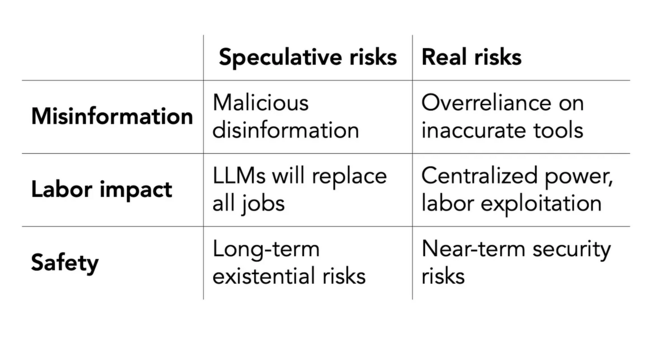
@markhurst @randomwalker @sayashk Even if you look at it from the perspective of automating all jobs, the concentration of power is still the most pressing issue.
Consider who will own the machines and software to do this: Existing megacorporations. Every one of them is a for-profit corporation, designed specifically to sit between workers and customers (who belong to the same pool of human beings), taking a portion of all money that changes hands on behalf of a third party that contributes nothing beyond the initial investment of capital.
With full job automation, there are no workers being paid, so there is no money going to customers. So after a brief period of customers making purchases with savings, all money will end up in the hands of corporate shareholders. It's literally cutting a huge fraction of the population right out of the path of the flow of money.
@markhurst @randomwalker @sayashk Every automated job acts as an amplifier for the rate of wealth concentration in our economy. It's not even necessary to automate all jobs.
With each wave of automation, there is temporary technological unemployment. Waves of automation are coming faster with each cycle. Eventually those waves will come fast enough that the job market cannot adjust fast enough, and technological unemployment will build faster than it can be eliminated. So unemployment will continue to rise until it reaches an untenable level, even if you are of the school of thought that new jobs can always be created to replace old ones.
And once there aren't enough jobs to go around, people will be cut out of the money flow and left to go hungry/homeless. Even if it's not a majority of people who suffer this fate, it's still going to be too many.
@hosford42 @markhurst @randomwalker @sayashk
Instead of doom and gloom, let’s plan for this future: