 gshevlin
 Thomas Baekdal
A Reuters journalist put 11 airtags in shoes destined to be recycled, but found they were being sold in used clothes markets instead ... okay, smart journalism ... but... isn't selling them just as good... or even better? I mean, if you have a used pair of shoes, the best thing for the environment is the prolong their use before they are cut up and recycled. So, I don't see what the problem is here. It might not be what was intended, but the outcome is surely better?!? https://www.reuters.com/investigates/special-report/global-plastic-dow-shoes/

 Mike Masnick ✅
@baekdal also, isn't reselling the shoes... a form of recycling? One that has little to no waste involved?
 Jono Ferguson
 Quick Weasel 🏳️⚧️🏳️🌈
@QuickWeasel @baekdal article says they originated in singapore. and went to... indonesia. not very far away at all.
 Leon Bambrick
@mmasnick @QuickWeasel @baekdal the journalists catching planes and boats and trains everywhere to track down the shoes… that bit definitely isn’t carbon neutral
 keithzg
@mmasnick @baekdal The rubric I've always heard Reduce, Re-use, Recycle—in that order!
Simply in terms of efficiency first you want fewer items created, then when they're no longer being used by someone they should ideally be used by someone else for the same or another purpose while still existing as the same manufactured item, and then after/failing those two tiers is breaking it down to do something else with those materials.
This sounds like everything is working fairly ideally!
Simply in terms of efficiency first you want fewer items created, then when they're no longer being used by someone they should ideally be used by someone else for the same or another purpose while still existing as the same manufactured item, and then after/failing those two tiers is breaking it down to do something else with those materials.
This sounds like everything is working fairly ideally!
 rag. Gustavino Bevilacqua
 Travelfish
@mmasnick @baekdal think the point is the premise of the programme, greenwashing aside, was to keep the shoes out of landfill. Now that’s they’re somewhere here in Indonesia I can almost guarantee that landfill is where they’ll end up—even if a few years down the track. Waste management is already a complete disaster here and Singapore tossing its stuff in this direction for a quick buck isn’t helping the situation.
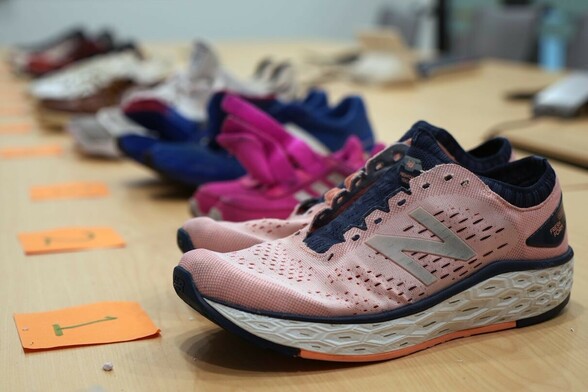
@travelfish @mmasnick Yeah, that a good point. However, this just illustrates that this is not a simple topic. What I think the Reuters story lacks is a larger perspective. Cutting up perfectly usable shoes seems to be just as big a problem here. Here is a picture that the Reuters journalist shared. What Reuters did was to focus on the wrong problem, in my opinion.
 alyshalynn
@baekdal @travelfish @mmasnick I think a large part of the issue they are raising is that companies like Dow undergo the theatrics of ‘recycling’ not for the end result, but to reap benefits other than 𝒋𝒖𝒔𝒕 optics…
@baekdal @travelfish @mmasnick They get tax write offs for these sorts of programs. They get noted as ESG friendly. Thrse both make them look good to investment funds & expand their profits - it’s like a bureaucratic, corporate MLM where each participant in the ‘cycle’ gets to fly a false flag of ‘environmentalism’ while paradoxically expanding their consumptive business along the way.
@alyshalynn @travelfish @mmasnick I agree that what they did was greenwashing. But, Reuters reporting is not helping here. It's better to reuse perfectly usable shoes than to cut them up, but Reuters was so focused on just Dow. The result of their reporting is that now more usable shoes will be cut up, which doesn't solve the problem with either fast fashion or reuse/recycling
 Andrew Bennett
@mmasnick @baekdal And what happens to them then? Do they eventually end up recycled into new playgrounds or track facilities? No. They get thrown away and end up in landfills, the exact result the program purports to avoid.
And the lies, of course. Aren’t we all tired yet of all these fucking lies? If they want to sell donated shoes to poor people who can’t afford new ones why don’t they just say that? I mean, besides the fact that this is actually illegal in Indonesia, of course.
 Princess Unikitty
 Armando
 @faktoider
 Michelle R. Smith
@baekdal @mmasnick You should read the article. The program is part of a PR effort to make consuming more plastics seem more palatable to the public. The report finds the program does not appear to be doing what it promises. Instead, it’s exporting the waste problem. Some shoes might get reused, but the article notes a lot end up in landfills in a completely different country. The article also notes a track record of problems with similar programs.
@baekdal @mmasnick What evidence do you have that the shoes are wanted and will be worn in Indonesia? This paragraph is from the article: "The donated shoes that ended up in Indonesia have added to a flood of illegal second-hand clothing pouring into that developing country, according to a senior government official there, who said such cast-offs pose a public health risk, undercut its local textile industry and often pile more waste into its already bulging landfills."
@baekdal @mmasnick There's no game. The premise of the story is that the program they have is making it seem like there's a solution to manufacturing huge amounts of plastics by recycling it into something else. Reuters found that in practice, shoes were being shipped elsewhere, where they have a big problem with second-hand clothing being dumped and ending up in landfills. It's nice to think the shoes could be worn again, but is there any evidence that's happening?
@mrsmith @mmasnick I don't know. That is problem with the Reuters story. They did not find the shoes at landfills, they found them at varies used-clothes markets (places of sale). Would then eventually end up in landfills? Maybe. But at the point where the story was written, the intention of those shops was to extend their product life. But this is besides the point.
The problem I have is that I don't think we are focusing on the right problems here.
 Adam R. Wood
@mmasnick @baekdal [casually gestures toward Cory Doctorow's latest article] https://pluralistic.net/2023/02/26/career-criminals/#fool-me-twice-three-times-four-times-a-hundred-times
 Dan Shick
@baekdal “companies lie about recycling” is the point
 hanno
hanno@baekdal I mean you can still legitimately point out that DOW did not do what they publicly said. But yeah, "this company did something that was better for the environment than what they said they would do" is an unusual take...
 Marius Kießling
@hanno @baekdal I partially disagree. When I stop wearing shoes, they are usually in a state in which they should really get recycled instead of being shipped overseas. At this point, I want the resources of my shoes get properly reclaimed for future use while complying with environmental regulations within the EU. The same goes for textiles. When I stop wearing something made from 100% cotton, I want the cotton to get recycled but I haven’t found any provider that guarantees this.
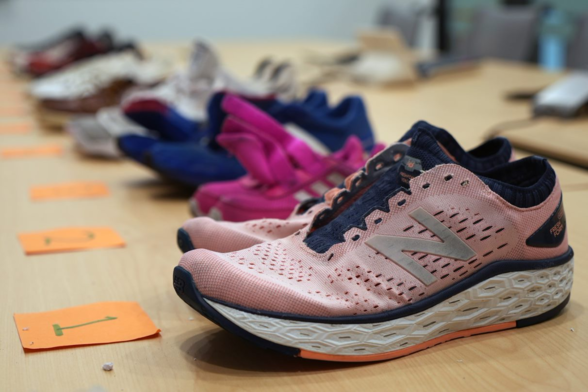
@marius @hanno I agree, when they reach their end of life, they should be recycled... in this case, though, the Reuters journalist shared a picture of them, and they look perfectly usable. I think it's fine that someone looked at these and thought: "Hey, these look perfectly fine. Let's try to sell them instead of cutting them up"
 Sebastien 🌍 🇵🇸🇺🇦
 @baekdal how is this better? People in Indonesia are buying shoes with trackers in it. 🤷🏽♂️
 Godefroy_B
@baekdal I quite agree but this line of reasoning is valid only if those shoes are indeed sold, isn't it ?... If they stay on the shelf and then are destroyed, as typically half of textile items, then there is a loop hole (except if the used-shoes shop but them back in the recycler bin).
 That Anonymous Coward
Any idea what Reuters take was on the companies who slashed old stock before trashing it so the poor wouldn't be seen in their brand?
Just wondering if their outrage covers that sort of wasteful or just the kind where items that are still useful are getting into the hands of those who need help.
 develin
@baekdal the green washing is that the CAN'T recycle. the recycle claim is supposed to remove the guild from switching faster than you have to and not make durability etc as a factor in your purchasing decision.
 Raven Onthill
@baekdal “The donated shoes that ended up in Indonesia have added to a flood of illegal second-hand clothing pouring into that developing country, according to a senior government official there, who said such cast-offs pose a public health risk, undercut its local textile industry and often pile more waste into its already bulging landfills.”
None of the shoes that Reuters tracked down were actually being worn. Athletic shoes wear out v quickly - they’re not good for much.
 Nemo_bis 🌈
@baekdal Wow! At the cost of months of work and who knows how many flights, Reuters managed to prevent 10 shoes from being reused, a practice which probably reduces carbon emissions. Also, "Yok Impex would be removed".
But hey, at least the brands' value and market segmentation will be preserved ("Decathlon sent Reuters a statement saying it had not authorized the export of any shoes").
 pedatn
@baekdal beats used clothing being shipped to nigeria where it ends up in landfills because fast fashion isnt durable enough to last over a year
 Joé McKen
@baekdal I think reselling used shoes is fine, great even. But I can understand if people are annoyed at being misled when a company says they’re doing one thing and then secretly does another. If Dow wants to resell the shoes, they should just say that’s what they’re doing, IMO.
So yeah, this outcome is better, but it’d be even more optimal if Dow were upfront with their intentions. Just my 1.5¢.
 bazpoint
I mean.... Reduce > Reuse > Recycle. As others have said, I'm not really thinking this is a terrible outcome. But yes, the transparency is the issue that needs attention.
More to the point, there's surely an obvious way to improve this test: put a couple of single, odd shoes into the program with trackers in them. They obviously won't be resellable, so if they don't find their way into some sort of recycling you'll know there's really an issue.
Do I get a job at Reuters now?
 Matt Stocum
@baekdal Yeah. “Reduce, reuse, recycle,” they’re listed in that order for a reason. If the shoes are in good enough condition to be used by someone else, that’s far better than recycling.
 Woolfhound
@baekdal @Finagle_a_Hegel as long as the shoes (or any other clothing or personal items) are being properly sanitized this seems like a better outcome.
 Kals_Els
@baekdal I guess reduce, reuse, recycle is not something that the reporter has ever heard of.
 tripleman, a 🇨🇦 in 🇩🇪
@baekdal I'm a big reduce *reuse* recycle guy but that's not really what this is. A huge plastics manufacturer lied about the recyclability of its products and I guarantee you the real intended consumers of this lie are regulators. Dow will point to fake programs like this every time a country wants to clamp down on plastics manufacturing/use/sale. It's a feel good story that lobbyists can tell legislators.
Oh, and those shoes will still end up in a landfill pdq if they haven't already.
 Chris Wojno
@baekdal Sure, re-selling is still a great use for the shoes. The anger is likely from the perception that Dow lied about turning them into running tracks.
 Theodora Sutcliffe (she/her)
@baekdal it's better. The hierarchy goes: reduce, reuse, recycle. What a dumb story. They should be ashamed.