
Varallo [Plaintiff], on Ira Ehrenpreis' conflict as an "independent" director:

"When it came time to involve the committee itself, Ehrenpreis seems never to have shared the genesis of the grant, allowing the committee to proceed without any detail about Musk's huge ask where that ask's central role as the basis for the grant is [not] actually presented to the committee until two months after Musk made the ask to Ehrenpreis."

15/
Now we are on to Robyn Denholm's conflicts as a so-called independent director, who realized a quarter of a billion dollars for three years of service.

Varallo does a great job of showing how "[his] friends really can't have it both ways." The Court should either consider the actual realized value or consider the Black–Scholes model value, while the defendants want them to consider neither, since she hadn't sold before the approval of the grant and didn't sell until thereafter.

16/

Varallo is doing a very good job in my opinion here. He's very effective when he is on, and he's currently on. "Indeed, the court may recall that Denholm engaged in an almost endless equivocation on the point [...] until the court broke in and required an answer. But I have to say, I was somewhat amused to review testimony to find that the Court had to ask the question three times yourself to get that answer."

17/

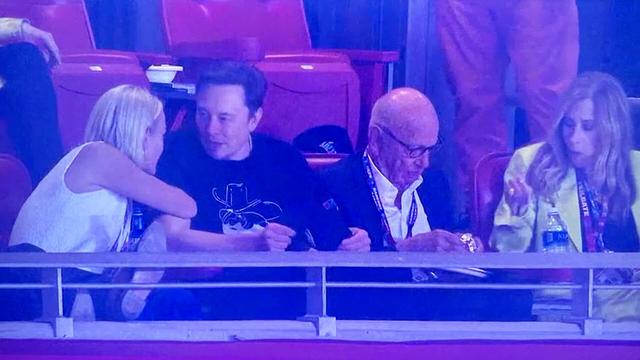
We're now running through the remaining committee members, Brad Buss, Mr. Murdoch (think he'll mention Super Bowl with Dad and sister lol, nope seems like he'll let it slide by oblique reference ... oop no, there it is hahaha, picture on the board and everything).

18/

Now I need to know if he used my screen cap of the Super Bowl or what.

19/

Varallo is now differentiating the case law and the arguments cited by defendants against plaintiff's disclosure claims. The question is really: is there a disclosure claim that is viable in this information economy? Because if there is, this seems to be a pretty strong one. If the language of the case law still holds, despite this insane informational melieu in which we swim, this case seems to be on all fours on disclosure.

20/

Varallo has brought out the "doozy" — "And I want to pause here because I gotta tell you, this one's a doozy Your Honor. The idea that I could have invested hundreds of millions of dollars in private Musk entities; vacation literally around the world with him and his family and my family; owe him for literally handing me generational wealth; and that I nonetheless come into court and testify that none of that mattered to me because I was a really independent guy..."

21/

"...Your Honor, if that's all a director needs to do to satisfy an independent director inquiry, is simply to say that he wasn't swayed by evidence negating any claim of independence, then we don't have a system capable of enforcing fiduciary duties any longer. In Delaware, we don't credit self serving testimony over hard facts."

22/

Now we are onto the disclosure about the grant's genesis and development, and disclosure about milestones and their likelihood of achievement. There's a lot of baggage and backstory echoing in the background here about disclosure claims in Delaware that's hard to nuance in here, even with a 500 character limit (be glad I didn't join a server with a 5k character limit lol).

23/

Varallo covering the "probable of achievement" disclosures. We have entered the S-curve phase, and Varallo has brought out the Immaculate Heart of Mary nuns and how they taught him to draw an S, and he's describing how Tesla explains an S-curve from a Tesla tweet.

24/

Varallo: "At the early part of production of Model 3 or any new car, it's not entirely clear that they're going to succeed. But there comes a point on the curve as it begins to leave flat and ascend, where the production issues have been tied down. The production problems have been solved, and mass production is about to print money for the company. That's what an S-curve is."

25/

Varallo: "That's what this shows and the testimony you got during the trial about where the parties were on the S-curve is highly probative of exactly how difficult it was going to be to meet these milestones. If we were on the upward slope of the S-curve, then these projections were highly likely to be achieved and indeed, many of the milestones were highly likely to be achieved. If we were way at the left, then we have a different story."

[referring to an S-curve demonstrative]

26/

LOL on Musk being a part-time CEO

Varallo: "Indeed, while Mr. Musk came to trial saying that that he anticipated his full time activity at Twitter to end and I'm quoting 'probably this week and next week' [trial was November 14-18, 2022], he was quoted in the financial press last week on February 15, as saying that he anticipated being able to appoint a new Twitter CEO by the end of 2023."

27/

#Law #Musk #Tornetta

After spending more than an hour on the disclosure claims, Varallo now turns to entire fairness, after reminding the Court that she need not reach entire fairness if there is a finding that the grant fails for any of the disclosure claims. I'm not really clear how they are going to have time for rebuttal the way this is going.

28/

Varallo: "I submit to Your Honor, that the board's wholesale lack of engagement here, including a stunning silence in the face of a less personal and very public jihad against the SEC tells Your Honor all that you need to know about who dominates and controls this company and its board, and frankly the lack of character, integrity of the board, which is subservient to Mr. Musk."

Tell us how you really feel. 🫠

29/

Talking about Musk bringing Boring Company and Tesla employees to Twitter:

"Once again, where was the adult in the boardroom who stepped forward to say that Tesla was not Musk's playpen for which he could simply draw volunteers to his other pursuits?"

30/

"The evidence shows a founder CEO single-largest shareholder's self-appointed techno-king of Tesla alone promulgates masterplans for the company. running w/out board supervision and a board which is sufficiently empowered by him to sit idle while he single-handedly wages war with the company's primary regulator to engage the company's engineers for his private interest and contribute sadly to the deterioration of more than half of Tesla's market capitalization in a matter of a few months."

31/

Varallo is talking so fast, it's a good thing that the Court has post-trial briefs with all this information. But they can't have more than three hours allotted for this argument, so he's got to have less than 14 minutes left of his time, so ten minutes for rebuttal, if he stops now, and he doesn't seem to be stopping...or have I lost track of time and space again?

32/

Varallo:

"For those of you who drive new Teslas, this is pushing into Ludicrous mode" he says of the compensation package.

LOL

He's going through the entire fairness arguments in a ludicrous period of time, I'll give him that. I honestly think it wasn't a bad allocation of time, but I do believe he should sit down and save a few minutes for rebuttal because the Chancellor is not going to go long, that's for sure.

We're playing a Musk clip.

33/

"Was this topic discussed with you?"

Musk: "I mean, do you mean, what do you mean by this topic?"

"The topic of whether there should be some assurance about the amount of time you spend on Tesla vis a vis other interests?"

Musk: "No, because that would be silly."

Varallo says they didn't talk about it because they knew Musk would give him the back of the hand, and that the directors' testimony equivocated about whether on whether they had talked about it or not.

34/

Varallo with the burn:

"The court may recall such testimony in open court that Musk took the red eye to attend court. Apparently, flying during the night on one's Gulfstream qualifies as the redeye, I didn't know that, but I learned it at trial."

loooool "during the night"

These are things only Varallo can pull off. 😂

35/

Ok, so is he just going to get cut off? I'm so confused about the timing on this, but I guess it means that the Chancellor isn't going to get to ask any questions, so that's I guess not surprising, but an interesting take.

She says they are at the break, and he says he will finish up on remedy. He cites a case for rescission of the grant.

The Chancellor has no questions for plaintiff. She has one for the defense.

36/

Here it is—a question from her Honor...

The Chancellor calls a fifteen minute break, but has a question for the defense to answer when they return.

Plaintiff argues that one disclosure violation is a kill shot.

She tells the defense that she didn't see a meaningful discussion of that argument in their briefs. "I could have missed it, but I would like you to address that in your argument."

Let's see how they respond. Back in 15. I have no idea how time is working here.

37/

Ok, we are back. Somewhat surprisingly, they are not going to address her question first, which seems like ... an interesting choice.

38/

Her response to their decision not to address her question right off the bat should tell you everything you need to know about their decision not to address her question right off the bat.

She said "I'll let you [address it last (at the end of your presentation) but ..."

So now they have jumbled up their response order substantively, but also are not going to address her question directly firstly, which is such a bad choice imho, I really do not understand.

39/

Taking a condescending approach to the Chancellor is a choice.

Also, thank you for your answer that you don't actually have a response.

IT IS SO NOTED.

40/

In comes the Chancellor. There's a lot of nuance in her assessment of his argument about how she characterizes the way he's presenting the "give and the get" re process disclosures but she's skeptical of how he's bringing it to her. She's not going to be steamrolled here, obviously, but it's not clear to be defendants are aware.

She says again now: I have some ideas of my own, but explain again to me why you think process disclosures are less significant in this context.

41/

This is all very, very interesting.

The Chancellor asks defendants whether, by analogy, process disclosures would be less important in a situation of a buyout where there's a controller seller.

There is a lot going on here. I'm going to have to unpack some of this after the fact to avoid getting bogged down here with backstory on process disclosures.

42/

The idea that Elon Musk is not a controller is so absurd. It's so condescending.

43/

The Chancellor asks what the reality is about his voting rights.

She asks what the math says. He has less than a third and it's not veto power. She wants to know what it means with respect to people not likely to vote, etc.

44/

The idea that they had to give him all the money in the world because they couldn't live without him but that it's also not "his company" and he doesn't control it. How do you square those two things?

45/

This is a lot of time to spend on the controller issue, to be honest, since there are a lot of ways they can lose this case before getting to this issue.

46/

"Are the directors beholden to Mr. Musk because he made them rich?"

"We believe the answer is no."

Did he answer her question yet? 🧐

47/

As the Chancellor said, "I might have missed it" but I didn't hear him answer her question. Did I miss it? Did I blink?

48/

The Chancellor:

"You've done a clever thing here. You have divided your presentation by sources of influence as opposed to the aggregate of those influences on each individual director. But to be clear, defendants don't concede the independence of any of the directors from Mr. Musk, correct?"

Defendants say they will get to that shortly.

49/

It secures Mr. Musk's full focus in transforming Tesla.

Oh, really?

50/

He goes to answer her question and she interrupts with a new one:

Chancellor: Plaintiff argues that potential conflicts can alter the total mix of information. Do you agree?

If there's a real potential, yes, I would agree. But total mix means total mix that is important to the vote that is to be taken.

She says he can continue to answer her question.

51/

"Is identifying a material misstatement in the proxy a kill shot?"

He says he addresses this in the brief. He says there doesn't appear to be any precedent to what the Court needs to do here, because it's in the discretion of the Court, because it's an equitable remedy.

He cites to SolarCity, which said the proxy was shitty, and still went to entire fairness, which is A HELLA TAKE OMGGGG.

52/

I have so much to say about the last take.

Mr. Musk would have an unjust enrichment/quantum meruit claim, which I would absolutely love to see it.

53/

She almost interrupts him, but stops.

"So, plaintiff argues that if there are material issues with the disclosure, it invalidates the award, full stop. And there's an elegance to the simplicity of that analysis, which is why I'm skeptical of it. And you're saying that I need to move toward entire fairness, what's your best case for that?"

He asks if he can send her a letter, and again cites SolarCity.

54/

@chancerydaily 55/ who is the attorney.
Why is she denying that this was a sham and comittimg perjury?
